The program addresses safety concerns about e-bikes and e-scooters by letting residents trade in non-UL compliant devices.


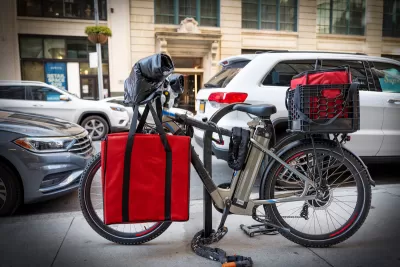
After lithium-ion batteries in micromobility devices were linked to fires that caused at least 13 deaths in New York City, the city created a first-in-the-nation trade-in program that provides e-bike and scooter owners with new equipment that meets UL safety standards.
Dan Zukowski describes the new policy in Smart Cities Dive, noting that “The trade-in program complements Local Law 39, which as of Sept. 16 requires the electrical systems and batteries for all powered bikes and scooters sold, leased or rented in the city to be certified by an accredited testing laboratory to comply with UL safety standards.”
E-bikes are part of a growing micromobility delivery ecosystem in New York City. According to Zukowski, “More than 250 delivery workers have already applied for the trade-in program, according to a statement from the Equitable Commute Project, a micromobility advocacy organization.”
Last month, a decision by the city’s Department of Transportation to change the rules on delivery cargo bikes was met with backlash from the delivery industry, with industry leaders saying the new rules limiting vehicle length outlaws the bikes most commonly used today.
FULL STORY: NYC’s safety-focused e-bike and e-scooter trade-in program is a US first

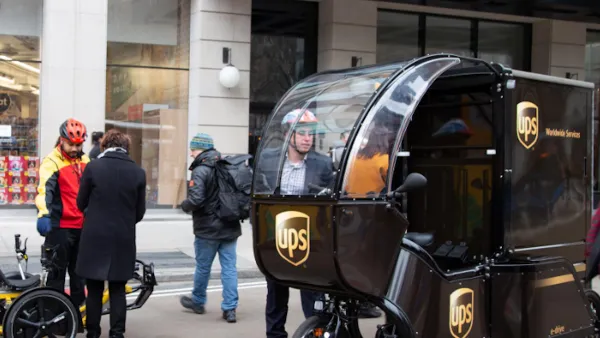
Cargo Bike Industry Pushes Back on NYC Rules
Cargo bike producers and delivery companies say the proposed 120-inch length limit and emphasis on four-wheeled bikes excludes many commonly used delivery bikes and favors one manufacturer.
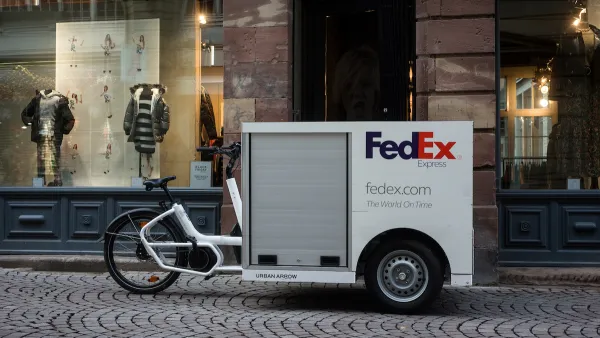
NYC to Approve Larger Cargo Bikes
With delivery companies increasingly using cargo bikes to make deliveries faster and more efficient, the new rule could open the door to a ‘delivery revolution.’
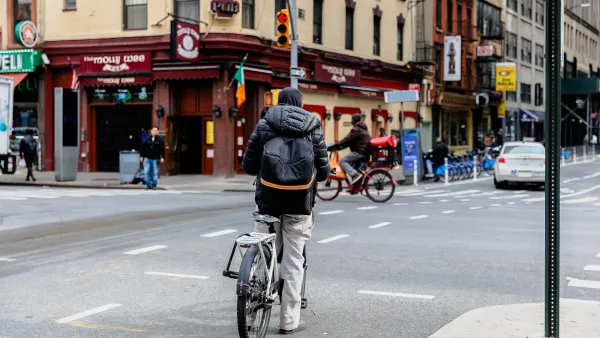
NYC e-bike injury study highlights 'critical infrastructure deficiencies'
The sharp rise in e-mobility injuries points to a need for safer roads, not more punitive laws.

Planetizen Federal Action Tracker
A weekly monitor of how Trump’s orders and actions are impacting planners and planning in America.

The state-sanctioned urbicide of Austin
People don’t kill cities. Freeways do.

US to reduce Colorado River water deliveries to Mexico
A new Colorado Treaty amendment reduces Mexico’s Colorado River water allocation by 250,000 acre feet.

5 New England states march closer to 800 megawatt wind energy project
Securing federal approval for the project may be complicated under the Trump administration, which has historically been hostile towards domestic wind power.

Baltimore to break ground on $50 million Transit Priority Project
The project will bring faster bus trips, safer streets and better bike connections to Baltimore.

Airbnb launches $250 million 'last-dollar financing' housing accelerator, makes first investment in Austin
The company will put $6.4 million towards affordable housing development in Texas’ capital.

FREE Course: Walkable City 1: Why Walkability?
After describing his path towards focusing on walkability as the essence of good planning, Jeff Speck marches through his five principal reasons for making more walkable places.
Reinventing Malls: Planning Alchemy—Turning Gray Fields Into Gold
The course focuses on the opportunities and imperatives that shape reinvention of mall sites.

Eagle County Government
Harvard University Graduate School of Design
Nashville Planning Department
The Architects Foundation
University of Cincinnati Online
The Pocatello Development Authority
The Urban Renewal Agency of the City of Pocatello
Journal of the American Planning Association