Cargo bike producers and delivery companies say the proposed 120-inch length limit and emphasis on four-wheeled bikes excludes many commonly used delivery bikes and favors one manufacturer.



When the New York City Department of Transportation (NYCDOT) announced a proposed rule revision that would make way for larger cargo bikes in the city, bike advocates hailed it as a victory. But freight industry leaders say the change would outlaw some of the most common delivery bikes and skew the market toward one particular manufacturer, writes Gersh Kuntzman in Streetsblog NYC.
The new rules would explicitly allow four-wheeled, pedal-assist cargo bikes—just the kind that the city’s Department of Transportation is testing. But, as Kuntzman explains, “Those bikes are made by Fernhay, which is owned by a well-connected lawyer, William Wachtel.”
Kuntzman points out that “Industry leaders who were not Wachtel believe that the well-connected lawyer has some undue influence over the Adams administration — though such speculation is common when one company’s design is chosen over others’.”
According to Ben Morris of Boaster Cycles, “The 120-inch cap is going to eliminate all bike-and-trailer cargo solutions that currently operate in the market today and in the future.” The CEO of Net Zero Logistics said, “the suggested limit of 120 inches will force us to shut down, completely reengineer our operations or return to using vans for delivery.”
NYCDOT will hold just one public hearing on the issue on September 13.
FULL STORY: Industry Leaders Slam DOT’s Proposed Cargo Bike Rules


NYC to Approve Larger Cargo Bikes
With delivery companies increasingly using cargo bikes to make deliveries faster and more efficient, the new rule could open the door to a ‘delivery revolution.’
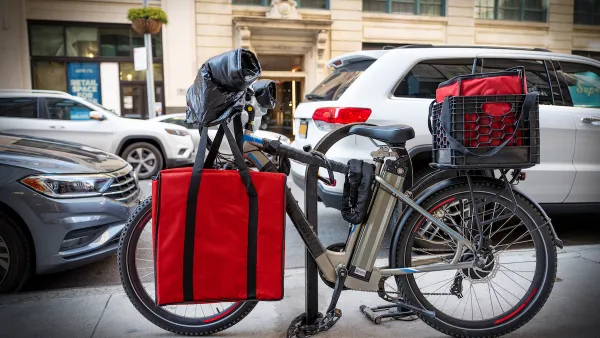
New York Launches Nation’s First Micromobility Trade-In Program
The program addresses safety concerns about e-bikes and e-scooters by letting residents trade in non-UL compliant devices.
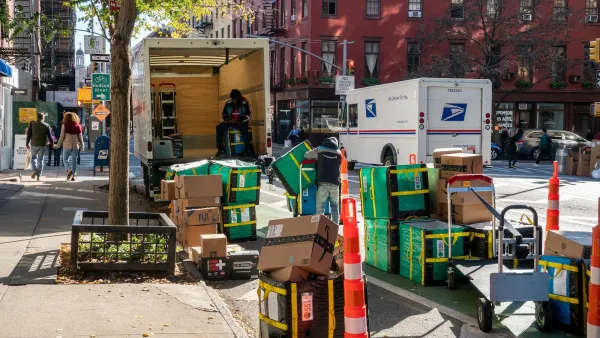
Report: 75% of NYC warehouses are in 'disadvantaged communities'
Low-income New Yorkers are 1.2 times more likely to live within half a mile of a warehouse.

The state-sanctioned urbicide of Austin
People don’t kill cities. Freeways do.

US to reduce Colorado River water deliveries to Mexico
A new Colorado Treaty amendment reduces Mexico’s Colorado River water allocation by 250,000 acre feet.

New Jersey’s second-largest city bans standalone data centers
Jersey City will continue to allow co-location facilities, such as those meant for research institutions that store their own data.

Amtrak not solely to blame for New Jersey commuter rail's unreliability, report finds
A new study from the Garden State Initiative found that NJ Transit’s budget grew 20% across a 4 year period, but reliability declined significantly over the same period.

EPA erases limits on planet-warming pollution from power plants
Under Monday’s plan, power plants would still have some limits on how much mercury, arsenic and other contaminants they can emit.

Phoenix announces new on-demand transit service, more frequent RAPID buses
Both new services will launch in October, and are part of Phoenix's Project Effective Access Solutions for Easing Congestion.

FREE Course: Walkable City 1: Why Walkability?
After describing his path towards focusing on walkability as the essence of good planning, Jeff Speck marches through his five principal reasons for making more walkable places.
Reinventing Malls: Planning Alchemy—Turning Gray Fields Into Gold
The course focuses on the opportunities and imperatives that shape reinvention of mall sites.

Eagle County Government
Harvard University Graduate School of Design
Nashville Planning Department
The Architects Foundation
University of Cincinnati Online
The Pocatello Development Authority
The Urban Renewal Agency of the City of Pocatello
Journal of the American Planning Association