The first of three elements of the City of Yes rezoning proposal aims to remove barriers to building green infrastructure.



The New York City Planning Commission (CPC) approved the first of Mayor Eric Adams’ ‘City of Yes’ rezoning proposals aimed at reducing carbon emissions. The proposal includes 17 citywide zoning changes that are designed to remove “barriers to greener energy, buildings, transportation, and water and waste systems,” reports Jessica Jones-Gorman on SILive.com.
In practice, the proposal, dubbed City of Yes for Carbon Neutrality, means “environmentally friendly retrofits for over 50,000 buildings and 1 million homes, the allocation of over 400 million square feet for electric vehicle charging, and the modernization of the city’s water, compost and recycling regulations -- all measures that CPC officials say are critical steps for New York City to reach its ambitious environmental goals.”
Some Staten Island officials have expressed concern about the proposal to allow energy storage infrastructure in residential areas. “The physical design of these facilities we have seen during the process, and the uncertain nature of the safety of them creates a whole host of issues that clearly is inconsistent with residential character and use,” said CPC Commissioner Alfred Cerullo. “The borough president noted that Staten Island elected officials have stated publicly that the current approach will decrease the quality of life for many families, potentially increase safety issues for both residents and firefighters, and diminish property values.”
FULL STORY: First ‘City of Yes’ zoning change approved by City Planning Commission, despite Staten Island pushback


Midtown Manhattan Rezoning Proposal Could Yield Almost 10,000 Housing Units
A plan to alter zoning for parts of Midtown would permit new housing and make it easier to convert office buildings to residential units.

Will New York ‘City of Yes’ Proposal Make an Impact?
Some housing experts say the rezoning plan is not nearly ambitious enough to make a dent in the city’s housing crisis.
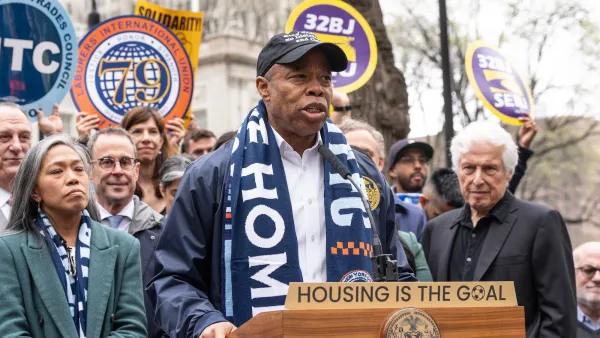
What Actually Got Built Under Eric Adams’ ‘Pro-Housing’ Administration
The outgoing mayor claims credit for hundreds of thousands of new homes. The truth is more complicated.

Planetizen Federal Action Tracker
A weekly monitor of how Trump’s orders and actions are impacting planners and planning in America.

The state-sanctioned urbicide of Austin
People don’t kill cities. Freeways do.

US to reduce Colorado River water deliveries to Mexico
A new Colorado Treaty amendment reduces Mexico’s Colorado River water allocation by 250,000 acre feet.

5 New England states march closer to 800 megawatt wind energy project
Securing federal approval for the project may be complicated under the Trump administration, which has historically been hostile towards domestic wind power.

Baltimore to break ground on $50 million Transit Priority Project
The project will bring faster bus trips, safer streets and better bike connections to Baltimore.

Airbnb launches $250 million 'last-dollar financing' housing accelerator, makes first investment in Austin
The company will put $6.4 million towards affordable housing development in Texas’ capital.

FREE Course: Walkable City 1: Why Walkability?
After describing his path towards focusing on walkability as the essence of good planning, Jeff Speck marches through his five principal reasons for making more walkable places.
Reinventing Malls: Planning Alchemy—Turning Gray Fields Into Gold
The course focuses on the opportunities and imperatives that shape reinvention of mall sites.

Eagle County Government
Harvard University Graduate School of Design
Nashville Planning Department
The Architects Foundation
University of Cincinnati Online
The Pocatello Development Authority
The Urban Renewal Agency of the City of Pocatello
Journal of the American Planning Association