The draft Seattle Transportation Plan proposes an ambitious agenda for the next 20 years of transportation planning in the city of Seattle.



The Seattle Department of Transportation (SDOT) published a draft of the new Seattle Transportation Plan (STP), culminating a year and a half of planning and public engagement.
A blog post by Katie Olsen, written for SDOT, announces the draft and asks for public input. SDOT has created a Seattle Transportation Plan Online Engagement Hub to help facilitate the learning and engagement process.
Ryan Packer also writes an article for The Urbanist providing insight into the STP in context of other recent plans, as well as transportation planning efforts reaching into the more distant past. According to Packer, today’s residents echo some of their forebears, as expressed in the words of a report by the 2000 Seattle Commission, published in 1973:
“Individual motor vehicles, in their consumption of land and energy resources, imposition of visual blight and physically dividing barriers, creation of vehicular congestion, noise, air pollution and more tangible hazards to life and safety, are the most disruptive present means of transportation in the city,” that final report stated.
So, for example, “Making space for pedestrians on the city’s streets was the number one most responded-to option when participants were asked which specific actions they’d support, while readying the city’s streets for ‘emerging technologies,’ like autonomous vehicles, ranked last,” writes Packer.
According to Packer’s assessment of the plan, all the good intentions and grand ambitions contained in the draft will only go so far as the implementation of the plan allows. “For example, the ambitious 2015 Move Seattle Levy set up a transformative plan that matches the ambitions of Seattleites only to be undercut with delays and a stubborn political reality that could set things back even further,” writes packer.
More details about what’s in the draft STP are included at the source article below.
FULL STORY: Seattle Transportation Plan Shows an Ambitious Vision, But the Hard Part Comes Next

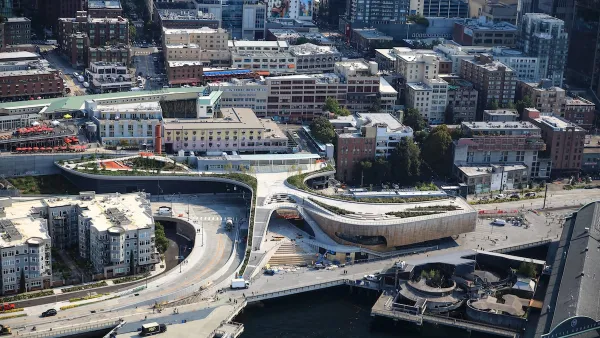
Seattle’s New Overlook Walk Offers Ample Park Space Near Pike Place Market
The elevated park and event space replaces part of the demolished Alaskan Way Viaduct, connecting the city’s famous Pike Place Market to the waterfront.
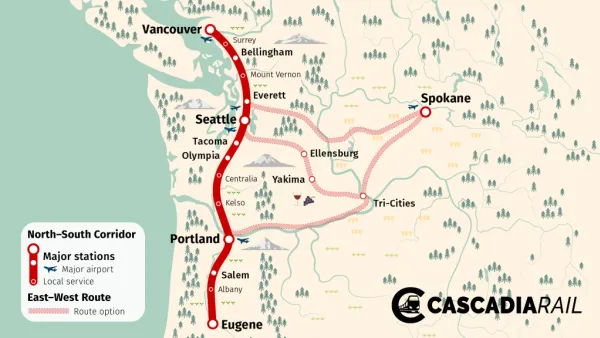
Cascadia High-Speed Rail Corridor Seeking Federal Funding
The state of Washington is hoping federal infrastructure funding can pay for $198 million of the $348 million necessary to plan the Cascadia High-Speed Rail project.
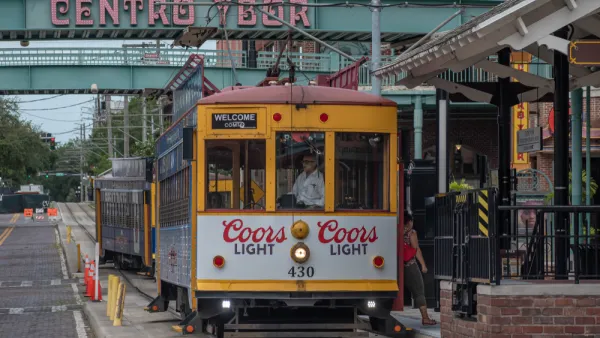
Tampa Unveils 30-Year Mobility Plan
The Tampa MOVES plan would spend $2 billion to relieve congestion, reduce traffic collisions, and improve mobility equity in the city.

Planetizen Federal Action Tracker
A weekly monitor of how Trump’s orders and actions are impacting planners and planning in America.

The state-sanctioned urbicide of Austin
People don’t kill cities. Freeways do.

US to reduce Colorado River water deliveries to Mexico
A new Colorado Treaty amendment reduces Mexico’s Colorado River water allocation by 250,000 acre feet.

5 New England states march closer to 800 megawatt wind energy project
Securing federal approval for the project may be complicated under the Trump administration, which has historically been hostile towards domestic wind power.

Baltimore to break ground on $50 million Transit Priority Project
The project will bring faster bus trips, safer streets and better bike connections to Baltimore.

Airbnb launches $250 million 'last-dollar financing' housing accelerator, makes first investment in Austin
The company will put $6.4 million towards affordable housing development in Texas’ capital.

FREE Course: Walkable City 1: Why Walkability?
After describing his path towards focusing on walkability as the essence of good planning, Jeff Speck marches through his five principal reasons for making more walkable places.
Reinventing Malls: Planning Alchemy—Turning Gray Fields Into Gold
The course focuses on the opportunities and imperatives that shape reinvention of mall sites.

Eagle County Government
Harvard University Graduate School of Design
Nashville Planning Department
The Architects Foundation
University of Cincinnati Online
The Pocatello Development Authority
The Urban Renewal Agency of the City of Pocatello
Journal of the American Planning Association