Cities have been designed for user experience (UX) for millennia, and contemporary UX designers have plenty to learn from planners, according to a recent article in Fast Company.


Writing for Fast Company, Tom Seiple reports on a lesson recently acquired on a visit to the Alfama district in Lisbon, which was originally formed in 1200 BCE:
It shares, more or less, the same characteristics and elements of any modern city. Despite the centuries of time that separate them and clear differences in scale, Chicago and Alfama share many of the same core elements. They both have roads, businesses, homes, places of worship, public art, neighborhood squares, parks, schools, and much more. They may look exceptionally different in terms of their form and scale, but at the end of the day, Alfama’s churches, markets, and alleyways perform the exact same functions as the same spaces in Lagos, London, Beijing, Mumbai, Los Angeles, or any other major modern metropolis.
The tradition goes back even further into history, writes Seiple, to the oldest known city, Çatalhöyük. “In the nearly 10,000 years—as far as we are aware—that mankind has been building cities, the same common elements have always existed, albeit in various forms and scales,” writes Seiple.
Nothing shared from the article so far will come as a surprise to Planetizen readers, but Seiple soon provides a twist: the lessons from cities, ancient to contemporary, can be applied to software design. The article draws on examples of urban form (referencing Frank Lloyd Wright) and the image of the city (referencing Kevin Lynch).
In addition to the article linked below, Seiple promises another article soon about how lessons of good and bad urban design can be applied to software UX.
FULL STORY: Ancient cities have lessons UX/UI designers can use right now

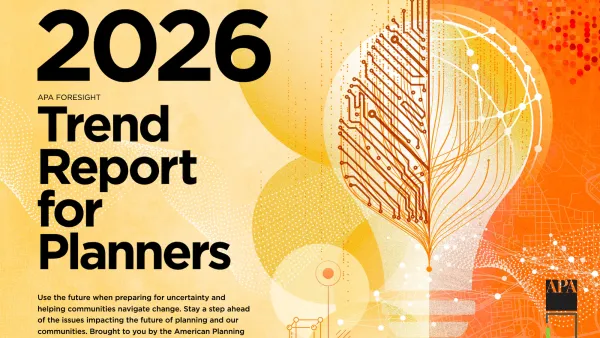
Everything you Need to Know from the APA’s 2026 Trend Report for Planners
Plus, a conversation with the APA’s Chief Foresight and Knowledge Officer, Petra Hurtado.
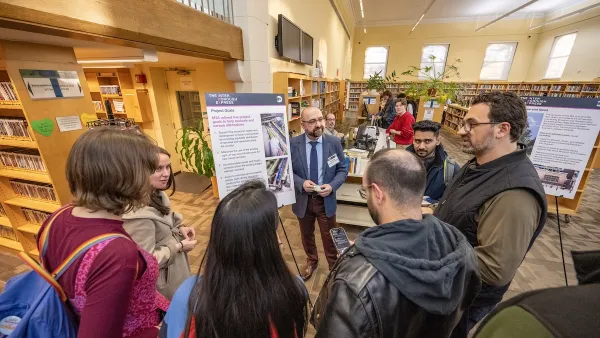
Will Urban Planners Lose Their Jobs to AI?
Let’s see what the data says.
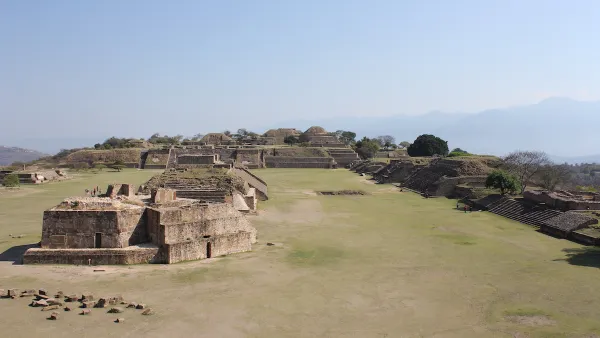
First Cities: Planning Lessons for the 21st Century
A new book about urban planning in the deep human past explores principles, strategies, and lessons relevant for today.

The state-sanctioned urbicide of Austin
People don’t kill cities. Freeways do.

US to reduce Colorado River water deliveries to Mexico
A new Colorado Treaty amendment reduces Mexico’s Colorado River water allocation by 250,000 acre feet.

New Jersey’s second-largest city bans standalone data centers
Jersey City will continue to allow co-location facilities, such as those meant for research institutions that store their own data.

Amtrak not solely to blame for New Jersey commuter rail's unreliability, report finds
A new study from the Garden State Initiative found that NJ Transit’s budget grew 20% across a 4 year period, but reliability declined significantly over the same period.

EPA erases limits on planet-warming pollution from power plants
Under Monday’s plan, power plants would still have some limits on how much mercury, arsenic and other contaminants they can emit.

Phoenix announces new on-demand transit service, more frequent RAPID buses
Both new services will launch in October, and are part of Phoenix's Project Effective Access Solutions for Easing Congestion.

FREE Course: Walkable City 1: Why Walkability?
After describing his path towards focusing on walkability as the essence of good planning, Jeff Speck marches through his five principal reasons for making more walkable places.
Reinventing Malls: Planning Alchemy—Turning Gray Fields Into Gold
The course focuses on the opportunities and imperatives that shape reinvention of mall sites.

Eagle County Government
Harvard University Graduate School of Design
Nashville Planning Department
The Architects Foundation
University of Cincinnati Online
The Pocatello Development Authority
The Urban Renewal Agency of the City of Pocatello
Journal of the American Planning Association