Residents of a historic Black South Carolina town are being displaced by a road widening project.


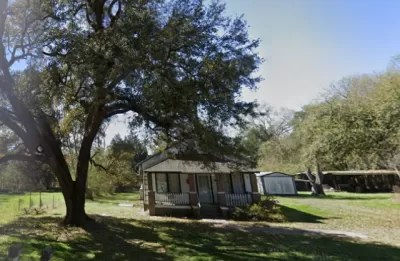
Residents of Sandridge, South Carolina are being displaced by a road-building project, reports Sarah Sax in The Guardian. The project highlights the continuing impact of infrastructure projects on primarily Black and brown communities.
As Sax explains, “In January this year, the South Carolina chapter of the NAACP filed a Title VI complaint alleging that the state and the county violated the civil rights of Black residents in the design, planning and implementation of the Conway Perimeter Road.” The road project “would span four lanes and connect two existing highways and allegedly cut travel time for those headed to the nearby beach – and it would also mean destroying at least six homes in Sandridge.” The project would also cut through the community, making it harder for residents to pass from one side to the other.
Despite federal commitments to ‘reconnecting communities,’ projects like the Conway Perimeter Road are still being planned and implemented around the country, harming communities like Sandridge, where “Residents are mostly Black and elderly, and many are related to each other. It has historic value: one of the first Black-owned grocery stores in the state was opened in Sandridge.” One resident who was offered relocation compensation said the money for her three-bedroom home was just enough to cover a one-bedroom apartment nearby.
Read the full story: Why is South Carolina still building roads on top of Black communities?

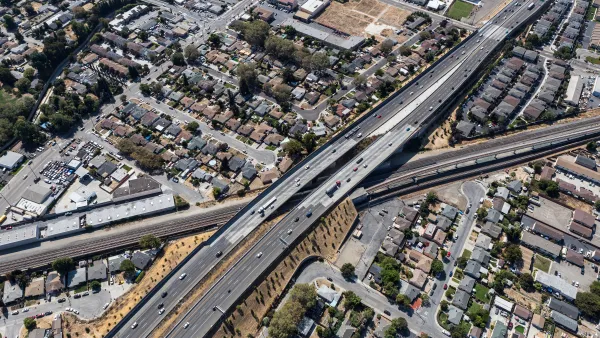
The Limitations of ‘Reconnecting Communities’
The Biden administration has pledged to correct the damage imposed on communities by highways and infrastructure, but many projects are only committing to minor improvements, not transformative changes.
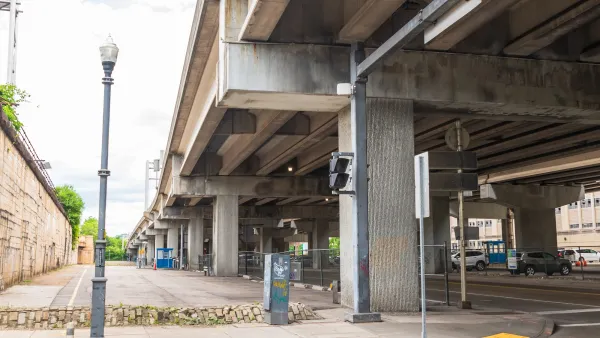
Report: Land Under US Highways Could Earn Over $5 Billion in Property Taxes Yearly
An analysis of 142 U.S. cities reveals the economic potential of land used for highways.
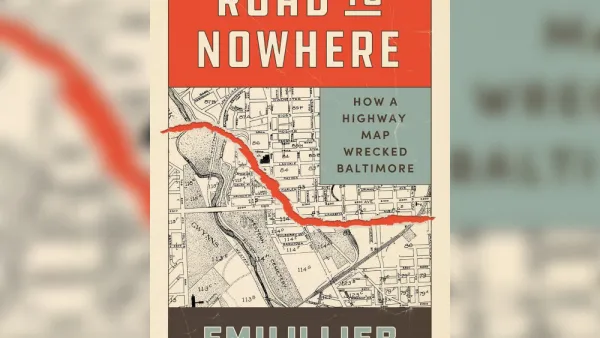
Tracing the Destruction of the Highway Baltimore Never Built
In “Road to Nowhere: How a Highway Map Wrecked Baltimore,” historian Emily Lieb demonstrates how the mere threat of a highway project, combined with systemic redlining and predatory real estate practices, can dismantle a community just as effectively as physical construction can.

Planetizen Federal Action Tracker
A weekly monitor of how Trump’s orders and actions are impacting planners and planning in America.

The state-sanctioned urbicide of Austin
People don’t kill cities. Freeways do.

US to reduce Colorado River water deliveries to Mexico
A new Colorado Treaty amendment reduces Mexico’s Colorado River water allocation by 250,000 acre feet.

Nation's most wind-powered state turns to coal as data centers increase energy demand
For the first time in decades, Iowa has increased its generation of coal power.

NYC cools commuters with city's first rain garden above a bus stop
New York City officials say the plants in the rain garden can absorb 16 gallons of rainwater during heavy storms.

Brightline West’s future may rely on $6 billion federal loan
The company has until Nov. 2 to make a $400 million equity investment into its proposed high-speed rail line.

FREE Course: Walkable City 1: Why Walkability?
After describing his path towards focusing on walkability as the essence of good planning, Jeff Speck marches through his five principal reasons for making more walkable places.
Reinventing Malls: Planning Alchemy—Turning Gray Fields Into Gold
The course focuses on the opportunities and imperatives that shape reinvention of mall sites.

Eagle County Government
Harvard University Graduate School of Design
Nashville Planning Department
The Architects Foundation
University of Cincinnati Online
The Pocatello Development Authority
The Urban Renewal Agency of the City of Pocatello
Journal of the American Planning Association