The MTA is putting its effort to improve the system’s century-old stations to make them more universally accessible in high gear, adding elevators, boarding upgrades, and mechanical improvements.


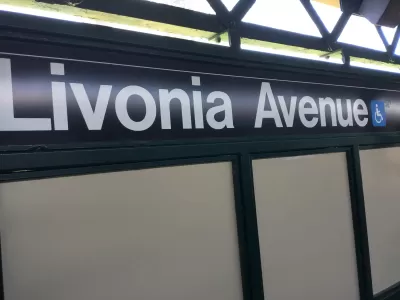
A station renovated as part of the New York Metropolitan Transportation Authority’s effort to improve accessibility at its subway stations won a ‘Construction Project of the Year,’ modeling how transit agencies can improve accessibility at older stations.
According to a press release from TAP Electric, a partner on the project team, “The rehabilitation included the installation of two elevators with a street-level elevator machine room; a passageway above the tracks to connect the platforms, new platform windscreens and canopies; new ADA compliant stairs to station platforms and passageways; and station agent booth upgrades. ADA improvements were made to the station’s architectural, structural, and mechanical components, and the control house and platforms were reconfigured to assist in ADA boarding.”
The Livonia Avenue station was built in 1905, and today the L train has a ridership of over 30 million annual riders. “Prior to this vital upgrade, disabled and limited mobility passengers, seniors, and families with young children in strollers could travel to the Wilson Avenue Station in Bushwick – some 2.4 miles away – which was previously the closest ADA-accessible station on the L Line.”
FULL STORY: Brooklyn’s Livonia Avenue Station ADA Modernization Wins Construction Project of the Year

New York Must Make Almost All Subway Stations Accessible by 2055, Judge Rules
Another recent ruling is forcing the agency to accelerate its efforts to make all New York subway stations accessible to people with disabilities and mobility issues.
Report: NYC Transit Accessibility Depends on Congestion Pricing Revenue
The ability of the MTA to complete its accessibility upgrades relies on funding from the upcoming congestion pricing program.
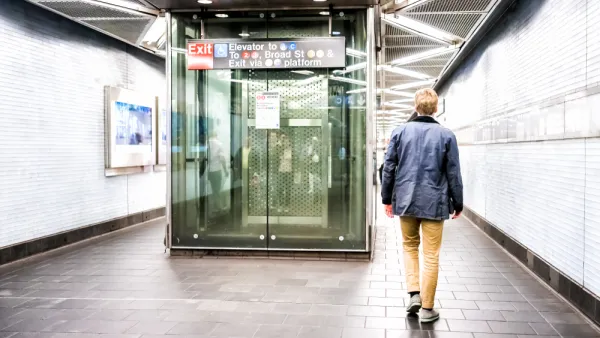
New York MTA Releases Plan for Improved Accessibility
The MTA announced plans for new or improved elevators at almost two dozen stations as part of its pledge to make more of its stations fully accessible.

Planetizen Federal Action Tracker
A weekly monitor of how Trump’s orders and actions are impacting planners and planning in America.

The state-sanctioned urbicide of Austin
People don’t kill cities. Freeways do.

US to reduce Colorado River water deliveries to Mexico
A new Colorado Treaty amendment reduces Mexico’s Colorado River water allocation by 250,000 acre feet.

5 New England states march closer to 800 megawatt wind energy project
Securing federal approval for the project may be complicated under the Trump administration, which has historically been hostile towards domestic wind power.

Baltimore to break ground on $50 million Transit Priority Project
The project will bring faster bus trips, safer streets and better bike connections to Baltimore.

Airbnb launches $250 million 'last-dollar financing' housing accelerator, makes first investment in Austin
The company will put $6.4 million towards affordable housing development in Texas’ capital.

FREE Course: Walkable City 1: Why Walkability?
After describing his path towards focusing on walkability as the essence of good planning, Jeff Speck marches through his five principal reasons for making more walkable places.
Reinventing Malls: Planning Alchemy—Turning Gray Fields Into Gold
The course focuses on the opportunities and imperatives that shape reinvention of mall sites.


Eagle County Government
Harvard University Graduate School of Design
Nashville Planning Department
The Architects Foundation
University of Cincinnati Online
The Pocatello Development Authority
The Urban Renewal Agency of the City of Pocatello
Journal of the American Planning Association