A project that would give pedestrians their own dedicated path on the crowded bridge has been pushed back to at least the summer of 2024.


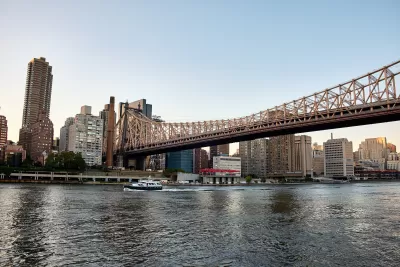
Pedestrians and cyclists who use New York’s busy Queensboro Bridge will have to wait at least another year to have their own dedicated lanes on the bridge, reports Julianne Cuba in Streetsblog NYC. Cyclists and pedestrians are currently forced to share the narrow north outer roadway, which has become increasingly crowded as the popularity of biking grows, creating dangerous conditions and leading to collisions.
The delay is the fourth for the project, which was originally scheduled for completion in 2022. “Ex-Mayor Bill de Blasio in 2021 promised to turn the more than century-old span’s south outer roadway into a full-time pedestrian path by the end of 2022. But that deadline came and went, and now his successor, Mayor Adams, continues to push back the schedule.”
DOT officials vaguely blamed “supply chain” and materials problems. Meanwhile, Council member Julie Won “questioned why the DOT can’t just cede the south outer roadway to pedestrians during ongoing reconstruction of the upper car lanes, but [DOT First Deputy Commissioner Margaret Forgione] claimed that removing another lane for service to car drivers would cause too much congestion.”
Read the full story: Not Again: Queensboro Bridge Pedestrian Path Delayed Til ‘Mid-2024’

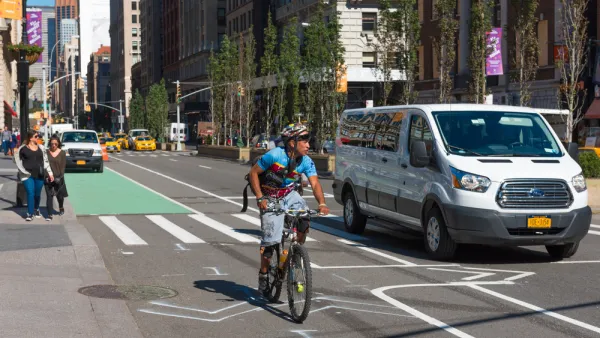
New York Cyclist Deaths Spike, Worrying Bike Advocates
The number of people killed on bikes in the city has already surpassed 2018’s total for the entire year.
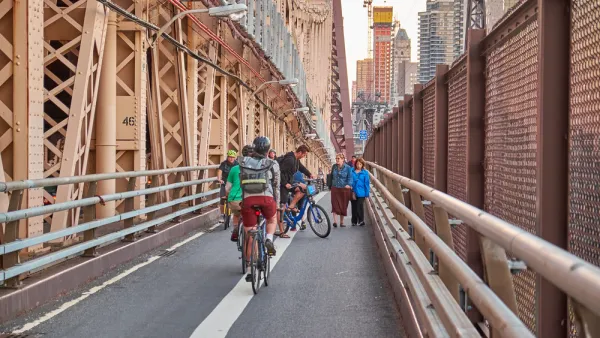
Bike Traffic Up 88 Percent On New Brooklyn Bridge Bike Lane
Bike ridership nearly doubled after New York City installed a new bike lane on the Brooklyn Bridge.
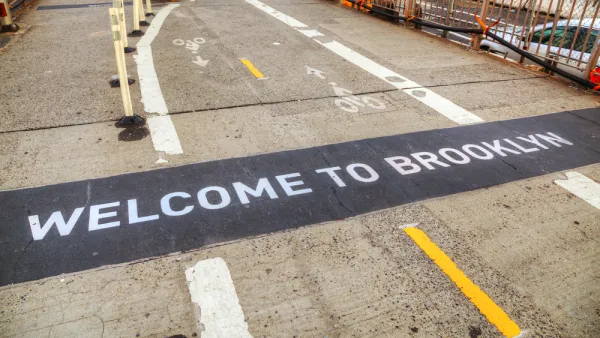
Brooklyn Bridge Bike Path Could Be Wider, Safer
Advocates want to see a safer plan for the proposed two-way path on one of the country's busiest commuter corridors.

Planetizen Federal Action Tracker
A weekly monitor of how Trump’s orders and actions are impacting planners and planning in America.

California plans to bury El Niño’s downpour
If the state plays its cards right, it may be able to store a billion acre-feet of El Niño’s water in aquifers.

Chicago breaks ground on $3 billion megadevelopment
The new neighborhood, titled Foundry Park, will one day host 3,700 residences.

California High-Speed Rail Authority CEO resigns after $600,000 scandal
Under Ian Choudri, the authority used taxpayer dollars to fund first class flights and trips to nightclubs.

Want to study the Missouri River? Soon, you may need unanimous approval from 10 states
Legislation would require 10 governors’ permission to study or build projects moving water outside the basin.

Desperate measures: Advocates weigh draining Lake Powell to fill Colorado River
Draining the reservoir could reduce evaporation losses by a couple hundred thousand acre-feet.

FREE Course: Walkable City 1: Why Walkability?
After describing his path towards focusing on walkability as the essence of good planning, Jeff Speck marches through his five principal reasons for making more walkable places.
Reinventing Malls: Planning Alchemy—Turning Gray Fields Into Gold
The course focuses on the opportunities and imperatives that shape reinvention of mall sites.

City of Rosemead
Rutgers University, Edward J. Bloustein School of Planning and Public Policy
One Hundred Miles
Hunter College, City University of New York (CUNY)
The Architects Foundation
University of Cincinnati Online
City of Cambridge
Montrose County
The Pocatello Development Authority