The city has been working to raise $200 million to create a 5.5 acre park spanning a portion of Interstate 670.


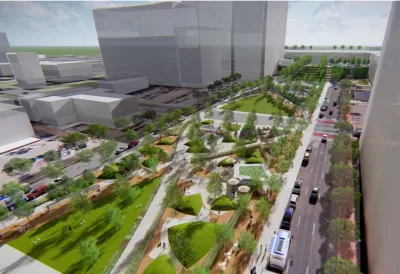
A proposed freeway cap park in Kansas City got a funding boost last week when the city council approved a request to the state for $15 million in state tax credits for the South Loop park project. The tax credits would use state funding to match $30 million already committed to the park, according to an article by Celisa Calacal for KCUR.
“Kansas City officials, along with Port KC and the Downtown Council, are working together on a 5.5 acre urban park that would sit on top of a portion of Interstate 670 downtown — commonly referred to as the South Loop.” The project would create new park space and reconnect communities previously cut off by the freeway.
“A recent $10 million contribution from H&R Block, plus federal grants and other investments from the private sector, total $47 million toward the South Loop project so far.” However, the new funding would still only bring the project’s budget to less than half of the total projected cost of $200 million.
City councilmembers support the project, but some express concern that it prioritizes amenities aimed at tourists before benefiting local communities. Pointing to other project that try to mitigate the impacts of rampant freeway construction, 4th District Councilman Eric Bunch said, “We need to keep the momentum going on those other ones that are truly affecting communities of color communities, who've been, again, dealing with these things for decades.”
Read the full story: Kansas City is asking Missouri for millions in tax credits to build a park over I-670

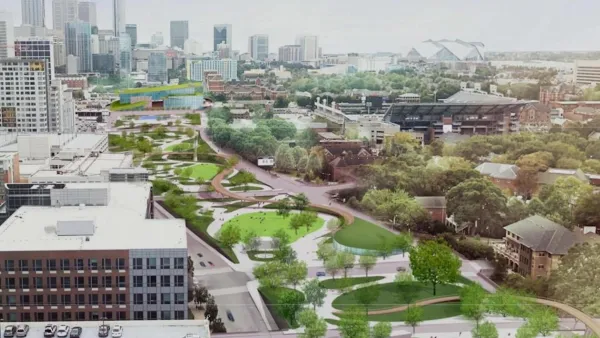
Atlanta Receives $3.2 Million for Freeway Cap Plan
The federal funding will help move forward planning for an ambitious proposal to cap a downtown Atlanta freeway with a 25-acre park.
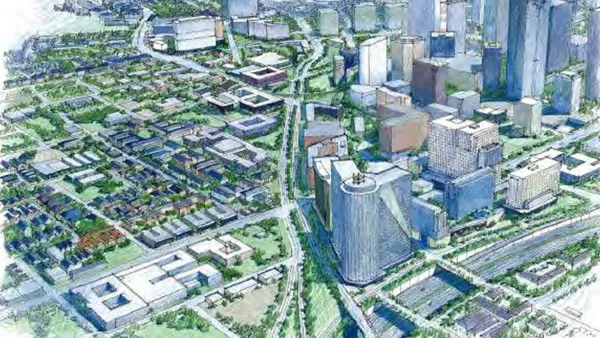
The Freeway Removal Cause Gains Momentum—But Don't Forget Gentrification and Displacement
The case for freeway in urban areas isn't as unequivocal as it might seem. Plans to undo the damage of the legacies of past freeway planning need to ensure an inclusive future.
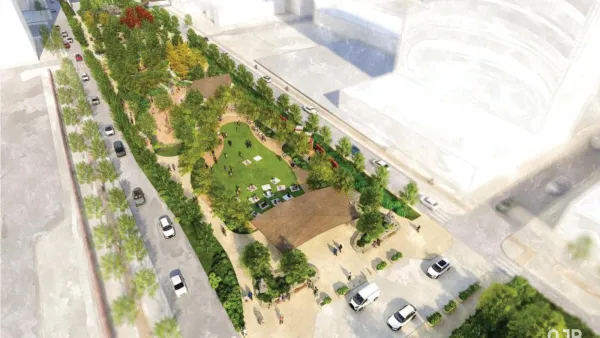
Philadelphia lawmakers fight to save 'Chinatown Stitch' from Trump cuts
The freeway cap project, approved and funded under the Biden administration, is now in jeopardy after the federal government rescinded all but $8 million in funding.

Planetizen Federal Action Tracker
A weekly monitor of how Trump’s orders and actions are impacting planners and planning in America.

California plans to bury El Niño’s downpour
If the state plays its cards right, it may be able to store a billion acre-feet of El Niño’s water in aquifers.

Desperate measures: Advocates weigh draining Lake Powell to fill Colorado River
Draining the reservoir could reduce evaporation losses by a couple hundred thousand acre-feet.

40 years after approval, Chicago breaks ground on new park
The park honors Jean Baptiste Point du Sable, the city’s first permanent non-native settler.

‘Hoodwinked:’ New Mexico bill aimed at microgrids paves way for data center development
In an interview with High Country News, Padilla said the legislation “ignited” New Mexico's economy.

California’s ‘unrecognizable’ water plan may go down the drain
After four years of regulatory processes, water agencies say the plan to overhaul how cities and farms take water from the Sacramento-San Joaquin Delta has changed dramatically.

FREE Course: Walkable City 1: Why Walkability?
After describing his path towards focusing on walkability as the essence of good planning, Jeff Speck marches through his five principal reasons for making more walkable places.
Reinventing Malls: Planning Alchemy—Turning Gray Fields Into Gold
The course focuses on the opportunities and imperatives that shape reinvention of mall sites.

City of Rosemead
Rutgers University, Edward J. Bloustein School of Planning and Public Policy
One Hundred Miles
Hunter College, City University of New York (CUNY)
The Architects Foundation
University of Cincinnati Online
City of Cambridge
Montrose County
The Pocatello Development Authority