Los Angeles County's popular and award-winning Parks After Dark program returns for the spring, providing opportunities for residents to come together in safe and welcoming spaces where they can access quality programming and a variety of services.



The Los Angeles County Department of Parks and Recreation (DPR) is once again offering evening events twice a week through mid-April as part of the Parks After Dark (PAD) program. PAD brings communities together to enjoy various activities at 34 parks across the county. The spring edition of the program runs from March 23 through April 15, with nighttime events happening every Thursday and Saturday from 6:00 to 9:00 p.m.
PAD started in 2010 at three County parks and expanded to thirty-three parks in 2019. For an eight-week period each summer, PAD extends hours of park operation from 6:00 to 9:00 pm at participating parks. The program offers family entertainment (like movies, concerts, arts and crafts, and free meals), sports and recreational activities (like swimming and dance), cultural and educational programming (like healthy cooking and financial literacy classes), and employment and volunteer opportunities for youth and adults. PAD parks also host resource fairs through which public agencies and community-based organizations provide health, social, economic, and legal resources to participants. Throughout all events, deputies from the Sheriff’s Department patrol and engage in activities alongside participants, which help to ensure safety and foster positive interactions between law enforcement and community members.
The program outcomes and benefits of PAD are well-documented. In an evaluation brief published in July 2018, researchers from the UCLA Center for Health Policy Research reported that:
- PAD programming like guided walking clubs, group exercise, team sports, and other physical activities helped to reduce costs for both the County of Los Angeles and the participants by reducing expenditures for treating chronic diseases. The report estimated savings of $1.1 million for 2017.
- PAD’s safety efforts prevented 41 violent crimes and almost 480 nonviolent crimes in neighborhoods near County parks between 2010 and 2017. The reduction in crime saved the County about $2.2 million in criminal justice costs in 2017 alone.
- New initiatives added to the program in 2017 provided participants with easier ways to access mental health services, as well as valuable gang intervention and other activities for at-risk youth and young adults. In 2017, PAD employed about 50 youth and young adults, including teens for whom the experience was their first job, and over 300 youth volunteered through the program.
- As in previous years, concerts and movie nights remained PAD’s most popular offerings.
To serve children and families during school breaks, DPR launched the first ever winter edition of PAD in December 2018 and a spring edition in March 2019 with free programs and events for all to enjoy. In addition to sports and movies, the winter PAD offered holiday-themed programming and snow days. The Spring PAD included fun activities like community gardening, color run/walks, paint nights, and silent dancing.
Read the full story: L.A. County Parks after Dark program returns for spring

Los Angeles County Parks Department Releases Five-Year Strategic Plan
The L.A. County Department of Parks and Recreation recently completed a strategic plan which details goals, strategies, and actions that reflect the agency's commitment to advancing equity.

A Historic Investment in LA County’s Parks and Open Spaces
Los Angeles County has launched its largest-ever competitive grant program, investing $58 million to expand park access, enhance climate resilience, and support community-driven projects in the areas that need them most.
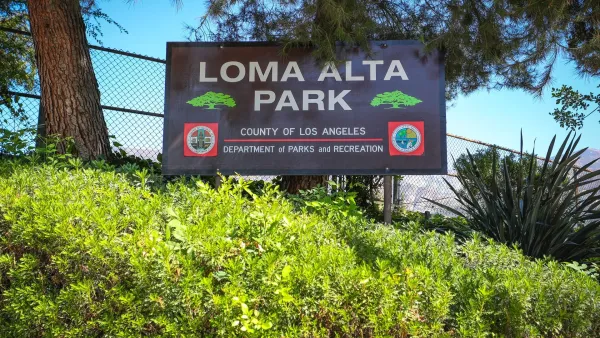
A Park Reborn: Resilience and Renewal in Fire-Stricken Altadena
Rebuilt in just two months after the devastating Eaton Fire, Loma Alta Park now stands as a symbol of community resilience and renewal, even as some residents hope recovery efforts will continue to support housing stability and long-term equity.

Planetizen Federal Action Tracker
A weekly monitor of how Trump’s orders and actions are impacting planners and planning in America.

The state-sanctioned urbicide of Austin
People don’t kill cities. Freeways do.

US to reduce Colorado River water deliveries to Mexico
A new Colorado Treaty amendment reduces Mexico’s Colorado River water allocation by 250,000 acre feet.

Nation's most wind-powered state turns to coal as data centers increase energy demand
For the first time in decades, Iowa has increased its generation of coal power.

NYC cools commuters with city's first rain garden above a bus stop
New York City officials say the plants in the rain garden can absorb 16 gallons of rainwater during heavy storms.

Brightline West’s future may rely on $6 billion federal loan
The company has until Nov. 2 to make a $400 million equity investment into its proposed high-speed rail line.

FREE Course: Walkable City 1: Why Walkability?
After describing his path towards focusing on walkability as the essence of good planning, Jeff Speck marches through his five principal reasons for making more walkable places.
Reinventing Malls: Planning Alchemy—Turning Gray Fields Into Gold
The course focuses on the opportunities and imperatives that shape reinvention of mall sites.

Greater Baltimore Committee
Eagle County Government
Harvard University Graduate School of Design
The Architects Foundation
University of Cincinnati Online
The Pocatello Development Authority
The Urban Renewal Agency of the City of Pocatello
Journal of the American Planning Association