Trains will arrive at shorter intervals during rush hours on the line’s busiest days.


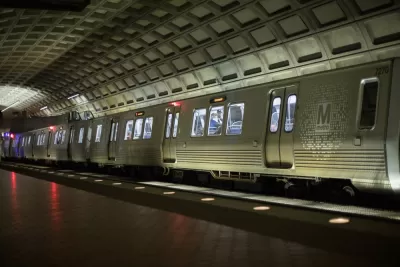
Commuters in the Washington, D.C. area will see shorter headways on the well-used Red Line train. As Abigail Constantino reports for WTOP, “Trains will operate every eight minutes all day Tuesdays, Wednesdays and Thursdays, which have become Metro’s highest ridership days, the transit agency said in a news release.” Red Line trains will continue to operate every eight minutes at rush hour and every 10 minutes the rest of the day on Mondays and Fridays.
Like other transit agencies, Metro has been dealing with an operator shortage, problems with its 7000-series trains, which put many of them out of service, as well as a dispute over operator training. Last January, the Metrorail Safety Commission “discovered that Metro was ‘deliberately ignoring’ its own training standards, allowing operators to skip a required eight hours of initial hands-on training overseen by instructors on out-of-service trains.” Metro was later able to make an agreement with the commission that prevented it from having to reduce service by providing operators with the required additional training.
As a TransitCenter blog post recently outlined, the District’s transit recovery after the disruptions brought on by the Covid-19 pandemic has been halting, with ridership remaining below pre-pandemic levels and service reaching fewer jobs in the region than before.
FULL STORY: Red Line service increasing on Metro’s busiest days of the week

DC-Area Jurisdictions Pledge Bridge Funding for Transit
District officials could commit up to $200 million as short-term support for the struggling regional transit system.
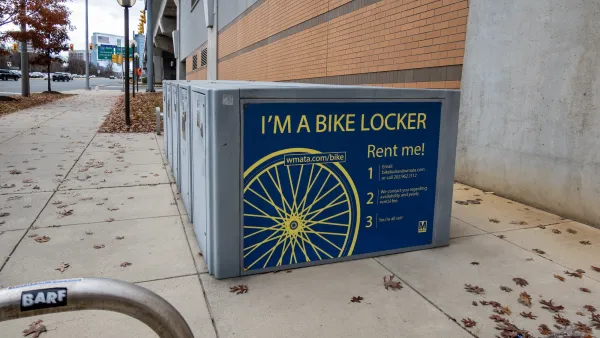
DC is Installing Hundreds of New Bike Lockers at Metro Stops
The WMATA’s push to better integrate bikes into their transit system includes hundreds of new secure bike lockers, repair stations, and train cars with dedicated space for bikes.
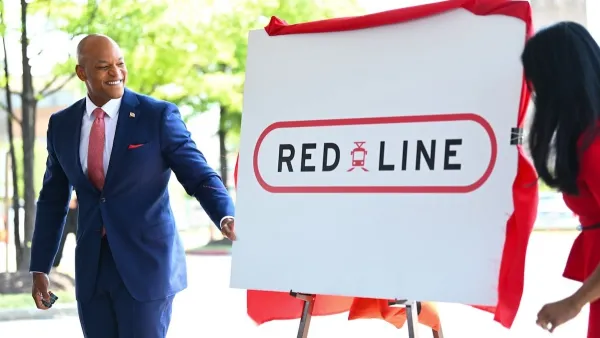
Feds Pause Baltimore Red Line Permits
The MTA says it is committed to continuing work on the light rail project, but the pause signals a potential shift in federal funding for the east-west line.

The state-sanctioned urbicide of Austin
People don’t kill cities. Freeways do.

US to reduce Colorado River water deliveries to Mexico
A new Colorado Treaty amendment reduces Mexico’s Colorado River water allocation by 250,000 acre feet.

New Jersey’s second-largest city bans standalone data centers
Jersey City will continue to allow co-location facilities, such as those meant for research institutions that store their own data.

Amtrak not solely to blame for New Jersey commuter rail's unreliability, report finds
A new study from the Garden State Initiative found that NJ Transit’s budget grew 20% across a 4 year period, but reliability declined significantly over the same period.

EPA erases limits on planet-warming pollution from power plants
Under Monday’s plan, power plants would still have some limits on how much mercury, arsenic and other contaminants they can emit.

Phoenix announces new on-demand transit service, more frequent RAPID buses
Both new services will launch in October, and are part of Phoenix's Project Effective Access Solutions for Easing Congestion.

FREE Course: Walkable City 1: Why Walkability?
After describing his path towards focusing on walkability as the essence of good planning, Jeff Speck marches through his five principal reasons for making more walkable places.
Reinventing Malls: Planning Alchemy—Turning Gray Fields Into Gold
The course focuses on the opportunities and imperatives that shape reinvention of mall sites.

Eagle County Government
Harvard University Graduate School of Design
Nashville Planning Department
The Architects Foundation
University of Cincinnati Online
The Pocatello Development Authority
The Urban Renewal Agency of the City of Pocatello
Journal of the American Planning Association