District officials could commit up to $200 million as short-term support for the struggling regional transit system.


Washington, D.C. officials committed “up to $200 million” to the region’s ailing transit system to help close a budget gap that was projected to rise to $750 million, reports Sarah Y. Kim in DCist. Additionally, “Maryland and Virginia have proposed budget commitments of $150 million and $130 million respectively,” bringing the total to $480 million—much closer to the deficit that is now projected at only $500 million.
“D.C. leaders stressed that the additional funding is only a short-term solution and that WMATA and the jurisdictions would need to get back to the table this spring to work on long-term solutions. They also said WMATA’s funding formula is ‘seriously flawed’ and that they would need to collaborate on a new formula for the 2026 fiscal year.” Unlike other agencies, the WMATA doesn’t have a dedicated source of funding, relying on a patchwork of local and federal funding and fare revenue.
FULL STORY: D.C. Proposes $200 Million To Prevent Metro Service Cuts

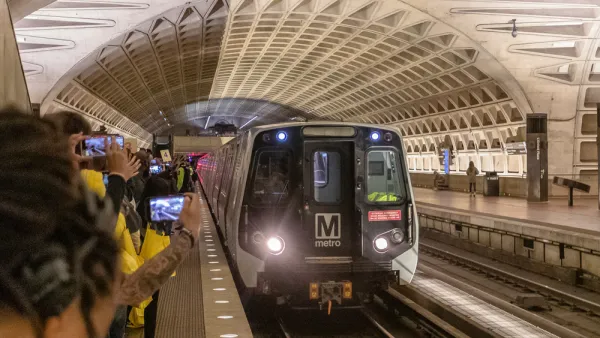
Congressman Proposes Bill to Rename DC Metro “Trump Train”
The Make Autorail Great Again Act would withhold federal funding to the system until the Washington Metropolitan Area Transit Authority (WMATA), rebrands as the Washington Metropolitan Authority for Greater Access (WMAGA).

Impending ‘Fiscal Cliff’ Could Doom DC Transit’s Dramatic Improvement Efforts
Without additional funding, the region’s transit agency could be forced to reverse key changes that have improved service in the past year.
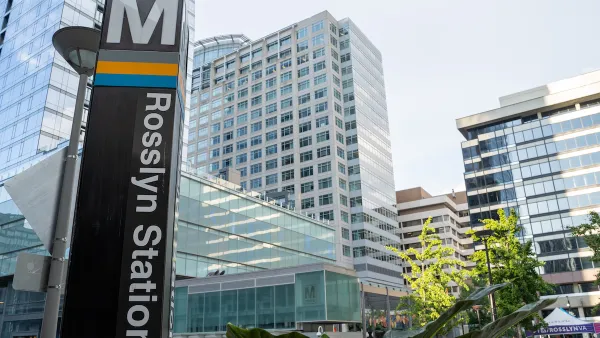
Opinion: More TOD in the DC Area Could Improve Both Transit and Housing
Converting underutilized parking lots to housing could make transit more accessible and housing more affordable.

Planetizen Federal Action Tracker
A weekly monitor of how Trump’s orders and actions are impacting planners and planning in America.

The state-sanctioned urbicide of Austin
People don’t kill cities. Freeways do.

US to reduce Colorado River water deliveries to Mexico
A new Colorado Treaty amendment reduces Mexico’s Colorado River water allocation by 250,000 acre feet.

5 New England states march closer to 800 megawatt wind energy project
Securing federal approval for the project may be complicated under the Trump administration, which has historically been hostile towards domestic wind power.

Baltimore to break ground on $50 million Transit Priority Project
The project will bring faster bus trips, safer streets and better bike connections to Baltimore.

Airbnb launches $250 million 'last-dollar financing' housing accelerator, makes first investment in Austin
The company will put $6.4 million towards affordable housing development in Texas’ capital.

FREE Course: Walkable City 1: Why Walkability?
After describing his path towards focusing on walkability as the essence of good planning, Jeff Speck marches through his five principal reasons for making more walkable places.
Reinventing Malls: Planning Alchemy—Turning Gray Fields Into Gold
The course focuses on the opportunities and imperatives that shape reinvention of mall sites.

Eagle County Government
Harvard University Graduate School of Design
Nashville Planning Department
The Architects Foundation
University of Cincinnati Online
The Pocatello Development Authority
The Urban Renewal Agency of the City of Pocatello
Journal of the American Planning Association