The Boston Globe’s editorial board calls on the city to take on citywide zoning reform to boost housing construction and revitalize areas that have faced historical underinvestment.



The Boston Globe Editorial Board writes in favor of reforming Boston’s complex zoning code to make it easier for homeowners to convert part of their homes to rental units as one way to increase the housing supply. In 2022, the city only permitted 31 accessory dwelling units (ADUs). Boston chief of planning James Arthur Jamison says he would like to see that number grow to 200 or 300 per year.
As the editorial explains, “There are two paths to changing the city’s zoning codes — both for those accessory units and more broadly for many of the city’s “squares and corridors” — places like Glover’s Corner or Fields Corner in Dorchester or sections of East Boston — where the Wu administration wants to encourage development of housing along commercial corridors.”
Rather than amend the code neighborhood by neighborhood, one proposed approach would make citywide changes, such as permitting ADUs without a Zoning Board of Approvals review. This approach would admittedly face pushback from neighborhood groups concerned about losing control of local decisionmaking.
“There’s nothing sexy about zoning codes,” the board admits, but expresses optimism about the Wu administration’s efforts to reform it. “But it is where change and growth begin to happen — and it’s where this administration’s focus is spot-on.”
Read the full story: An easy way for Boston to add more housing units

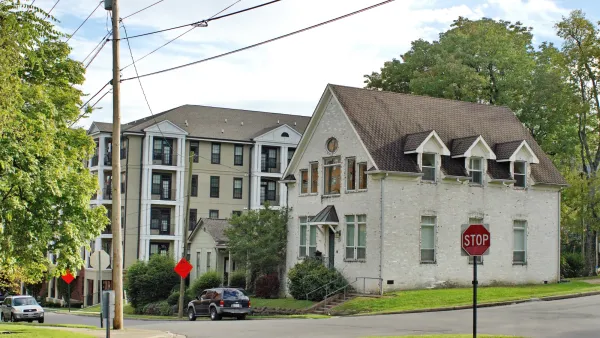
Nashville Allows More Detached ADUs, Courtyard Apartments
The city has been considering a series of zoning reform bills designed to diversify housing options.

Boston Upzoning Proposal Moves Forward
The Boston Planning Department approved a proposal that would raise allowable building heights in downtown and streamline permitting for small businesses.

Texas Legislature’s Surprising Pro-Housing Swing
Smaller homes on smaller lots, office to apartment conversions, and 40% less say for NIMBYs, vote state lawmakers.

Planetizen Federal Action Tracker
A weekly monitor of how Trump’s orders and actions are impacting planners and planning in America.

The state-sanctioned urbicide of Austin
People don’t kill cities. Freeways do.

Colorado’s Largest Data Center Could Rise Next to Homes — Without a Public Hearing
The proposed campus would consume 11 times the power of Denver International Airport; as it has across the country, opposition mounts.

Judges permit Denver to divert 77,000 acre feet from the Colorado River for reservoir expansion
Overuse and climate change have caused the Colorado River’s water levels to plummet.

Amtrak, CN end decades-long dispute with eight-year agreement
The new operating agreement establishes an updated framework for the companies to work together, including processes to resolve disputes.

Raised interest rates may kill financially vulnerable construction projects
The chief economist at ConstructConnect warns that if construction project owners are negatively impacted by the raised rates, it could result in delayed payments to contractors.

FREE Course: Walkable City 1: Why Walkability?
After describing his path towards focusing on walkability as the essence of good planning, Jeff Speck marches through his five principal reasons for making more walkable places.
Reinventing Malls: Planning Alchemy—Turning Gray Fields Into Gold
The course focuses on the opportunities and imperatives that shape reinvention of mall sites.

Greater Baltimore Committee
Eagle County Government
Harvard University Graduate School of Design
The Architects Foundation
University of Cincinnati Online
The Pocatello Development Authority
The Urban Renewal Agency of the City of Pocatello
Journal of the American Planning Association