Metro plans to invest half a million dollars in the city’s bike share system to improve connectivity to buses and trains.


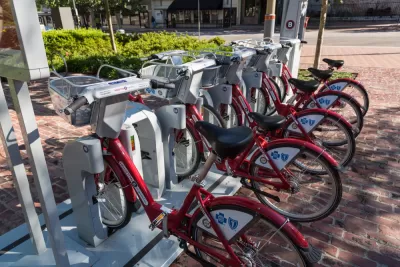
According to the Houston Chronicle’s Dug Begley, the region’s Metropolitan Transit Authority could take over Houston’s bike share system. The change could boost efforts to better integrate bike share into the city’s public transit system and provide efficient options for multimodal transportation in more neighborhoods. “The proposal would give the nonprofit and Metro six to nine months to work together on the system and then have Metro officials develop a plan for continuing the bike sharing initiative.”
The system was launched in 2012 and has grown to almost 1,000 bikes and e-bikes and 153 stations. More recently, its future has been under question, with half of stations closed in November to cut costs during the winter. “The hope, At-large Houston City Councilmember Sallie Alcorn said, is that Metro adds to and does not subtract from what already is available and popular with users.” Meanwhile, the agency plans to examine how it can more equitably distribute bikes and stations to neighborhoods that have been overlooked. Sprawling, auto-oriented Houston is building out its bike infrastructure, making an ambitious pledge to add thousands of miles of bike lanes and trails.
Read the full story: Metro could take over Houston's BCycle, spending $500K to help people get to bus and train stops

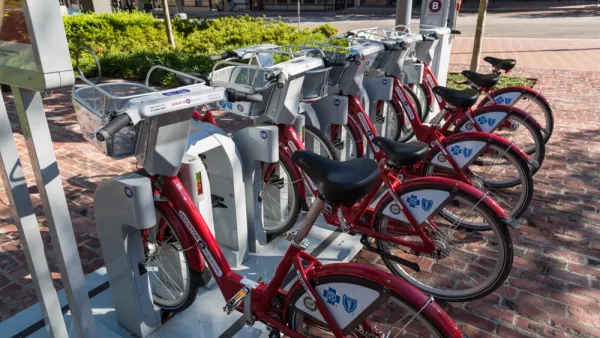
Houston Metro Abandons Bike Share in Favor of On-Demand Microtransit
The agency failed to include funding for bike share in its 2025 budget proposal.
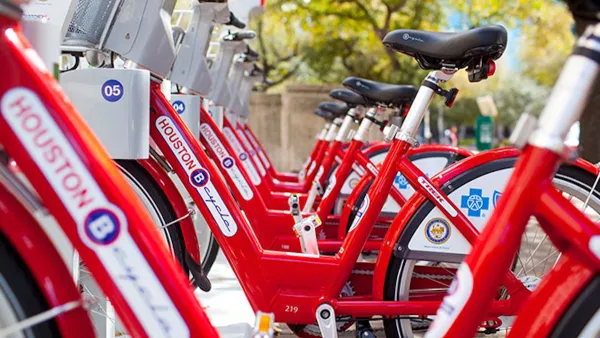
Houston Will Be Largest US City Without Bike Share
The city’s bike share system will cease operations at the end of June.
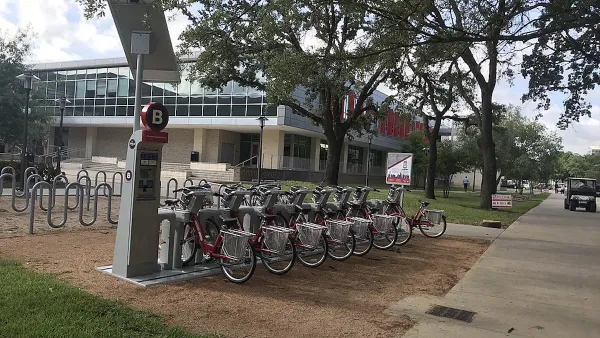
From Zero to Two: Houston’s Bike Share Saga Continues
The city is now proposing supporting BCycle as well as launching a new, complementary system.

Planetizen Federal Action Tracker
A weekly monitor of how Trump’s orders and actions are impacting planners and planning in America.

The state-sanctioned urbicide of Austin
People don’t kill cities. Freeways do.

Colorado’s Largest Data Center Could Rise Next to Homes — Without a Public Hearing
The proposed campus would consume 11 times the power of Denver International Airport; as it has across the country, opposition mounts.

Nation's most wind-powered state turns to coal as data centers increase energy demand
For the first time in decades, Iowa has increased its generation of coal power.

NYC cools commuters with city's first rain garden above a bus stop
New York City officials say the plants in the rain garden can absorb 16 gallons of rainwater during heavy storms.

Brightline West’s future may rely on $6 billion federal loan
The company has until Nov. 2 to make a $400 million equity investment into its proposed high-speed rail line.

FREE Course: Walkable City 1: Why Walkability?
After describing his path towards focusing on walkability as the essence of good planning, Jeff Speck marches through his five principal reasons for making more walkable places.
Reinventing Malls: Planning Alchemy—Turning Gray Fields Into Gold
The course focuses on the opportunities and imperatives that shape reinvention of mall sites.

Greater Baltimore Committee
Eagle County Government
Harvard University Graduate School of Design
The Architects Foundation
University of Cincinnati Online
The Pocatello Development Authority
The Urban Renewal Agency of the City of Pocatello
Journal of the American Planning Association