Advocates say incentivizing e-bikes is a quick and effective way to reduce carbon emissions and shift U.S. transportation priorities away from car-oriented planning.


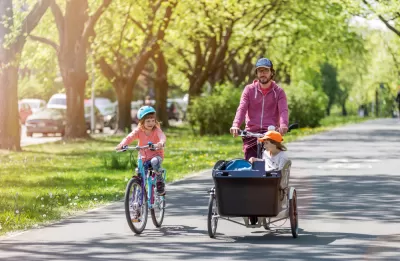
In a piece for NPR, Adam Bearne highlights the benefits of electric bikes, which can bring biking to more people and reduce carbon emissions. Some riders tout the benefits of e-cargo bikes, which allow them to efficiently transport groceries or children and replace drives with more pleasant outdoor time.
According to Bearne, e-bikes can provide a convenient alternative to cars for short trips. “The Bureau of Transportation Statistics found that in 2021, 52% of all trips were three miles or less. That's the kind of distance that most people can manage on an e-bike.” For Denver, a recent e-bike rebate program has proven hugely successful, with participants reporting that they replace an average of 21.6 miles of driving per week with bike trips.
Advocates are calling on the federal government to offer e-bike rebate programs as a tool for reducing carbon emissions. A proposed e-bike program was dropped from the Inflation Reduction Act last year after pressure from opponents. Noa Banayan of PeopleForBikes says “if we're giving people an incentive to choose cars, electric vehicles, and not necessarily an electric bicycle, then we're sort of locking our transportation system into the way that it has been, which is really car-dominated.”
FULL STORY: E-bikes could be a more affordable way to reduce emissions

Taking on the Bad E-Bike Takes
How to spot a bad-faith e-bike story.
Denver Taking New Applications for Wildly Popular E-Bike Rebate Program
Residents are taking advantage of the city’s rebate program, which offers discounts of up to $1,200 on e-bikes for low-income residents.
Study: Delivery Workers Are the Safest Cyclists on NYC Roads
A new study shows that delivery workers are more likely to stop at red lights and obey traffic rules than recreational or commuter riders.

Planetizen Federal Action Tracker
A weekly monitor of how Trump’s orders and actions are impacting planners and planning in America.

The state-sanctioned urbicide of Austin
People don’t kill cities. Freeways do.

US to reduce Colorado River water deliveries to Mexico
A new Colorado Treaty amendment reduces Mexico’s Colorado River water allocation by 250,000 acre feet.

5 New England states march closer to 800 megawatt wind energy project
Securing federal approval for the project may be complicated under the Trump administration, which has historically been hostile towards domestic wind power.

Baltimore to break ground on $50 million Transit Priority Project
The project will bring faster bus trips, safer streets and better bike connections to Baltimore.

Airbnb launches $250 million 'last-dollar financing' housing accelerator, makes first investment in Austin
The company will put $6.4 million towards affordable housing development in Texas’ capital.

FREE Course: Walkable City 1: Why Walkability?
After describing his path towards focusing on walkability as the essence of good planning, Jeff Speck marches through his five principal reasons for making more walkable places.
Reinventing Malls: Planning Alchemy—Turning Gray Fields Into Gold
The course focuses on the opportunities and imperatives that shape reinvention of mall sites.

Eagle County Government
Harvard University Graduate School of Design
Nashville Planning Department
The Architects Foundation
University of Cincinnati Online
The Pocatello Development Authority
The Urban Renewal Agency of the City of Pocatello
Journal of the American Planning Association