Advocates hope to enlist the federal government in forcing state regulators to set clean water standards for the San Francisco Bay Delta.


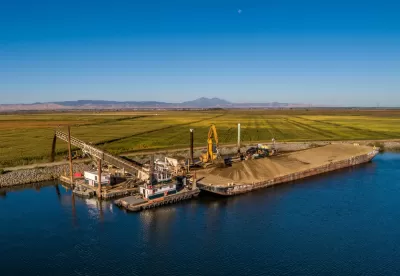
A group of environmentalists, racial justice advocates, and indigenous tribes have filed a complaint with the U.S. Environmental Protection Agency alleging that the ecological crisis on the San Francisco Bay Delta has roots in racism, according to a column by Michael Fitzgerald for Stocktonia.
Stockton’s Little Manila Rising, Restore the Delta, the Winnemem Wintu and Shingle Springs Band of Miwok Indians, and Save California Salmon filed the 288-page complaint linking the ecological crisis in the Bay Delta to white supremacy, according to the article.
“[The complaint] alleges that the state Water Resources Control Board is failing to do its job to set clean water standards for the Delta — which is true — and this mostly hurts people of color, a violation of Title VI of the Civil Rights Act of 1964 requiring all groups be given equal treatment under the law,” writes Fitzgerald.
As clear from the citation above, Fitzgerald opines that the complaint makes a persuasive argument.
The complaint asks the U.S. EPA to force the Water Resources Control Board to set clean water standards for the Bay Delta.
More details about the political context surrounding the complaint are included in the source article below.
FULL STORY: Is racism behind the Delta’s decline?

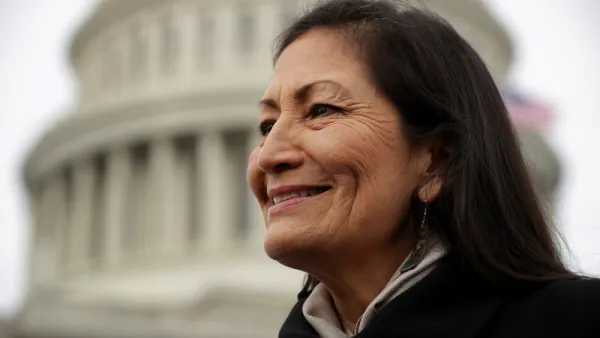
Biden Diversifies Cabinet With EPA Administrator, Interior Secretary Picks
President-elect Biden made two historic cabinet selections: Michael Regan, who heads the North Carolina Department of Environmental Quality, to run the U.S. EPA, and Rep. Deb Haaland of New Mexico, to head the Interior Department.
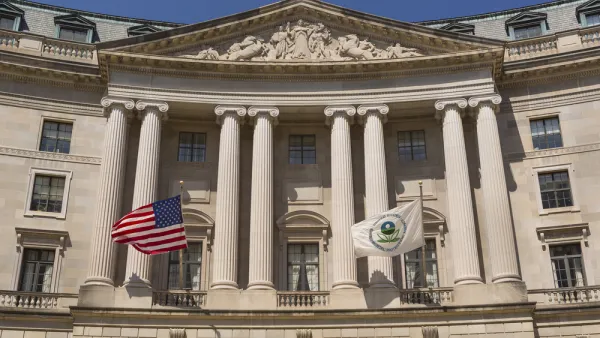
Environmental Agencies Failing at Civil Rights, Report Says
A report from the U.S. Environmental Protection Agency's Office of Inspector General calls out state environmental agencies for a lack of civil rights enforecement and makes recommendations for resolving shortcomings.

Formerly Redlined Neighborhoods Have Higher COVID-19 Prevalence, Study Says
Add COVID-19 to the list of long-term consequences of the racist and discriminatory regulatory and lending practices of the 20th century.

Planetizen Federal Action Tracker
A weekly monitor of how Trump’s orders and actions are impacting planners and planning in America.

The state-sanctioned urbicide of Austin
People don’t kill cities. Freeways do.

US to reduce Colorado River water deliveries to Mexico
A new Colorado Treaty amendment reduces Mexico’s Colorado River water allocation by 250,000 acre feet.

5 New England states march closer to 800 megawatt wind energy project
Securing federal approval for the project may be complicated under the Trump administration, which has historically been hostile towards domestic wind power.

Baltimore to break ground on $50 million Transit Priority Project
The project will bring faster bus trips, safer streets and better bike connections to Baltimore.

Airbnb launches $250 million 'last-dollar financing' housing accelerator, makes first investment in Austin
The company will put $6.4 million towards affordable housing development in Texas’ capital.

FREE Course: Walkable City 1: Why Walkability?
After describing his path towards focusing on walkability as the essence of good planning, Jeff Speck marches through his five principal reasons for making more walkable places.
Reinventing Malls: Planning Alchemy—Turning Gray Fields Into Gold
The course focuses on the opportunities and imperatives that shape reinvention of mall sites.

Eagle County Government
Harvard University Graduate School of Design
Nashville Planning Department
The Architects Foundation
University of Cincinnati Online
The Pocatello Development Authority
The Urban Renewal Agency of the City of Pocatello
Journal of the American Planning Association