The state’s department of transportation is moving forward with a proposal that will expand the freeway to eight lanes, rejecting a ‘Fix at Six’ plan that would have kept the existing six lanes.


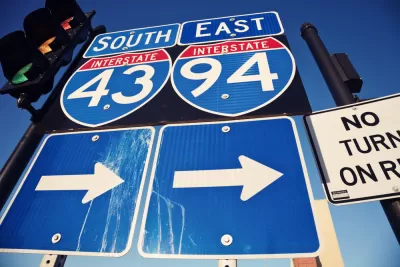
After years of debate and delays, the Wisconsin Department of Transportation (WisDOT) has selected an eight-lane expansion plan for Interstate 94 in Milwaukee, despite calls from community activists and. environmental advocates to keep the road at six lanes and focus on safety improvements and maintenance instead. Jeramey Jannene describes the project for Urban Milwaukee.
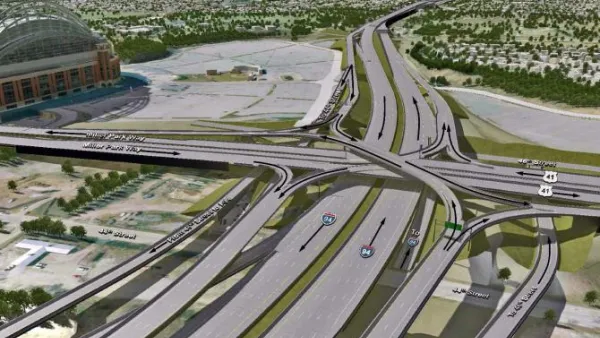
The agency’s proposed design includes one new lane in each direction and a diverging diamond to replace the Stadium Interchange. “The diverging diamond concept, first unveiled in June, would involve the north-south roadways through the interchange running underneath the elevated east-west freeway.” As Jannene explains, “The design strategy results in fewer collision points than a traditional interchange because on-off ramp access doesn’t involve crossing lanes.”
Opponents of the expansion say the project ignores community concerns. Elizabeth Ward, director of Sierra Club Wisconsin Chapter, said “This proposal will increase water and climate pollution, health problems, racial disparities, and more. WisDOT needs to reconsider and move forward with a Fix at Six solution.”
The agency says it plans to invest $25 million in “transit solutions” to minimize disruption during construction. According to Jannene, “County officials have hoped to use some of the funding to support the development of the 27th Street bus rapid transit line. The project plan also calls for improved bicycle and pedestrian infrastructure near the freeway.”
Local council members Michael Murphy and Robert Bauman are among the plan’s detractors, saying, “To invest such a hefty sum of money into a project that will disrupt businesses and homeowners represents spending priorities that do not align with what people want, especially when traffic volume doesn’t justify the need for additional lanes.”
FULL STORY: State Picks I-94 Expansion Over ‘Fix at Six’ Proposal


Milwaukee Environmental Groups Sue to Stop Freeway Expansion
Groups including the Sierra Club say the expansion of I-94 would negatively impact communities of color and increase flood risks.
Opinion: Proposed I-94 Expansion a 'Fiasco' for Milwaukee
An opinion piece published by Urban Milwaukee argues against a proposed expansion of three miles of Interstate 94 in Milwaukee.
New Governor, Same Billion Dollar Freeway Expansion Plan
Wisconsin Gov. Tony Evers is picking up a plan previously championed and abandoned by former Gov. Scott Walker: The North-South expansion of I-94 west of Milwaukee.

The state-sanctioned urbicide of Austin
People don’t kill cities. Freeways do.

US to reduce Colorado River water deliveries to Mexico
A new Colorado Treaty amendment reduces Mexico’s Colorado River water allocation by 250,000 acre feet.

New Jersey’s second-largest city bans standalone data centers
Jersey City will continue to allow co-location facilities, such as those meant for research institutions that store their own data.

Amtrak not solely to blame for New Jersey commuter rail's unreliability, report finds
A new study from the Garden State Initiative found that NJ Transit’s budget grew 20% across a 4 year period, but reliability declined significantly over the same period.

EPA erases limits on planet-warming pollution from power plants
Under Monday’s plan, power plants would still have some limits on how much mercury, arsenic and other contaminants they can emit.

Phoenix announces new on-demand transit service, more frequent RAPID buses
Both new services will launch in October, and are part of Phoenix's Project Effective Access Solutions for Easing Congestion.

FREE Course: Walkable City 1: Why Walkability?
After describing his path towards focusing on walkability as the essence of good planning, Jeff Speck marches through his five principal reasons for making more walkable places.
Reinventing Malls: Planning Alchemy—Turning Gray Fields Into Gold
The course focuses on the opportunities and imperatives that shape reinvention of mall sites.

Eagle County Government
Harvard University Graduate School of Design
Nashville Planning Department
The Architects Foundation
University of Cincinnati Online
The Pocatello Development Authority
The Urban Renewal Agency of the City of Pocatello
Journal of the American Planning Association