Disruption of shipping on the Mississippi could imperil food supplies and cost billions in losses.


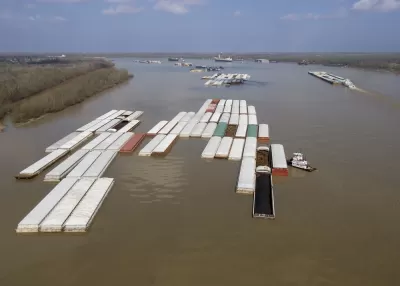
While the saga of the drought-stricken Colorado River is well-documented, another important American waterway, the Mississippi River, has fallen to historically low levels, disrupting a major shipping corridor. According to an article by Ben Tracy for CBS News, “Economic costs are estimated to be in the billions.”
Paul Rohde, who represents the river's shipping and towing industry, calls the operational challenges “almost unprecedented,” expressing concern about the ability of the river to continue serving as a conduit for forty percent of the world’s food supply, as well as other key commodities like petroleum, fertilizer, and road salt.
“The Army Corps of Engineers has been dredging the river nonstop for three months to help keep barges moving. It is desperately trying to maintain a nine-foot-deep shipping channel near St. Louis, sucking up enough sand and silt to fill an Olympic-sized swimming pool every hour.” But as Lou Dell'Orco, chief of operations for the St. Louis District Corps of Engineers points out, “We can dredge it to a certain point, and then Mother Nature wins.”
FULL STORY: Drought disrupts "irreplaceable" Mississippi River shipping corridor

Proposed Legislation Sounds Alarm on Mississippi River Drought
Without concerted restoration efforts, the river’s historically low levels could dramatically impact shipping activities and economic development throughout the region.
Midwestern Drought Threatens the Mississippi River
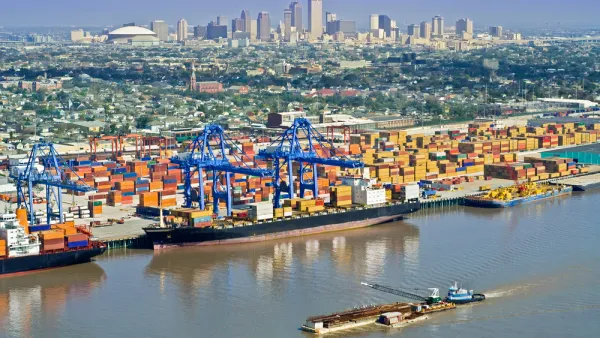
The Mississippi River handles $7 billion in trade as one of the world's largest navigable inland waterways. A Midwestern drought has brought the river to water levels so low that they threaten to shut down shipping, reports John Schwartz.
Arizona Legislators Want to Ship Mississippi River Stormwater to the Colorado River
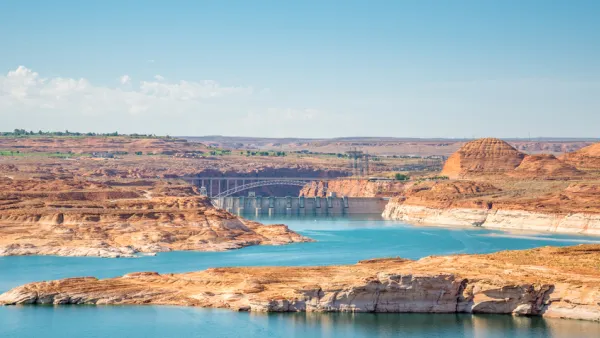
With Arizona bearing the brunt of the first round of drought-induced water cuts, with more sure to follow, the Arizona State Legislature is looking over the horizon for potential solutions.

The state-sanctioned urbicide of Austin
People don’t kill cities. Freeways do.

US to reduce Colorado River water deliveries to Mexico
A new Colorado Treaty amendment reduces Mexico’s Colorado River water allocation by 250,000 acre feet.

New Jersey’s second-largest city bans standalone data centers
Jersey City will continue to allow co-location facilities, such as those meant for research institutions that store their own data.

Amtrak not solely to blame for New Jersey commuter rail's unreliability, report finds
A new study from the Garden State Initiative found that NJ Transit’s budget grew 20% across a 4 year period, but reliability declined significantly over the same period.

EPA erases limits on planet-warming pollution from power plants
Under Monday’s plan, power plants would still have some limits on how much mercury, arsenic and other contaminants they can emit.

Phoenix announces new on-demand transit service, more frequent RAPID buses
Both new services will launch in October, and are part of Phoenix's Project Effective Access Solutions for Easing Congestion.

FREE Course: Walkable City 1: Why Walkability?
After describing his path towards focusing on walkability as the essence of good planning, Jeff Speck marches through his five principal reasons for making more walkable places.
Reinventing Malls: Planning Alchemy—Turning Gray Fields Into Gold
The course focuses on the opportunities and imperatives that shape reinvention of mall sites.

Eagle County Government
Harvard University Graduate School of Design
Nashville Planning Department
The Architects Foundation
University of Cincinnati Online
The Pocatello Development Authority
The Urban Renewal Agency of the City of Pocatello
Journal of the American Planning Association