After launching pilot programs in San Francisco and Phoenix, the company says it is ready to begin deploying its autonomous vehicles on Los Angeles streets.


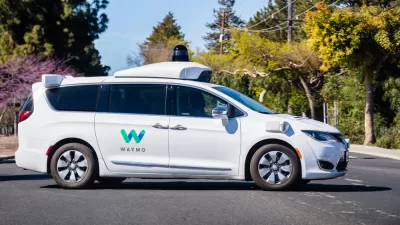
Alphabet-owned Waymo plans to expand its autonomous fleet to Los Angeles, reports Russ Mitchell for the Los Angeles Times. After three years of mapping the city, Waymo says the company is ready to test its robot taxi service on L.A. roads.
Waymo is conducting pilot programs with and without backup drivers in Phoenix and San Francisco. “To charge for rides, Waymo must obtain a permit from the California Public Utilities Commission. The company declined to discuss pricing plans, but in Phoenix its fares are roughly comparable to those of Uber and Lyft.” General Motors, Ford, and Hyundai are running their own autonomous taxi pilot programs in other cities.
Companies in the autonomous vehicle industry, which have spent around $75 billion on product development so far, are starting to lose stock value as regulatory approval and widespread adoption of the technology remain elusive. Petitions from Ford and General Motors to exempt autonomous vehicles from certain safety features have met with opposition from safety advocates who say the automakers are cutting corners and could endanger passengers and pedestrians.
Read the full story: Waymo says it’s bringing robotaxis to L.A.
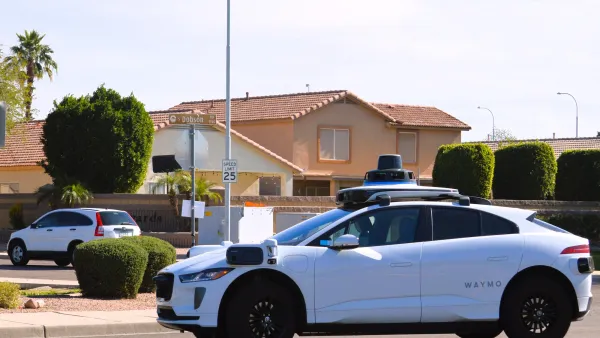
Uber and Waymo part ways in Phoenix
The companies ended a three-year pilot program, with Waymo saying it plans to keep its Phoenix robotaxi fleet available through its own app.
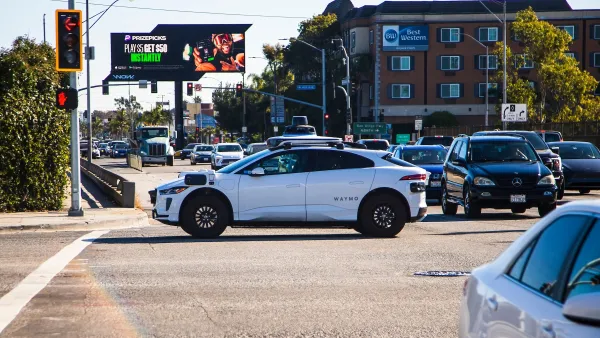
MIT study confirms robotaxis don't reduce traffic
Waymo data reveals that the cars spend close to half of their time 'deadheading' — driving around with no passengers.

Waymo's troubles with emergency vehicles are getting worse
In one case, first responders waited 53 minutes to reach a Waymo support representative during an emergency.

Planetizen Federal Action Tracker
A weekly monitor of how Trump’s orders and actions are impacting planners and planning in America.

California plans to bury El Niño’s downpour
If the state plays its cards right, it may be able to store a billion acre-feet of El Niño’s water in aquifers.

Desperate measures: Advocates weigh draining Lake Powell to fill Colorado River
Draining the reservoir could reduce evaporation losses by a couple hundred thousand acre-feet.

In Texas, data centers are swallowing promised parkland
Residents who moved to Taylor, Texas for a rural community now have to contend with three data centers in their backyard.

How a Chicago-sized wind farm beat the odds and powered on
The project spanned five presidential administrations and a standoff with a U.S. military base.

MTA gives itself 30 days to transform pit into basketball court
The site has been under construction since 2022; the city originally estimated it would finish the court in 2024.

FREE Course: Walkable City 1: Why Walkability?
After describing his path towards focusing on walkability as the essence of good planning, Jeff Speck marches through his five principal reasons for making more walkable places.
Reinventing Malls: Planning Alchemy—Turning Gray Fields Into Gold
The course focuses on the opportunities and imperatives that shape reinvention of mall sites.

City of Rosemead
Rutgers University, Edward J. Bloustein School of Planning and Public Policy
One Hundred Miles
Hunter College, City University of New York (CUNY)
The Architects Foundation
University of Cincinnati Online
City of Cambridge
Montrose County
The Pocatello Development Authority