A federal proposal that would require states to monitor and set targets to cut greenhouse gas emissions, praised by Democrats, is being called “unworkable” by many Republican states.


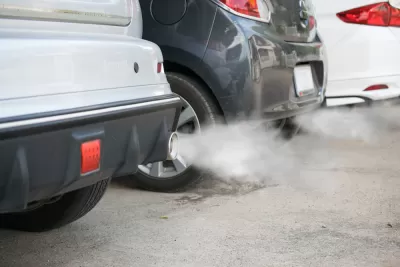
Republican-led states are pushing back on a proposal to monitor and curb greenhouse gas emissions from the nation’s highways, calling it federal overreach and arguing that the plan is “illegal and unworkable.” As Daniel C. Vock reports for Route Fifty, the proposal “would require states and metropolitan planning organizations to establish targets for cutting greenhouse gas pollution from vehicles” without implementing any enforcement mechanism. Opponents argue that the FHWA does not have the authority to make such requirements.
According to Vock, “Another major point of friction is over the ability and authority of state transportation departments to handle the requirements.” A statement from the Oklahoma Department of Transportation stated, “The mission and purpose of the Oklahoma Department of Transportation does not include reducing [greenhouse] gasses.”
“The Biden administration’s framework calling for reductions of those pollutants would disproportionately harm rural and fast-growing states, [opponents] also argued,” pointing out that many people in rural states have to drive longer distances for everyday needs.
If this all sounds familiar, it’s because the debate echoes a similar fight over an Obama-era policy revoked by the Trump administration.
The proposal is supported by many Democratic states, the California Air Resources Board (CARB), and the National Association of City Transportation Officials (NACTO), among others.
FULL STORY: States Divided on Setting Targets for Curbing Highway Emissions

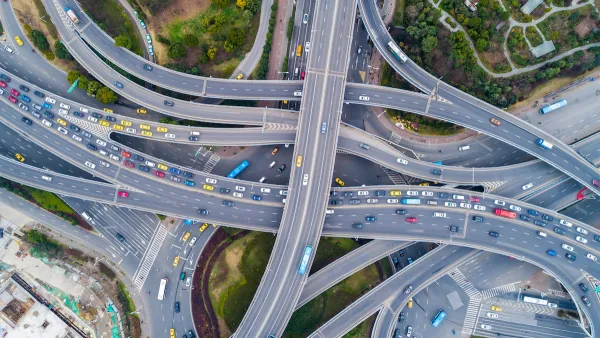
Opinion: California Must Walk the Walk on Transportation Emissions
While state leaders tout their climate goals at COP28, residents back home continue to fight highway expansion projects that induce traffic and increase emissions.
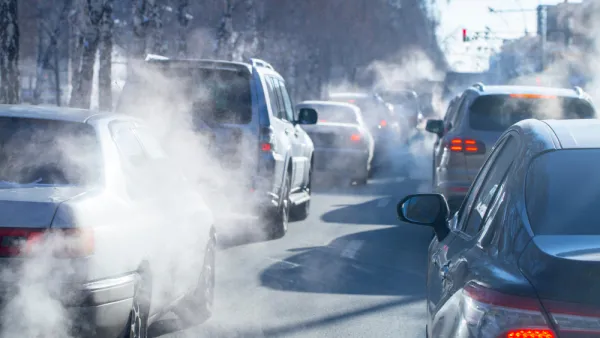
USDOT Repeals Emissions Monitoring Rule
A Biden-era regulation required states to report and plan to reduce transportation-related emissions.
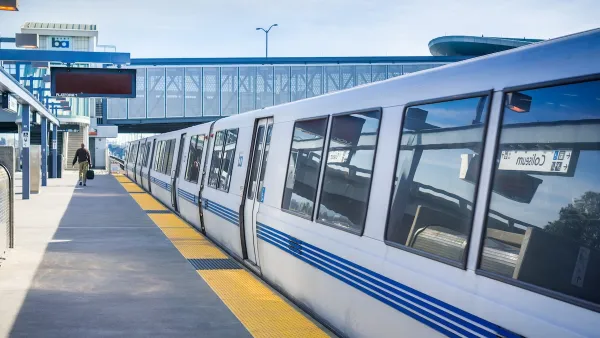
NRDC Releases State Transportation Scorecard
The Getting Transportation Right report highlights which states are making the most progress on reducing transportation emissions and improving access to clean transportation options.

Planetizen Federal Action Tracker
A weekly monitor of how Trump’s orders and actions are impacting planners and planning in America.

The state-sanctioned urbicide of Austin
People don’t kill cities. Freeways do.

US to reduce Colorado River water deliveries to Mexico
A new Colorado Treaty amendment reduces Mexico’s Colorado River water allocation by 250,000 acre feet.

5 New England states march closer to 800 megawatt wind energy project
Securing federal approval for the project may be complicated under the Trump administration, which has historically been hostile towards domestic wind power.

Baltimore to break ground on $50 million Transit Priority Project
The project will bring faster bus trips, safer streets and better bike connections to Baltimore.

Airbnb launches $250 million 'last-dollar financing' housing accelerator, makes first investment in Austin
The company will put $6.4 million towards affordable housing development in Texas’ capital.

FREE Course: Walkable City 1: Why Walkability?
After describing his path towards focusing on walkability as the essence of good planning, Jeff Speck marches through his five principal reasons for making more walkable places.
Reinventing Malls: Planning Alchemy—Turning Gray Fields Into Gold
The course focuses on the opportunities and imperatives that shape reinvention of mall sites.

Eagle County Government
Harvard University Graduate School of Design
Nashville Planning Department
The Architects Foundation
University of Cincinnati Online
The Pocatello Development Authority
The Urban Renewal Agency of the City of Pocatello
Journal of the American Planning Association