A proposal to eliminate parking minimums in the entire city would also expand Burlington’s Transportation Demand Management program.



A proposed ordinance in Burlington, Vermont would eliminate that city’s minimum parking requirements in favor of a more market-oriented approach that would allow developers to build parking if and when the demand for it exists, reports Lilly St. Angelo for the Burlington Free Press. While some city councilmembers support the ordinance, saying it could boost housing construction and limit driving, others express the usual concerns about straining available street parking.
Along with removing parking minimums in certain parts of the city two years ago, Burlington also created parking maximums—an unusually bold move that some developers disagree with. As we recently covered in a prior story, some lenders impose their own parking requirements on developers seeking to secure a building loan, sometimes putting themselves at odds with cities and states working to reduce or eliminate parking requirements.
“Besides taking away minimums, passing the ordinance would expand the city's Transportation Demand Management Program to the whole city instead of just the densest parts.” This program currently requires developers of projects with more than 10 units or 15,000 square feet in a downtown zoning district to follow a set of requirements that include “educating tenants on public transit and car share opportunities, providing free car-share memberships for two years and transit passes for one year to tenants, and doing an annual parking utilization study that is reported to the city. Developers also must unbundle the price of parking from rent.”
Read the full story: Burlington may eliminate parking minimums for builders city-wide. Here are the possible effects.


Denver Could Eliminate Parking Requirements
The city could remove parking mandates citywide to reduce the cost of housing construction and ease permitting for new projects.
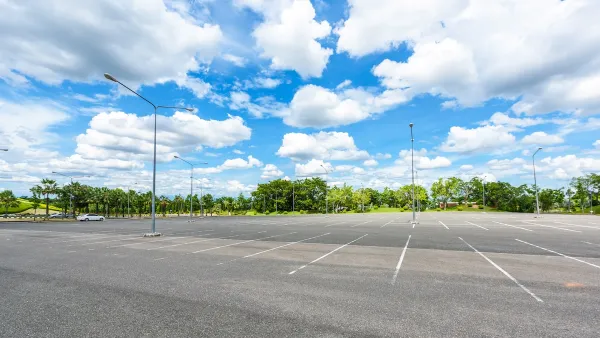
Parking Reform Yields New Housing
As more cities eliminate or reduce their minimum parking requirements, the impact on housing supply is coming into focus.

Dallas Considers Nixing Parking Requirements
According to one local official, Dallas projects routinely build 20 to 30 percent more parking than they need, driving up the cost of housing and leading to unsustainable land use patterns.

Planetizen Federal Action Tracker
A weekly monitor of how Trump’s orders and actions are impacting planners and planning in America.

The state-sanctioned urbicide of Austin
People don’t kill cities. Freeways do.

Colorado’s Largest Data Center Could Rise Next to Homes — Without a Public Hearing
The proposed campus would consume 11 times the power of Denver International Airport; as it has across the country, opposition mounts.

Judges permit Denver to divert 77,000 acre feet from the Colorado River for reservoir expansion
Overuse and climate change have caused the Colorado River’s water levels to plummet.

Amtrak, CN end decades-long dispute with eight-year agreement
The new operating agreement establishes an updated framework for the companies to work together, including processes to resolve disputes.

Raised interest rates may kill financially vulnerable construction projects
The chief economist at ConstructConnect warns that if construction project owners are negatively impacted by the raised rates, it could result in delayed payments to contractors.

FREE Course: Walkable City 1: Why Walkability?
After describing his path towards focusing on walkability as the essence of good planning, Jeff Speck marches through his five principal reasons for making more walkable places.
Reinventing Malls: Planning Alchemy—Turning Gray Fields Into Gold
The course focuses on the opportunities and imperatives that shape reinvention of mall sites.

KFH Group Inc.
Greater Baltimore Committee
Eagle County Government
The Architects Foundation
University of Cincinnati Online
The Pocatello Development Authority
The Urban Renewal Agency of the City of Pocatello