A decade-old plan to elevate a below-grade segment of Interstate 375 and replace it with a lower-speed boulevard could begin two years ahead of schedule thanks to USDOT funding.


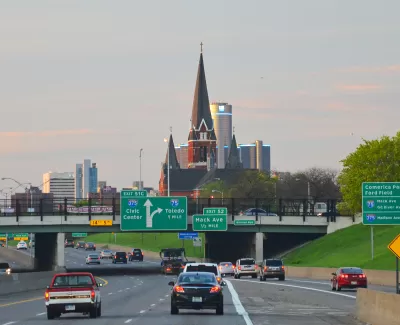
Detroit’s plan to remove a portion of the I-375 freeway received a boost from the federal government with a $104 million grant from the U.S. Department of Transportation, part of a broader federal endeavor to remedy the impacts of freeways and urban renewal on neighborhoods around the country. Notably, the grant was not awarded from the Reconnecting Communities Act, but from USDOT’s Infrastructure for Rebuilding America program.
According to a Detroit News article by Melissa Nann Burke and Riley Beggin, “The grant is a significant boon for the proposal, which dates to 2013 and envisions a walkable, leafy concourse integrated with the community and lined with shops, restaurants, homes and pedestrians on the eastern of edge of downtown Detroit.”
The effort is expected to cost $300 million and be completed by 2030. “The project, which already has environmental approvals from the Federal Highway Administration, would raise the roadway by 20 feet to street level, integrate it with cross-streets and landscape a boulevard past Jefferson Avenue down to Atwater Street.”
The freeway removal encompasses other projects including traffic calming measures, the removal of fifteen bridges, and new signalized crosswalks and bike lanes.
FULL STORY: Michigan gets $105M grant from feds to turn I-375 in Detroit into boulevard


Congress Moves to End Reconnecting Communities and Related Grants
The House Transportation and Infrastructure Committee moved to rescind funding for the Neighborhood Equity and Access program, which funds highway removals, freeway caps, transit projects, pedestrian infrastructure, and more.
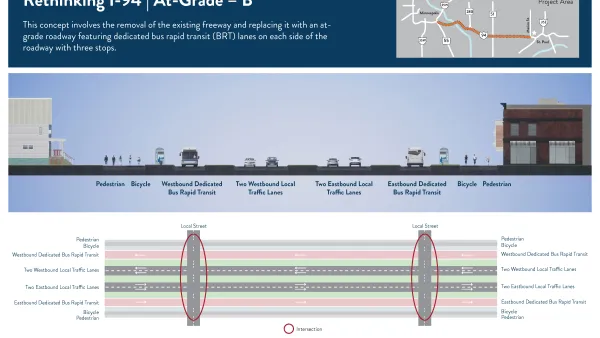
More Options Presented for Minneapolis I-94 Project
Two new proposals for replacing the freeway with at-grade segments offer new visions for the future of downtown Minneapolis.
GAO: Reconnecting Communities Lacks Clear Goals and Metrics
The program, aimed at supporting highway removals and other projects that work to reverse the impacts of freeway construction, is light on accountability and performance measures, according to a new report.

Planetizen Federal Action Tracker
A weekly monitor of how Trump’s orders and actions are impacting planners and planning in America.

The state-sanctioned urbicide of Austin
People don’t kill cities. Freeways do.

US to reduce Colorado River water deliveries to Mexico
A new Colorado Treaty amendment reduces Mexico’s Colorado River water allocation by 250,000 acre feet.

5 New England states march closer to 800 megawatt wind energy project
Securing federal approval for the project may be complicated under the Trump administration, which has historically been hostile towards domestic wind power.

Baltimore to break ground on $50 million Transit Priority Project
The project will bring faster bus trips, safer streets and better bike connections to Baltimore.

Airbnb launches $250 million 'last-dollar financing' housing accelerator, makes first investment in Austin
The company will put $6.4 million towards affordable housing development in Texas’ capital.

FREE Course: Walkable City 1: Why Walkability?
After describing his path towards focusing on walkability as the essence of good planning, Jeff Speck marches through his five principal reasons for making more walkable places.
Reinventing Malls: Planning Alchemy—Turning Gray Fields Into Gold
The course focuses on the opportunities and imperatives that shape reinvention of mall sites.

.jpg)
Eagle County Government
Harvard University Graduate School of Design
Nashville Planning Department
The Architects Foundation
University of Cincinnati Online
The Pocatello Development Authority
The Urban Renewal Agency of the City of Pocatello
Journal of the American Planning Association