Showing refugee and immigrant residents how to use public transportation can improve access to essential services, jobs, and education, but a more robust transit system is needed to effectively serve all who need it.


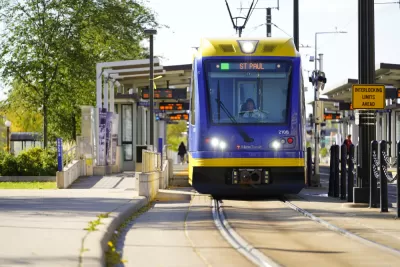
A nonprofit in the Twin Cities is helping new immigrants and refugees navigate the region’s public transit system in an effort to make jobs, shopping, schools, and other services more accessible to new Americans. Volunteers with the International Institute of Minnesota (IIMN) pair up with clients who want to learn how to get around on local transit but speak and read limited English, reports Henry Pan in Next City.
In spite of the organization’s efforts, obstacles remain for people who work in more remote areas not served by Metro Transit, which has been slow to recover after losing both ridership and drivers during the pandemic. According to the article, “year-to-date ridership as of June remains at 49% of year-to-date ridership in June 2019.” And while the agency is taking actions to include more translated materials, “They also learned those who do not understand English might not have necessarily understood the content being translated in their native language – in part because they may not be fully literate in their primary language, rendering the agency’s efforts moot.”
Language barriers aside, Pan notes, “Perhaps the answer to making transit service accessible to those who do not understand English is to simply have more frequent service that goes where people need to go.”
Read the full story: How The Twin Cities Is Making Transit Accessible To Immigrants And Refugees

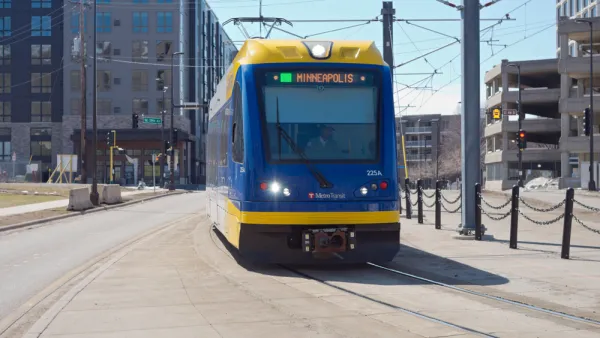
Three New Programs to Increase Transit Ridership in the Twin Cities
With peak hour commuter travel not expected to rebound to pre-pandemic levels, Metro Transit is getting creative in its efforts to attract new riders.
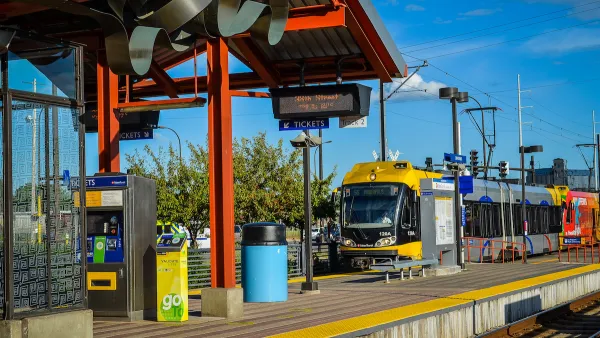
Twin Cities Trains Move to Fewer Cars, Higher Frequency
Headways will drop from 15 minutes to 12 minutes.
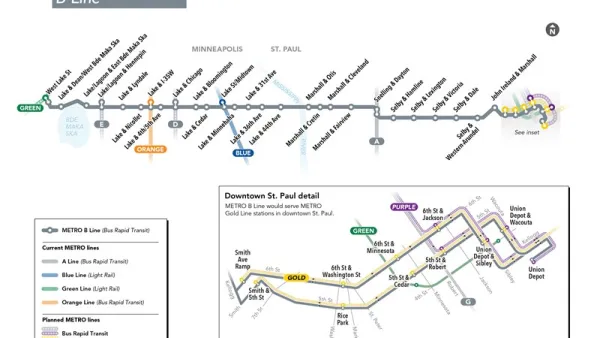
New Bus Rapid Transit Route Breaks Ground in the Twin Cities
The Twin Cities are on a mission to become the bus rapid transit capital of the United States. The latest improvement to advance that ambition broke ground earlier this week.

Planetizen Federal Action Tracker
A weekly monitor of how Trump’s orders and actions are impacting planners and planning in America.

The state-sanctioned urbicide of Austin
People don’t kill cities. Freeways do.

US to reduce Colorado River water deliveries to Mexico
A new Colorado Treaty amendment reduces Mexico’s Colorado River water allocation by 250,000 acre feet.

Nation's most wind-powered state turns to coal as data centers increase energy demand
For the first time in decades, Iowa has increased its generation of coal power.

NYC cools commuters with city's first rain garden above a bus stop
New York City officials say the plants in the rain garden can absorb 16 gallons of rainwater during heavy storms.

Brightline West’s future may rely on $6 billion federal loan
The company has until Nov. 2 to make a $400 million equity investment into its proposed high-speed rail line.

FREE Course: Walkable City 1: Why Walkability?
After describing his path towards focusing on walkability as the essence of good planning, Jeff Speck marches through his five principal reasons for making more walkable places.
Reinventing Malls: Planning Alchemy—Turning Gray Fields Into Gold
The course focuses on the opportunities and imperatives that shape reinvention of mall sites.

Eagle County Government
Harvard University Graduate School of Design
Nashville Planning Department
The Architects Foundation
University of Cincinnati Online
The Pocatello Development Authority
The Urban Renewal Agency of the City of Pocatello
Journal of the American Planning Association