The Justice40 initiative could make a major difference for communities burdened by pollution, but only if funds are spent on projects that maintain a focus on equity.


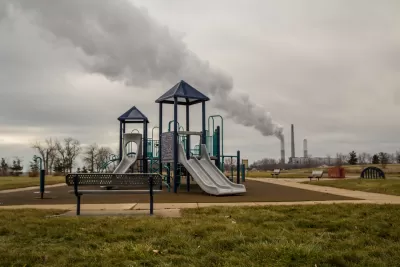
“In a letter sent Tuesday, more than 60 Democrats urged the White House to strengthen implementation of the Justice40 Initiative, which seeks to send at least 40 percent of the benefits of federal climate investments to communities that are overburdened by pollution, climate change and other environmental hazards.”
According to an article by Maxine Joselow and Vanessa Montalbano in the Washington Post, the group called for four key commitments: to consider the 40 percent goal a starting point rather than a ceiling for investments; to ensure programs funded by Justice40 do not cause additional harm to communities; to provide well-paying local jobs; and to establish a Climate Justice and Equity Office tasked with overseeing a “whole-of-government” approach to the program.
The Justice40 initiative has faced criticism from environmental justice advocates who fear that, due to its unclear parameters, the program could end up funding projects that increase pollution and negative health impacts in underinvested communities. Senator Edward J. Markey (D-Mass.), who led the letter-writing group, said “The Inflation Reduction Act has the power to shape a generation of climate action that can build health and wealth in disadvantaged communities, but only if we develop and use a powerful Justice40 framework to right the historic wrongs of environmental injustice.”
FULL STORY: Democrats push White House to strengthen environmental justice efforts

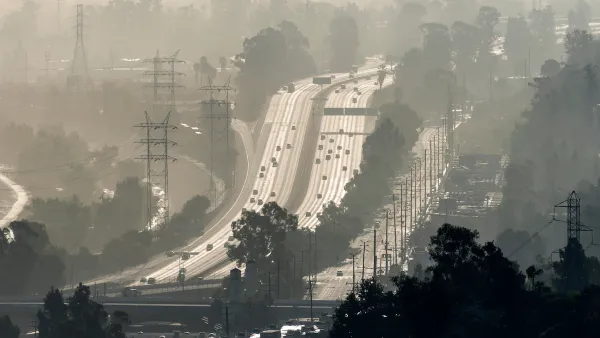
Study: Air Pollution Disproportionately Impacts Communities of Color
The negative effects of poor air quality occur at higher rates in low-income neighborhoods and communities of color, according to new research.
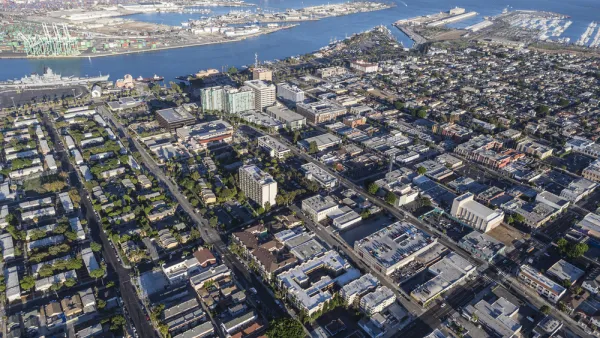
EPA Grants Target Environmental Justice
The agency will administer $100 million in grants to cities, states, and tribal nations as part of the Biden administration’s Justice40 initiative.

Los Angeles County Launches Environmental Justice Department
The new department will develop plans for addressing the impacts of air and water pollution, extreme heat, and climate change on vulnerable communities.

Planetizen Federal Action Tracker
A weekly monitor of how Trump’s orders and actions are impacting planners and planning in America.

The state-sanctioned urbicide of Austin
People don’t kill cities. Freeways do.

US to reduce Colorado River water deliveries to Mexico
A new Colorado Treaty amendment reduces Mexico’s Colorado River water allocation by 250,000 acre feet.

5 New England states march closer to 800 megawatt wind energy project
Securing federal approval for the project may be complicated under the Trump administration, which has historically been hostile towards domestic wind power.

Baltimore to break ground on $50 million Transit Priority Project
The project will bring faster bus trips, safer streets and better bike connections to Baltimore.

Airbnb launches $250 million 'last-dollar financing' housing accelerator, makes first investment in Austin
The company will put $6.4 million towards affordable housing development in Texas’ capital.

FREE Course: Walkable City 1: Why Walkability?
After describing his path towards focusing on walkability as the essence of good planning, Jeff Speck marches through his five principal reasons for making more walkable places.
Reinventing Malls: Planning Alchemy—Turning Gray Fields Into Gold
The course focuses on the opportunities and imperatives that shape reinvention of mall sites.

Eagle County Government
Harvard University Graduate School of Design
Nashville Planning Department
The Architects Foundation
University of Cincinnati Online
The Pocatello Development Authority
The Urban Renewal Agency of the City of Pocatello
Journal of the American Planning Association