After being closed to cars during the pandemic, Rock Creek Park’s Beach Drive has become a haven for people with mobility impairments.


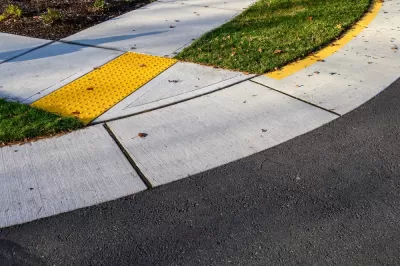
“Urbanism and walkability go hand-in-hand, but what does a walkable city look like for those who need mobility assistance, individuals with cognitive or sensory disabilities, toddlers, and the elderly?” Juliana Schmidt asks in Greater Greater Washington.
Schmidt points out that some activists say the word ‘walkable’ is inherently ableist. “Designing cities to meet the needs of all who live within them should be the bare minimum. Unfortunately, for the nearly 1 billion people in the world with disabilities, this is not the case.”
Schmidt provides examples of ‘universal design,’ interventions that are designed to make places accessible to people with mobility or visual impairments but also bring benefits for other users, such as people pushing strollers or carrying heavy bags. In the case of Washington, D.C.’s Rock Creek Park, Schmidt argues that “Accessibility for cars does not equate to accessibility for people with disabilities.”
Rock Creek Park’s Beach Drive is, when closed to car traffic, a good example of universal design that makes space for vulnerable road users, writes Schmidt. “Road closures free up a lot of space in general, which accommodates larger crowds. This proved helpful when social distancing went into effect during the pandemic, and continues to be beneficial by allowing walkers, runners, and bikers to use the space simultaneously.” With universal design benefiting everyone and harming no one, researcher and disability rights advocate Melissa Thompson wonders, “why is it not the default?”
Read the full story: How a car-free Beach Drive embodies universal design

Knoxville Ranked Best US City for People With Disabilities
An analysis of accessibility, affordability, healthcare access, and other metrics reveals the most disability-friendly U.S. cities.
How Infrastructure Shapes Public Trust
A city engineer argues that planners must go beyond code compliance to ensure public infrastructure is truly accessible to all users.
Bourbon Street Could Be a Model for Pedestrian Spaces
The conversation around pedestrianizing public streets isn’t new — think Times Square. Could one of America’s oldest streets lead the way in a revival of the pedestrian mall?

Planetizen Federal Action Tracker
A weekly monitor of how Trump’s orders and actions are impacting planners and planning in America.

California plans to bury El Niño’s downpour
If the state plays its cards right, it may be able to store a billion acre-feet of El Niño’s water in aquifers.

Chicago breaks ground on $3 billion megadevelopment
The new neighborhood, titled Foundry Park, will one day host 3,700 residences.

Move over, LA: St. Louis gears up for Olympics, invests millions in downtown redevelopment
The Missouri city will host the 2028 Olympic soccer group stage and knockout matches.

Satanic place names
From streams and lakes to valleys and canyons, I mapped more than 1,000 places named after the Devil.

California High-Speed Rail Authority CEO resigns after $600,000 scandal
Under Ian Choudri, the authority used taxpayer dollars to fund first class flights and trips to nightclubs.

FREE Course: Walkable City 1: Why Walkability?
After describing his path towards focusing on walkability as the essence of good planning, Jeff Speck marches through his five principal reasons for making more walkable places.
Reinventing Malls: Planning Alchemy—Turning Gray Fields Into Gold
The course focuses on the opportunities and imperatives that shape reinvention of mall sites.

City of Rosemead
Rutgers University, Edward J. Bloustein School of Planning and Public Policy
One Hundred Miles
Hunter College, City University of New York (CUNY)
The Architects Foundation
University of Cincinnati Online
City of Cambridge
Montrose County
The Pocatello Development Authority