Recent American Community Survey data solidifies an underappreciated pattern of migration in the United States: a reversal of the Great Migration of the 20th century, when an estimate 5 million Black Americans left the South.



Data from the Census Bureau’s 5-Year American Community Survey, released in March 2020, provides additional evidence of a great reversal in migration patterns among Black Americans. In the 21st century, Black Americans are moving in massive numbers back to the South—a reversal of the Great Migration that took place in the early decades of the 20th century.
The “New Great Migration” isn’t breaking news, however. Planetizen picked up analysis of the reversal of the Great Migration in 2011, but the pattern goes back further than that, to the 1970s—although the pace of Black American’s southward migration has increased from a trickle to a “virtual evacuation,” according to analysis by William Frey for the Brookings Institution. The effects of the “New Great Migration” are visible in the growth of the “New South,” especially in the states of Texas, Georgia, and North Carolina, as well as the metropolitan regions such as Atlanta, Dallas, and Houston.
“[A]lthough these areas are simultaneously in the midst of new immigrant growth and white in-migration, the continuing ‘New Great Migration’ has served to give Black Americans a large—and in many cases, dominant—presence in most parts of America’s South,” writes Frey.
An entire history of the migration patterns of Black Americans back to the early decades of the Great Migration is available at the link below. Also included are infographics illustrating the data and maps behind the “New Great Migration.”
Read the full story: A ‘New Great Migration’ is bringing Black Americans back to the South


Measuring the Urban Exodus
New data reveals truths about one of the biggest questions to emerge from the pandemic: Did the public health risks and economic disruptions of 2020 and 2021 spur an urban exodus away from the urban cores of large metropolitan areas?
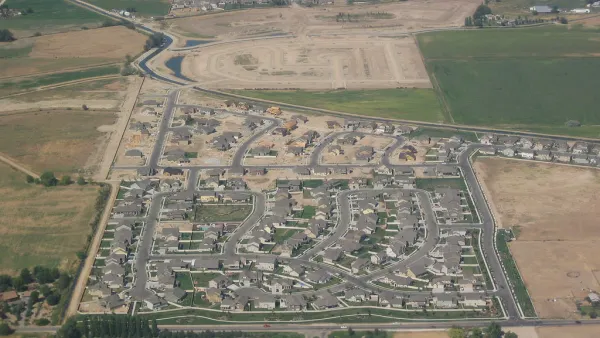
Idaho’s Growth Obscures Massive Demographic Turnover, Study Says
Quick population growth is remaking Idaho, but focusing only on raw population numbers masks the demographic changes at work.
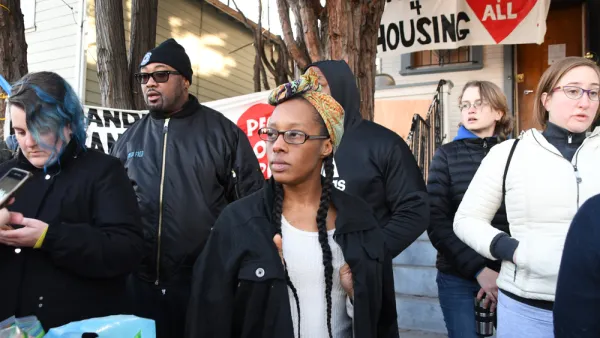
Pandemic Uncertainties Could Push Even More Black Residents Out of the Urban Bay Area
Add the coronavirus pandemic to an already deeply troubled housing market and the Bay Area has a recipe for even more displacement in a region already facing a massive demographic shift.

Planetizen Federal Action Tracker
A weekly monitor of how Trump’s orders and actions are impacting planners and planning in America.

Colorado’s Largest Data Center Could Rise Next to Homes — Without a Public Hearing
The proposed campus would consume 11 times the power of Denver International Airport; as it has across the country, opposition mounts.

US to reduce Colorado River water deliveries to Mexico
A new Colorado Treaty amendment reduces Mexico’s Colorado River water allocation by 250,000 acre feet.

Judges permit Denver to divert 77,000 acre feet from the Colorado River for reservoir expansion
Overuse and climate change have caused the Colorado River’s water levels to plummet.

Amtrak, CN end decades-long dispute with eight-year agreement
The new operating agreement establishes an updated framework for the companies to work together, including processes to resolve disputes.

Raised interest rates may kill financially vulnerable construction projects
The chief economist at ConstructConnect warns that if construction project owners are negatively impacted by the raised rates, it could result in delayed payments to contractors.

FREE Course: Walkable City 1: Why Walkability?
After describing his path towards focusing on walkability as the essence of good planning, Jeff Speck marches through his five principal reasons for making more walkable places.
Reinventing Malls: Planning Alchemy—Turning Gray Fields Into Gold
The course focuses on the opportunities and imperatives that shape reinvention of mall sites.

KFH Group Inc.
Greater Baltimore Committee
Eagle County Government
The Architects Foundation
University of Cincinnati Online
The Pocatello Development Authority
The Urban Renewal Agency of the City of Pocatello