With California’s water supply expected to drop by 10 percent in the next two decades, Governor Newsom’s strategy calls for conservation and increased investment in water collection, storage, and desalination infrastructure.


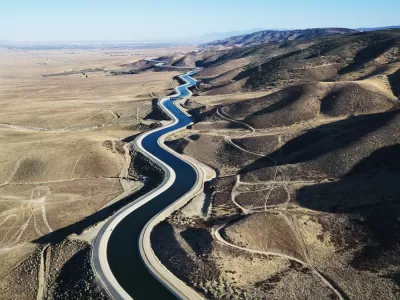
A new plan issued by California Governor Gavin Newsom outlines a strategy for reducing the state’s water use in advance of a projected 10 percent decrease in the state’s water supply. As reported by Ian James in the Los Angeles Times, “The plan focuses on accelerating infrastructure projects, boosting conservation and upgrading the state’s water system to match the increasing pace of climate change, securing enough water for an estimated 8.4 million households.”
“Drought is a permanent fixture here in the American West and California will adapt to this new reality.” — Gov. Gavin Newsom
As stated in the plan, “Targeted state funds and focus will support local efforts to conserve, capture, recycle, and de-salt enough water to allow California communities to prosper in a hotter, drier climate.” The strategy calls for expanding water storage capacity and groundwater recharge, speeding up wastewater recycling projects and runoff capture, and investing in desalination. “The plan includes targets and timelines, such as expanding desalination of brackish groundwater to 84,000 acre-feet by 2040, and boosting the state’s capacity to capture storm water by 500,000 acre-feet by 2040. For comparison, the total annual water use of Los Angeles is nearly 500,000 acre-feet.”
In May, California’s Coastal Commission rejected a governor-backed proposal to build a desalination project in Huntington Beach, dealing a blow to Newsom’s plans to expand desalination in the state. To date, 12 seawater desalination facilities operate in the state, with three proposals for new facilities making their way through the system.
FULL STORY: With California expected to lose 10% of its water within 20 years, Newsom outlines urgent action

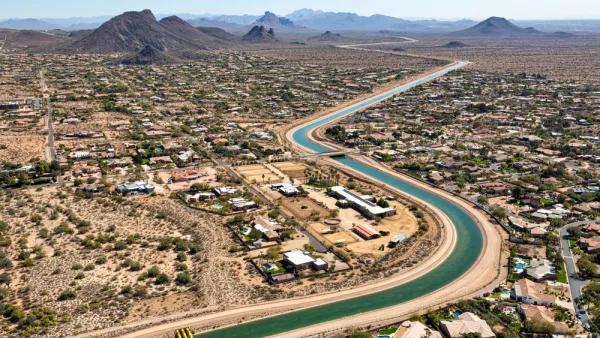
Arizona Governor Pledges $1 Billion to Water Infrastructure
The billion-dollar investment in the state's water supplies sounds good on paper, but lawmakers must also distribute funding effectively to mitigate the state's urgent water shortage.
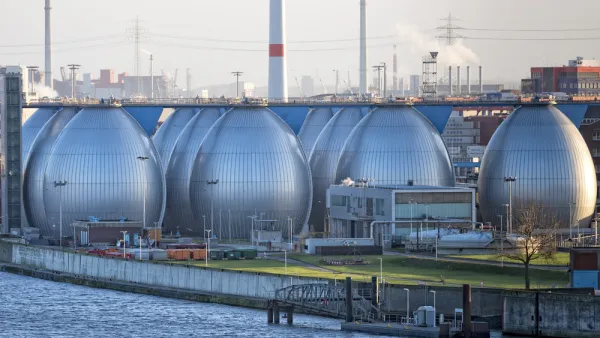
California Ballot Measure Could Streamline Permitting for Water Projects
A coalition of farmers and desalination supporters is collecting signatures for a California ballot measure that would fast-track construction processes for water storage projects.
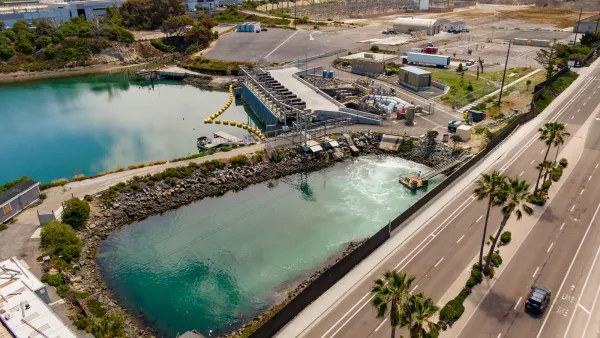
New agreement would let Arizona, Nevada use water from California desalination plant
The plan will help reduce strain on Lake Mead during extreme drought periods.

The state-sanctioned urbicide of Austin
People don’t kill cities. Freeways do.

US to reduce Colorado River water deliveries to Mexico
A new Colorado Treaty amendment reduces Mexico’s Colorado River water allocation by 250,000 acre feet.

New Jersey’s second-largest city bans standalone data centers
Jersey City will continue to allow co-location facilities, such as those meant for research institutions that store their own data.

Amtrak not solely to blame for New Jersey commuter rail's unreliability, report finds
A new study from the Garden State Initiative found that NJ Transit’s budget grew 20% across a 4 year period, but reliability declined significantly over the same period.

EPA erases limits on planet-warming pollution from power plants
Under Monday’s plan, power plants would still have some limits on how much mercury, arsenic and other contaminants they can emit.

Phoenix announces new on-demand transit service, more frequent RAPID buses
Both new services will launch in October, and are part of Phoenix's Project Effective Access Solutions for Easing Congestion.

FREE Course: Walkable City 1: Why Walkability?
After describing his path towards focusing on walkability as the essence of good planning, Jeff Speck marches through his five principal reasons for making more walkable places.
Reinventing Malls: Planning Alchemy—Turning Gray Fields Into Gold
The course focuses on the opportunities and imperatives that shape reinvention of mall sites.

Eagle County Government
Harvard University Graduate School of Design
Nashville Planning Department
The Architects Foundation
University of Cincinnati Online
The Pocatello Development Authority
The Urban Renewal Agency of the City of Pocatello
Journal of the American Planning Association