Fairfax County, Virginia estimates that climate change caused $25 million in damages from 2010 to 2019. A new plan is meant to prevent worse losses in the years and decades to come.


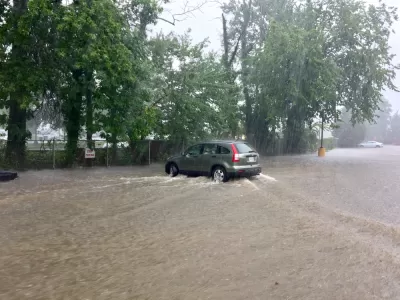
Fairfax County, Virginia recently opened its draft Climate Adaptation and Resilience Plan, also known as Resilient Fairfax. According to an article by David Taube for FFX Now, the plan is designed to adapt to the effects of climate change.
“The plan proposes short- and long-term solutions that could potentially cost up to $9.5 million. They include launching a climate resilience education program, implementing a flood-risk reduction plan, exploring possible retroactive physical capital improvement projects for communities, and more,” writes Taube.
“In addition to these step-by-step solutions, other goals call for protecting natural resources and restoring urbanized environments. For example, the county notes it could further encourage buildings to add vegetation to roofs and pursue other strategies.”
More details on the Resilient Fairfax plan, and the process leading up to the draft, are included in the source article below.
Read the full story: Fairfax County releases draft plan to address costly climate change effects

From Eco-Districts to Green Justice Zones
A great challenge facing urban planning in the short- and long-term future is how to complete green infrastructure and development without spurring gentrification and displacement.
How Cities Can Support Climate Adaptation
In the face of federal cuts to climate resilience funding, a panel at ULI’s Resilience Summit offered suggestions for maintaining managed retreat and other climate adaptation programs.

California is Updating its Climate Adaptation Strategy
The 2024 draft plan outlines the state's key climate resilience priorities, includes specific and measurable actions, and serves as a framework for collective efforts across sectors and regions in California.

Planetizen Federal Action Tracker
A weekly monitor of how Trump’s orders and actions are impacting planners and planning in America.

California plans to bury El Niño’s downpour
If the state plays its cards right, it may be able to store a billion acre-feet of El Niño’s water in aquifers.

Chicago breaks ground on $3 billion megadevelopment
The new neighborhood, titled Foundry Park, will one day host 3,700 residences.

Satanic place names
From streams and lakes to valleys and canyons, I mapped more than 1,000 places named after the Devil.

California High-Speed Rail Authority CEO resigns after $600,000 scandal
Under Ian Choudri, the authority used taxpayer dollars to fund first class flights and trips to nightclubs.

Want to study the Missouri River? Soon, you may need unanimous approval from 10 states
Legislation would require 10 governors’ permission to study or build projects moving water outside the basin.

FREE Course: Walkable City 1: Why Walkability?
After describing his path towards focusing on walkability as the essence of good planning, Jeff Speck marches through his five principal reasons for making more walkable places.
Reinventing Malls: Planning Alchemy—Turning Gray Fields Into Gold
The course focuses on the opportunities and imperatives that shape reinvention of mall sites.

City of Rosemead
Rutgers University, Edward J. Bloustein School of Planning and Public Policy
One Hundred Miles
Hunter College, City University of New York (CUNY)
The Architects Foundation
University of Cincinnati Online
City of Cambridge
Montrose County
The Pocatello Development Authority