Research shows neighborhoods historically redlined by the federal government have twice as many oil and gas extraction projects as “desirable” neighborhoods.


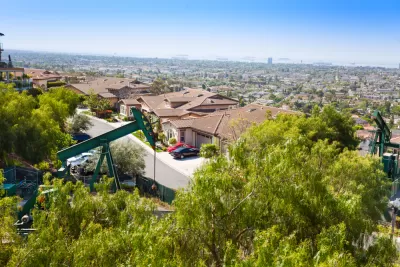
A first-of-its-kind analysis from a research team from the University of California, Berkeley, the University of California, San Francisco, and Columbia University highlights the correlation between historical redlining and oil and gas wells in neighborhoods. As Julia Kane writes, “[The research team] compared data on the location of plugged and active oil and gas wells to data from maps generated by the Home Owners Loan Corporation, the federal lending program created to prevent home foreclosures during the Great Depression.”
Looking at data for 33 cities where oil and gas wells are drilled and operated in urban neighborhoods across 13 states, researchers discovered the striking correlation between neighborhoods that were redlined and neighborhoods that have a high density of oil and gas wells.
While the study did not establish a causal link between redlining and drilling, Kane notes, “It’s not news that redlined communities tend to experience worse health outcomes. There are also links between neighborhoods that have undergone disinvestment and neighborhoods where there are higher rates of gun violence and less green space.”
This can directly affect the health of communities living near extraction sites. “Numerous studies have found that living near oil and gas wells increases a person’s risk of cardiovascular disease, impaired lung function, anxiety, depression, preterm birth, and impaired fetal growth — serious concerns for the estimated 17 million people in the U.S. who live within a mile of at least one active well.”
FULL STORY: Historically redlined neighborhoods have twice the number of oil and gas wells

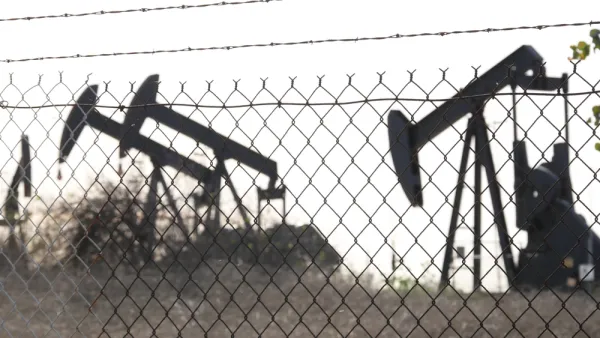
Los Angeles To Phase Out Oil Drilling
The city has banned new wells and will end all extraction within two decades.
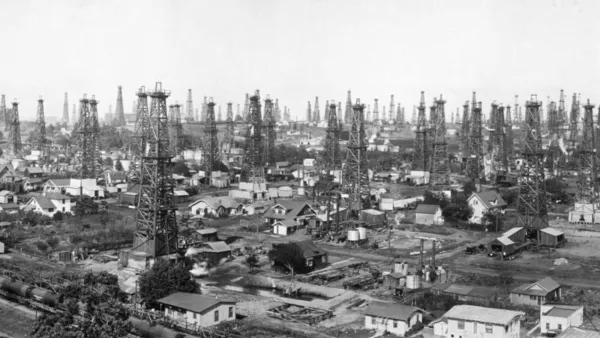
Your Not-So-Friendly Neighborhood Oil Well
Much of California's oil and gas extraction takes place in residential neighborhoods, posing significant health risks to entire communities.
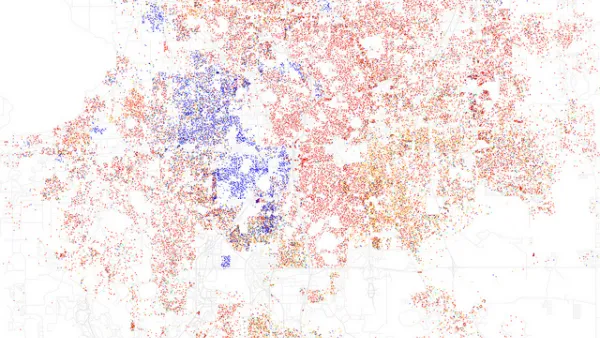
Pollution Does Discriminate in Orlando’s Parramore Neighborhood
Poor air quality has decimated the health of residents in this predominantly black community ringed by highways.

Planetizen Federal Action Tracker
A weekly monitor of how Trump’s orders and actions are impacting planners and planning in America.

The state-sanctioned urbicide of Austin
People don’t kill cities. Freeways do.

US to reduce Colorado River water deliveries to Mexico
A new Colorado Treaty amendment reduces Mexico’s Colorado River water allocation by 250,000 acre feet.

Mamdani overhauls NYC's Vision Zero plan with 100 new policy goals
The overhaul aims to reduce traffic deaths and make streets safer for pedestrians, cyclists and drivers through lower speed limits, new safety infrastructure and more.

Amtrak not solely to blame for New Jersey commuter rail's unreliability, report finds
A new study from the Garden State Initiative found that NJ Transit’s budget grew 20% across a 4 year period, but reliability declined significantly over the same period.

EPA erases limits on planet-warming pollution from power plants
Under Monday’s plan, power plants would still have some limits on how much mercury, arsenic and other contaminants they can emit.

FREE Course: Walkable City 1: Why Walkability?
After describing his path towards focusing on walkability as the essence of good planning, Jeff Speck marches through his five principal reasons for making more walkable places.
Reinventing Malls: Planning Alchemy—Turning Gray Fields Into Gold
The course focuses on the opportunities and imperatives that shape reinvention of mall sites.

Eagle County Government
Harvard University Graduate School of Design
Nashville Planning Department
The Architects Foundation
University of Cincinnati Online
The Pocatello Development Authority
The Urban Renewal Agency of the City of Pocatello
Journal of the American Planning Association