A program that distributed prepaid, transit-only debit cards to 500 Oakland residents has been successful in shifting transportation patterns for many of its participants.



Austyn Gaffney reports on Oakland's universal basic mobility program, which “provided 500 restricted and prepaid debit cards, each containing up to $300, that participants could use to purchase trips on public transit, bikeshares, and e-scooters between November 2021 and November 2022.”
According to an evaluation of the program's pilot phase released by the Oakland Department of Transportation, “the pilot was successful in reaching low-income participants who identify as Hispanic/Latino or Black/African American. In a mid-program survey, 40% of participants said they changed how they travel, with 23% saying they drove alone less often.”
The article quotes OakDOT Transportation Planner Quinn Wallace: “In developing and designing our program, we knew we wanted to prioritize equity and not solely target individuals who own a car or who have consistent access to a car who would be the more traditional targets of a transportation demand management, or TDM, program.”
Wallace describes the lessons the department learned as it implemented the program and the proposals for extending the program into the future. When asked what advice the department would give other agencies, Wallace said, “My first piece of advice is to absolutely do it. I would love to see a universal basic mobility program in every region and every city across the country. This program is so much about not just shifting travel behavior and patterns, but also reducing financial barriers to accessing opportunities and providing relief and rewards to existing transit and shared-mobility users who already help cities and regions meet clean air goals, in addition to folks who want to shift to those more sustainable modes.”
Read the full story: Universal basic mobility program in Oakland, California, provided lessons in achieving equity, leveraging community partnerships
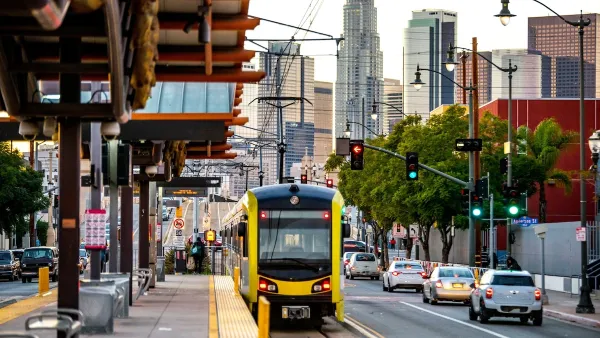
LA’s ‘Universal Basic Mobility’ Pilot, Eight Months In
The program issued ‘mobility wallets’ to 1,000 residents who took over 67,000 trips.
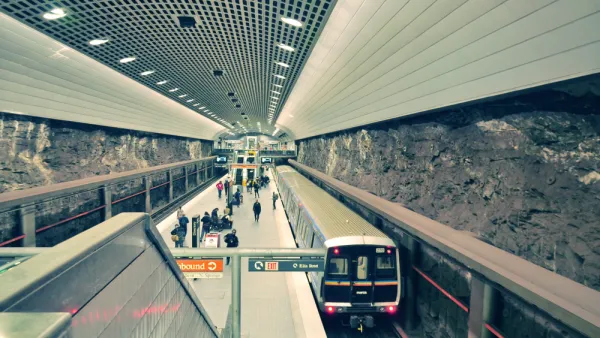
Atlanta Transit Could Go Fare-Free
The city has tasked the Metropolitan Atlanta Rapid Transit Authority with evaluating the feasibility of eliminating transit fares.
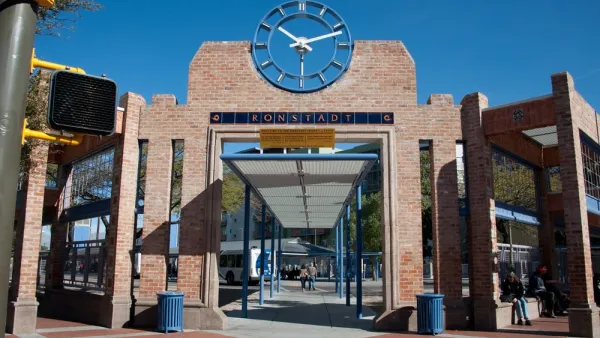
Tucson Extends Free Transit To End of Year
After eliminating transit fares in 2020, the city of Tucson is exploring ways to fund a permanent program.

Planetizen Federal Action Tracker
A weekly monitor of how Trump’s orders and actions are impacting planners and planning in America.

California plans to bury El Niño’s downpour
If the state plays its cards right, it may be able to store a billion acre-feet of El Niño’s water in aquifers.

Desperate measures: Advocates weigh draining Lake Powell to fill Colorado River
Draining the reservoir could reduce evaporation losses by a couple hundred thousand acre-feet.

In Texas, data centers are swallowing promised parkland
Residents who moved to Taylor, Texas for a rural community now have to contend with three data centers in their backyard.

How a Chicago-sized wind farm beat the odds and powered on
The project spanned five presidential administrations and a standoff with a U.S. military base.

MTA gives itself 30 days to transform pit into basketball court
The site has been under construction since 2022; the city originally estimated it would finish the court in 2024.

FREE Course: Walkable City 1: Why Walkability?
After describing his path towards focusing on walkability as the essence of good planning, Jeff Speck marches through his five principal reasons for making more walkable places.
Reinventing Malls: Planning Alchemy—Turning Gray Fields Into Gold
The course focuses on the opportunities and imperatives that shape reinvention of mall sites.

City of Rosemead
Rutgers University, Edward J. Bloustein School of Planning and Public Policy
One Hundred Miles
Hunter College, City University of New York (CUNY)
The Architects Foundation
University of Cincinnati Online
City of Cambridge
Montrose County
The Pocatello Development Authority