The city of Cincinnati will beef up its efforts to shift to renewable energy starting next week with electric police cars, fire trucks, and other city vehicles.


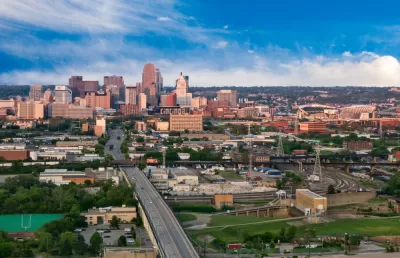
Cincinnati plans to electrify its municipal fleet as part of the city's pledge to power the city entirely through renewable energy by 2035, reports Sharon Coolidge. "[Mayor Aftab] Pureval and many of the Democratic council members campaigned on promises to not only make the city greener, but to do it in a way that helps Black and brown neighborhoods, which are disproportionately hurt by climate change, [Councilwoman Meeka] Owens said."
"The city is in the midst of building the largest municipal solar field in the country to provide that clean, renewable energy. The solar panel field in Highland County also will provide about 25% of the power to 80,000 homes that have opted-in to get renewable energy." According to Coolidge's article, "Cincinnati already has some electric cars, used by administrators who do inspections, but the new proposal includes police cruisers, fire trucks, ambulances and even garbage trucks, if available for purchase. The proposal calls for a full electric fleet by 2035, the same as the renewable energy deadline."
The city also recognizes the need for a more widespread charging network as more residents make the switch to electric cars. "This part of the plan involves finding a private partner to help with the installation of the stations at places like neighborhood parking lots and garages."
Read the full story: Cincinnati plans to buy electric police cars, install neighborhood charging stations

10 States Follow Through on Promise to Put 3.3 Million EVs on the Road
Rebate programs are at the heart of collaborative success.
USDOT Unveils Strategies to Achieve Near-Zero Transportation Emissions
Three key strategies — reducing travel distances, increasing energy-efficient travel modes, and transitioning to zero-emission vehicles and fuels — are recommended to meet national climate goals under the Paris Agreement.
How New Federal Rule Could Impact EV Adoption
An adjustment to federal pollution limits will require a greater share of low-carbon vehicles, but the rule also gives automakers some flexibility in deploying electric and hybrid cars.

Planetizen Federal Action Tracker
A weekly monitor of how Trump’s orders and actions are impacting planners and planning in America.

California plans to bury El Niño’s downpour
If the state plays its cards right, it may be able to store a billion acre-feet of El Niño’s water in aquifers.

Desperate measures: Advocates weigh draining Lake Powell to fill Colorado River
Draining the reservoir could reduce evaporation losses by a couple hundred thousand acre-feet.

California city breaks ground on transit connector
The project includes three mobility hubs and a pedestrian bridge.

After public outcry, Massachusetts city releases housing development tracker
Cambridge’s tracker currently shows 250 housing projects in various stages of development.

40 years after approval, Chicago breaks ground on new park
The park honors Jean Baptiste Point du Sable, the city’s first permanent non-native settler.

FREE Course: Walkable City 1: Why Walkability?
After describing his path towards focusing on walkability as the essence of good planning, Jeff Speck marches through his five principal reasons for making more walkable places.
Reinventing Malls: Planning Alchemy—Turning Gray Fields Into Gold
The course focuses on the opportunities and imperatives that shape reinvention of mall sites.

City of Rosemead
Rutgers University, Edward J. Bloustein School of Planning and Public Policy
One Hundred Miles
Hunter College, City University of New York (CUNY)
The Architects Foundation
University of Cincinnati Online
City of Cambridge
Montrose County
The Pocatello Development Authority