Communities in south and west Dallas are working to introduce zoning reform that would reduce industrial pollution and hold companies accountable for their impacts on surrounding neighborhoods.


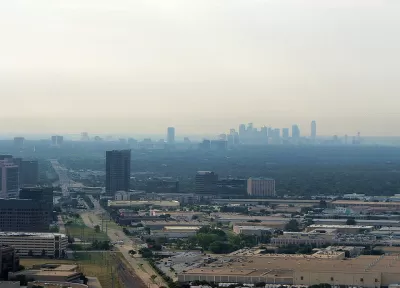
Patrick Sisson profiles the residents fighting to clean up the communities of southern and western Dallas. "Ringed by highways and dense with cement plants, warehouses, factories and landfills, these once-rural tracts of land are now the most contaminated in the city."
To fight polluters, residents, environmental activists and public health advocates have had to take on another powerful, mostly invisible foe: the zoning regulations that forced Black and brown communities on the wrong side of I-30 and the Trinity River to bear the brunt of industrial pollution.
Now, local activists are looking for ways to use zoning to their advantage. "'Zoning has been a tool to weaponize land against communities of color, and now communities of color are saying, wait, this is a tool we can use to restore our neighborhoods,' says Collin Yarbrough, a local activist and author of Paved A Way: Infrastructure, Policy and Racism in an American City, which explores Dallas’s legacy of economic segregation."
These efforts have gotten attention at City Hall, too. "In August 2021 the city launched Forward Dallas, an effort to reform future land use in the city. Citing the need to 'reevaluate existing land use policies and adopt new, more equitable and sustainable strategies,' the city’s rezoning initiative promises to acknowledge the systemic failures and injustices that drew its zoning map, and fix them."
The article points out that "The history of zoning and environmental injustice intersects with property values and the long history of redlining. The least expensive neighborhoods, those with fewer resources and support, tend to be where lower-income residents and communities of color can set down roots, as well as where highways and polluting industries are directed." Advocates are using science-based evidence to push for zoning reform that would regulate industrial uses to protect vulnerable neighborhoods.
According to Dallas director of planning and urban design Julia Ryan, "the planning department is reaching out to neighborhood groups and hopes to have a draft plan by the middle of next year." Ryan "intends to study the plans developed by different neighborhoods, establish land use policies that include buffers for certain uses, and 'look at areas from an environmental justice standpoint and follow up with recommendations for zoning changes.'"
FULL STORY: In Dallas, the Toxic Legacy of Zoning Lingers

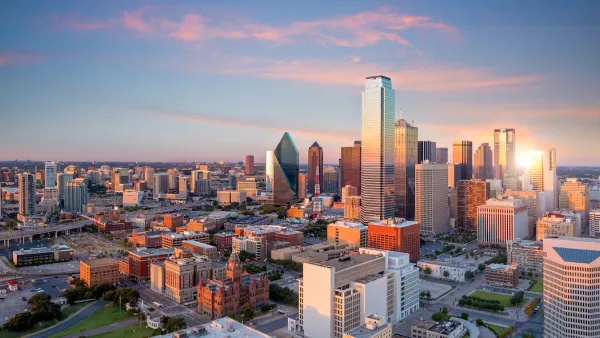
Dallas Approves Forward Dallas Comprehensive Plan Upgrade
The approval came with a raft of amendments, including one that calls for a reevaluation of the plan after five years.
Dallas Code Reform Makes Way for Missing Middle Housing
The Dallas City Council voted to change the city’s building code to allow up to eight residential units in three-story buildings.
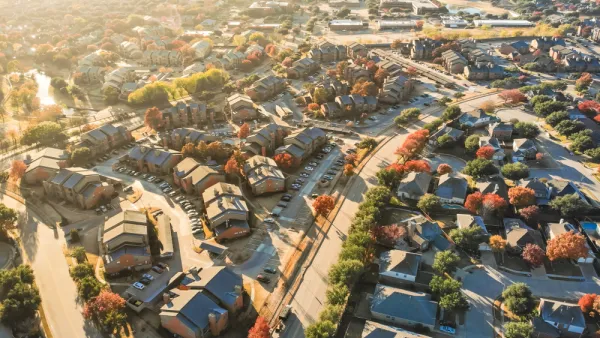
Texas Law Could Limit Local Control Over Zoning
If upheld, a Texas law would likely prevent cities from enacting zoning reform that would increase density or eliminate single-family-only zoning.

Planetizen Federal Action Tracker
A weekly monitor of how Trump’s orders and actions are impacting planners and planning in America.

The state-sanctioned urbicide of Austin
People don’t kill cities. Freeways do.

US to reduce Colorado River water deliveries to Mexico
A new Colorado Treaty amendment reduces Mexico’s Colorado River water allocation by 250,000 acre feet.

5 New England states march closer to 800 megawatt wind energy project
Securing federal approval for the project may be complicated under the Trump administration, which has historically been hostile towards domestic wind power.

Baltimore to break ground on $50 million Transit Priority Project
The project will bring faster bus trips, safer streets and better bike connections to Baltimore.

Airbnb launches $250 million 'last-dollar financing' housing accelerator, makes first investment in Austin
The company will put $6.4 million towards affordable housing development in Texas’ capital.

FREE Course: Walkable City 1: Why Walkability?
After describing his path towards focusing on walkability as the essence of good planning, Jeff Speck marches through his five principal reasons for making more walkable places.
Reinventing Malls: Planning Alchemy—Turning Gray Fields Into Gold
The course focuses on the opportunities and imperatives that shape reinvention of mall sites.

Eagle County Government
Harvard University Graduate School of Design
Nashville Planning Department
The Architects Foundation
University of Cincinnati Online
The Pocatello Development Authority
The Urban Renewal Agency of the City of Pocatello
Journal of the American Planning Association