Hindered by the pandemic and other factors, ridership numbers have been disappointingly low on the city's first BRT, but Metro officials are undeterred in their plans for future BRT lines.


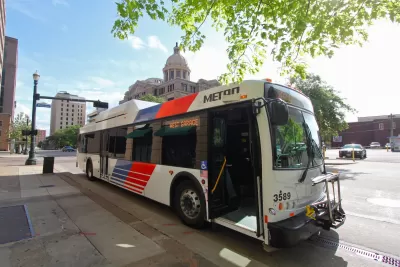
Houston's new Silver Line bus rapid transit (BRT) line is seeing disappointingly low ridership in its first year and a half of operation, reports Dug Begley. "The line, which comes every 12 minutes and avoids Galleria-area congestion, is a vital route for those using it, but carrying less than 10 percent of the riders it was built for on opening day." The line is serving fewer than 800 riders a day, far fewer than the 12,000 daily riders predicted by Metro. "Park and ride service, which was expected to be a big lure for commuters into Uptown to hop the Silver Line, dropped from 33,000 trips on a typical day in the region to fewer than 4,000 when the BRT began operating on Post Oak."
But the city's transit officials are cautiously optimistic about the future of its other BRT projects, calling them "50-year projects" whose ridership will grow with time. "Many of those plans feed into major routes, including the Silver Line. As part of the $7.5 billion plan approved by voters in 2019, Metro anticipates making high occupancy toll lanes along many freeways bi-directional, meaning bus lanes both ways for park and ride lines to Uptown and downtown Houston, feeding into the Uptown transit center."
FULL STORY: Uh oh, Silver: Houston's first bus rapid transit line carries only fraction of ridership Metro predicted

Houston Council Member Questions Microtransit Investment
METRO’s support of an on-demand microtransit service comes as the agency is scaling back its bigger bus projects.
Houston Plans for More Bus Rapid Transit
The city's transit agency hopes a more comprehensive and connected rapid transit network will encourage more Houstonians to use buses.
Houston Transit Agency Moves Forward With Long-Range Plan Even as Revenue Falls
Despite reduced ridership during the COVID-19 pandemic, Houston Metro is pushing ahead with its $7.5 billion long-range transit plan.

Planetizen Federal Action Tracker
A weekly monitor of how Trump’s orders and actions are impacting planners and planning in America.

The state-sanctioned urbicide of Austin
People don’t kill cities. Freeways do.

US to reduce Colorado River water deliveries to Mexico
A new Colorado Treaty amendment reduces Mexico’s Colorado River water allocation by 250,000 acre feet.

Mamdani overhauls NYC's Vision Zero plan with 100 new policy goals
The overhaul aims to reduce traffic deaths and make streets safer for pedestrians, cyclists and drivers through lower speed limits, new safety infrastructure and more.

Amtrak not solely to blame for New Jersey commuter rail's unreliability, report finds
A new study from the Garden State Initiative found that NJ Transit’s budget grew 20% across a 4 year period, but reliability declined significantly over the same period.

EPA erases limits on planet-warming pollution from power plants
Under Monday’s plan, power plants would still have some limits on how much mercury, arsenic and other contaminants they can emit.

FREE Course: Walkable City 1: Why Walkability?
After describing his path towards focusing on walkability as the essence of good planning, Jeff Speck marches through his five principal reasons for making more walkable places.
Reinventing Malls: Planning Alchemy—Turning Gray Fields Into Gold
The course focuses on the opportunities and imperatives that shape reinvention of mall sites.

Eagle County Government
Harvard University Graduate School of Design
Nashville Planning Department
The Architects Foundation
University of Cincinnati Online
The Pocatello Development Authority
The Urban Renewal Agency of the City of Pocatello
Journal of the American Planning Association