New research suggests that fewer speeding tickets are issued in neighborhoods where the city has invested in traffic calming and pedestrian safety improvements.


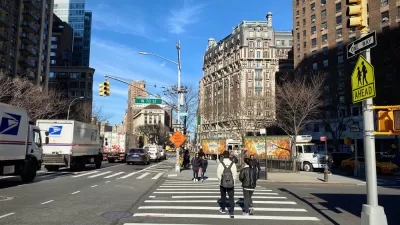
A study from New York City indicates that, while automated traffic enforcement cameras are evenly distributed across the city's neighborhoods, safe roadways and pedestrian infrastructure are not. As Julianne Cuba and Brian Howald report, "A new map created by activist Brian Howald shows where in the city drivers are getting nabbed for speeding in school zones and blowing through red lights, revealing a pattern of inequity not based on the location of the cameras themselves, but where the city has failed to provide adequate infrastructure that protects vulnerable road users."
Yes, the cameras are evenly distributed geographically in the city, but many tickets are issued in many communities of color because of the wide, speedway-like arterials that cut through such neighborhoods, and which have not been redesigned by the city for safety as they have been in White neighborhoods. The result is not only many speeding tickets written in communities of color, but also that residents of those neighborhoods are disproportionately the victims of road violence, advocates say.
This sheds light on the controversial devices and the argument over whether they unfairly target particular communities, signaling that, as pointed out in a recent ProPublica article, infrastructure—such as wide streets that encourage speeding—matters when it comes to driver behavior and road safety. Cuba and Howald's article quotes lawmakers and activists who want to see automated enforcement coupled with investment in safer roadways. "Such senseless deaths unfortunately happen far too often in our city, but they can be easily prevented with investment in more protective pedestrian and bicycle infrastructure," wrote state Senator Julia Salazar last year.
Read the full story: Are Speed Cameras Racist?

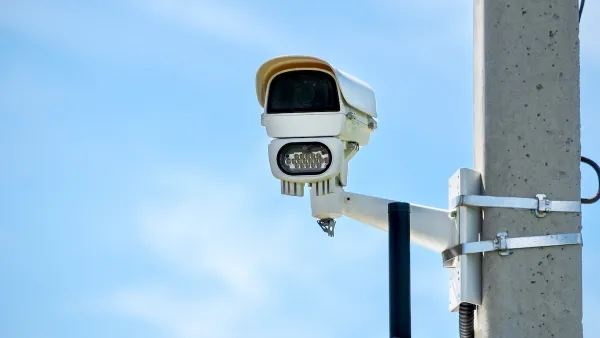
Philly Speed Camera Program Cuts Fatalities in Half
Excessive speeding along dangerous segments of Roosevelt Boulevard dropped by 90 percent after the city installed automated enforcement cameras.
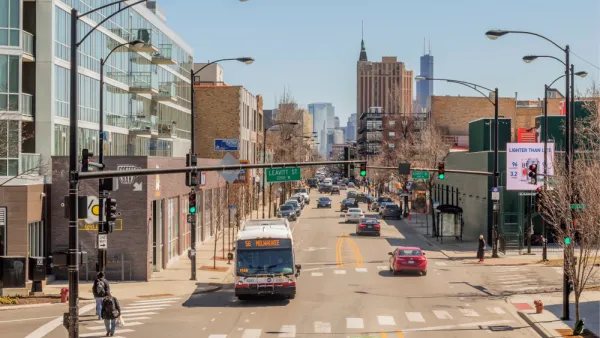
Chicago Traffic Cameras Issue Most Tickets to Black and Latino Drivers
The city's controversial traffic camera program tickets Black and Latino motorists more than white drivers. Infrastructure may play a role in why.

In N.Y.C., Speeding Is Up as Pandemic Continues
Data shows that drivers are speeding on the city’s mostly deserted streets.

Planetizen Federal Action Tracker
A weekly monitor of how Trump’s orders and actions are impacting planners and planning in America.

Amtrak, CN end decades-long dispute with eight-year agreement
The new operating agreement establishes an updated framework for the companies to work together, including processes to resolve disputes.
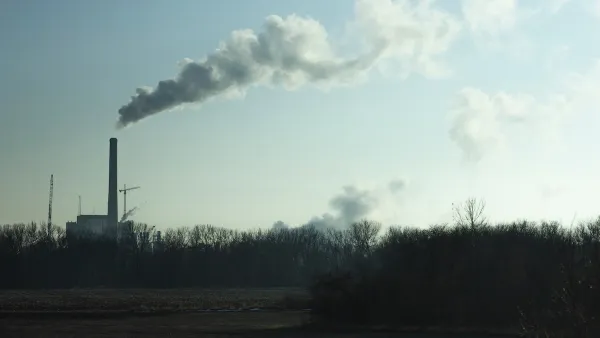
Nation's most wind-powered state turns to coal as data centers increase energy demand
For the first time in decades, Iowa has increased its generation of coal power.

Alabama scores up to $2.5 billion federal loan for largest infrastructure project in state’s history
The Mobile River Bridge and Bayway Project aims to ease congestion at Alabama’s worst bottleneck.

Trump is considering data centers on 6 states' public land — some state officials say they had no idea
If the administration approves the proposed projects, data center and data center-related developments will cover 17,600 acres of public land.

Despite court ruling, Trump is keeping nearly all wind projects in the US on hold
At least 110 wind energy projects have not heard from the government since a federal judge ruled that the Trump administration's freeze on wind turbine clearances was likely illegal.

FREE Course: Walkable City 1: Why Walkability?
After describing his path towards focusing on walkability as the essence of good planning, Jeff Speck marches through his five principal reasons for making more walkable places.
Reinventing Malls: Planning Alchemy—Turning Gray Fields Into Gold
The course focuses on the opportunities and imperatives that shape reinvention of mall sites.

KFH Group Inc.
Greater Baltimore Committee
Eagle County Government
The Architects Foundation
University of Cincinnati Online
The Pocatello Development Authority
The Urban Renewal Agency of the City of Pocatello