A new federal program will direct resources to reducing traffic deaths, improving roadway safety, and encouraging a shift to sustainable transportation modes.



With traffic fatalities rising in the U.S. despite lower vehicle miles traveled during the pandemic, the federal Department of Transportation has released a national strategy to address traffic safety. As Madeleine Ngo reports, the department plans to work with states and local jurisdictions to direct resources to improving roadways and reducing drunk driving, as well as impose new regulations to improve traffic safety. The plan, known as the National Roadway Safety Strategy, keys in on five areas: "safer people, safer roads, safer vehicles, safer speeds and post-crash care."
Although questions remain about how much influence federal policy will have on local roadways that are largely controlled by local agencies, the program represents a fundamental shift in priorities. According to Transportation Secretary Pete Buttigieg, "The big first here is committing the department to the idea that only zero roadway deaths are acceptable, and then aligning all of our resources around that."
In an interview with David Zipper, Sec. Buttigieg said the federal government would employ "a mix of carrots and sticks" to hold states accountable for eliminating pedestrian and traffic deaths. Buttigieg emphasized the need for a "comprehensive strategy" that includes not just making cars and roads safer but also encouraging and supporting a mode shift away from private vehicles, which would also reduce congestion and carbon emissions, benefiting all residents.
FULL STORY: Transportation Dept. Outlines Plan to Address Rising Traffic Deaths

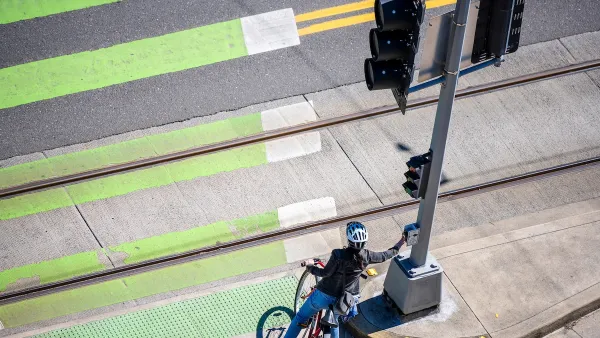
Audit: Portland’s Vision Zero Needs More Data, Funding
A city audit found that the program has failed to reduce traffic deaths and could benefit from a more systematic approach. Meanwhile, PBOT says it needs more state funding to support road safety projects.
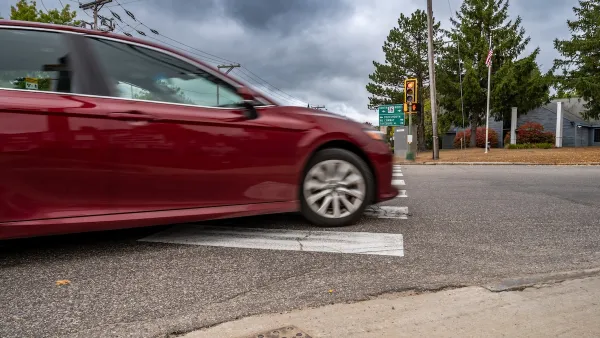
Banning Right Turns on Red Just One Step Toward Vision Zero
Experts caution that blanket bans on right turns on red make only a slight contribution to reducing fatal crashes, and other interventions are needed to bring down traffic fatalities.
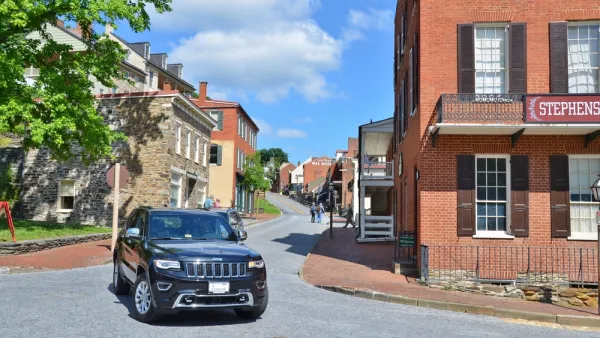
For Transportation Justice, Auto Safety Must Protect People Outside the Car
Light trucks are killing more pedestrians than ever while keeping their drivers and passengers safer. Is it time to reframe safety regulations?

Planetizen Federal Action Tracker
A weekly monitor of how Trump’s orders and actions are impacting planners and planning in America.

The state-sanctioned urbicide of Austin
People don’t kill cities. Freeways do.

US to reduce Colorado River water deliveries to Mexico
A new Colorado Treaty amendment reduces Mexico’s Colorado River water allocation by 250,000 acre feet.

5 New England states march closer to 800 megawatt wind energy project
Securing federal approval for the project may be complicated under the Trump administration, which has historically been hostile towards domestic wind power.

Baltimore to break ground on $50 million Transit Priority Project
The project will bring faster bus trips, safer streets and better bike connections to Baltimore.

Airbnb launches $250 million 'last-dollar financing' housing accelerator, makes first investment in Austin
The company will put $6.4 million towards affordable housing development in Texas’ capital.

FREE Course: Walkable City 1: Why Walkability?
After describing his path towards focusing on walkability as the essence of good planning, Jeff Speck marches through his five principal reasons for making more walkable places.
Reinventing Malls: Planning Alchemy—Turning Gray Fields Into Gold
The course focuses on the opportunities and imperatives that shape reinvention of mall sites.

Eagle County Government
Harvard University Graduate School of Design
Nashville Planning Department
The Architects Foundation
University of Cincinnati Online
The Pocatello Development Authority
The Urban Renewal Agency of the City of Pocatello
Journal of the American Planning Association