Out of the top five U.S. metro areas, Houston's transit ridership is second-lowest only to Dallas.


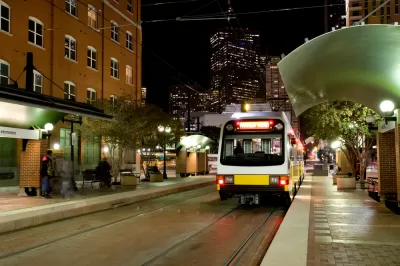
While Houston's public transit gets a consistently bad rap, writes Alexandra Kanik, there's one city that has it even worse: Houston's neighbor to the north, Dallas, which gets the lowest public transit ridership of the top five most populous metro areas in the nation, with a paltry 13 rides per resident per year. Houston comes in second with 18 annual rides per resident, compared to New York City's close to 200 rides per resident.
According to Kanik, Houston has lower transit vehicle availability than some cities, but this metric doesn't always indicate the effectiveness of a transit system. While Chicago has lower availability than Houston, its transit system moves more people. "Surprisingly, Houston was the only city that actually added transit vehicles during the first year of the pandemic. In 2019, the Metropolitan Transit Authority of Harris County had 2,515 vehicles available for maximum service. In 2020, MTA lists that they added 43 vehicles for a fleet size of 2,558."
Yet Houston's growth continues to rely on cars, with auto-oriented household growth keeping near-perfect pace with overall growth. This holds true for Dallas as well. Both cities have a long way to go to create truly transit-oriented environments and reach ridership numbers close to that of other major cities.
Read the full story: Is Houston's public transit really the worst? It's not as bad as Dallas, data shows

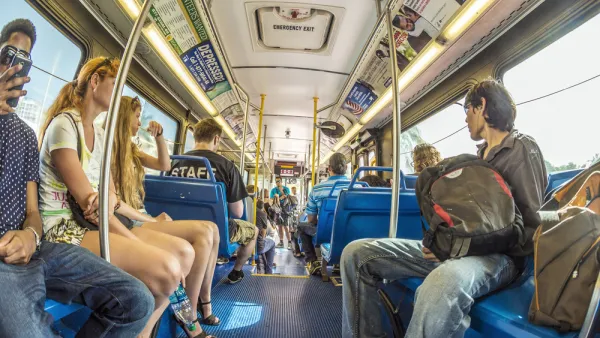
To Fight Climate Change, Support Public Transit
Electric cars may garner a lot of attention these days, but significantly reducing carbon emissions and urban congestion means investing in high-quality mass transit.
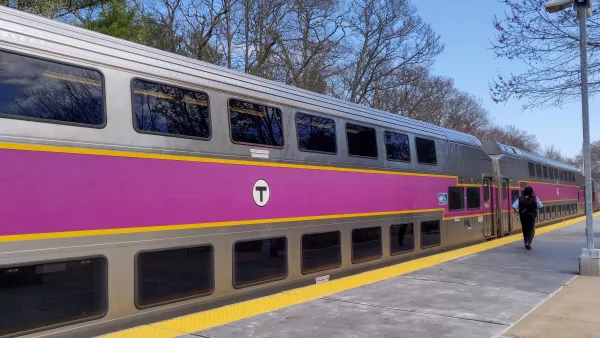
Boston Transit Ridership Grows Steadily
Ridership on the region’s commuter rail reached 80 percent of pre-pandemic levels in March.
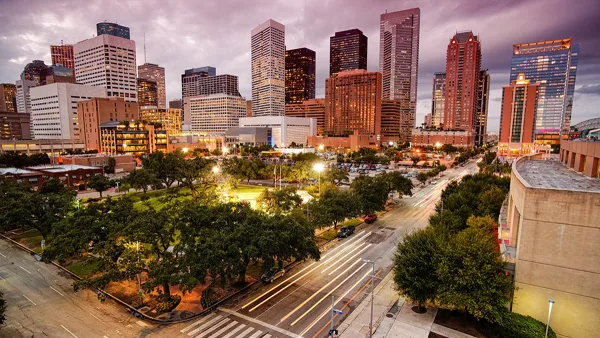
Houston Transit Agency Moves Forward With Long-Range Plan Even as Revenue Falls
Despite reduced ridership during the COVID-19 pandemic, Houston Metro is pushing ahead with its $7.5 billion long-range transit plan.

Planetizen Federal Action Tracker
A weekly monitor of how Trump’s orders and actions are impacting planners and planning in America.

The state-sanctioned urbicide of Austin
People don’t kill cities. Freeways do.

Colorado’s Largest Data Center Could Rise Next to Homes — Without a Public Hearing
The proposed campus would consume 11 times the power of Denver International Airport; as it has across the country, opposition mounts.

Nation's most wind-powered state turns to coal as data centers increase energy demand
For the first time in decades, Iowa has increased its generation of coal power.

NYC cools commuters with city's first rain garden above a bus stop
New York City officials say the plants in the rain garden can absorb 16 gallons of rainwater during heavy storms.

Brightline West’s future may rely on $6 billion federal loan
The company has until Nov. 2 to make a $400 million equity investment into its proposed high-speed rail line.

FREE Course: Walkable City 1: Why Walkability?
After describing his path towards focusing on walkability as the essence of good planning, Jeff Speck marches through his five principal reasons for making more walkable places.
Reinventing Malls: Planning Alchemy—Turning Gray Fields Into Gold
The course focuses on the opportunities and imperatives that shape reinvention of mall sites.

Greater Baltimore Committee
Eagle County Government
Harvard University Graduate School of Design
The Architects Foundation
University of Cincinnati Online
The Pocatello Development Authority
The Urban Renewal Agency of the City of Pocatello
Journal of the American Planning Association