A proposal from SoHo Broadway Initiative aims to prioritize pedestrian and bike infrastructure and discourage car traffic to make the neighborhood safer and more comfortable for the people who live and work there.


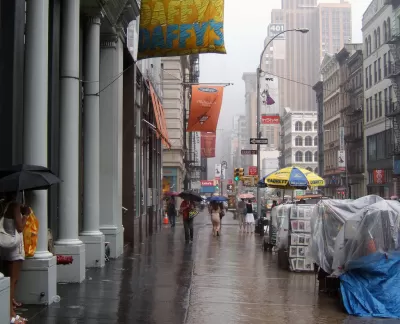
After describing the joys and challenges of living and working in New York City's SoHo neighborhood, Sara Schiller argues in favor of the SoHo Broadway Initiative's Public Realm Framework and Vision Plan, which presents "a fresh image of SoHo, where streets are reoriented for people and community, not cars."
Schiller notes that the pedestrian infrastructure put in place during the pandemic has once. again been subsumed by car traffic, making it difficult for pedestrians and cyclists to navigate the neighborhood safely and comfortably. According to Schiller,
The SoHo Broadway Initiative Public Realm Plan will, among other things, expand sidewalk width by at least 50 percent and divert car traffic away from the neighborhood, giving buses space to pick up and drop off travelers safely, and ensuring bikes can easily navigate these streets.
This will not only allow families to enjoy the area they love but also create a feeling of safety for those who truly need it in order to simply walk. It will boost foot traffic, which benefits the local economy, creating financial security for businesses and increasing overall livelihood in the area.
More importantly, Schiller says, these changes would most benefit the people who use the space and make SoHo "more welcoming and more human."
Read the full story: Opinion: Redesigning SoHo’s Streets for People and Community

NYC 25x25 Plan Would Reclaim ‘13 Central Parks’ From Cars
A plan backed by New York City Mayor Eric Adams would repurpose 25 percent of the city’s street space for multimodal transportation and pedestrian plazas.
Milwaukee Launches Vision Zero Plan
Seven years after the city signed its Complete Streets Policy, the city is doubling down on its efforts to eliminate traffic deaths.
Safe Streets Funding in Jeopardy
The Trump administration is specifically targeting bike infrastructure and other road safety projects in its funding cuts.

Planetizen Federal Action Tracker
A weekly monitor of how Trump’s orders and actions are impacting planners and planning in America.

California plans to bury El Niño’s downpour
If the state plays its cards right, it may be able to store a billion acre-feet of El Niño’s water in aquifers.

Desperate measures: Advocates weigh draining Lake Powell to fill Colorado River
Draining the reservoir could reduce evaporation losses by a couple hundred thousand acre-feet.

California city breaks ground on transit connector
The project includes three mobility hubs and a pedestrian bridge.

After public outcry, Massachusetts city releases housing development tracker
Cambridge’s tracker currently shows 250 housing projects in various stages of development.

40 years after approval, Chicago breaks ground on new park
The park honors Jean Baptiste Point du Sable, the city’s first permanent non-native settler.

FREE Course: Walkable City 1: Why Walkability?
After describing his path towards focusing on walkability as the essence of good planning, Jeff Speck marches through his five principal reasons for making more walkable places.
Reinventing Malls: Planning Alchemy—Turning Gray Fields Into Gold
The course focuses on the opportunities and imperatives that shape reinvention of mall sites.

City of Rosemead
Rutgers University, Edward J. Bloustein School of Planning and Public Policy
One Hundred Miles
Hunter College, City University of New York (CUNY)
The Architects Foundation
University of Cincinnati Online
City of Cambridge
Montrose County
The Pocatello Development Authority