Experts say a deep understanding of communities and access to rich local data are necessary for improving transit service for all segments of society.


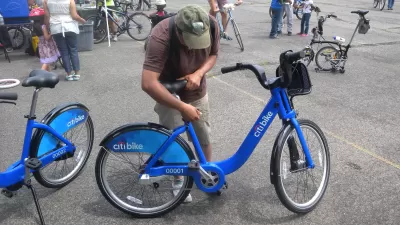
Since its launch ten years ago, users have taken over 60 million rides through New York's Citi Bike program. But demographic data shows the system "has been used largely by men," writes Skip Descant, indicating a disconnect between Citi Bike riders and New York City's general population. Sarah M. Kaufman, associate director of the New York University Rudin Center for Transportation Policy and Management, says "it’s important to understand, study and advocate for equity in transportation, since many systems don’t do a good job of serving everyone in a community."
"'Women overwhelmingly feel unsafe or experience harassment or assault on public transportation,' said Kaufman.'“Those numbers are often much worse for women of color, women who are disabled and trans women.'" With transportation equity becoming a "central goal" for many transportation agencies, experts argue that "a deep understanding of communities and access to rich data" are essential to making progress toward more equitable transportation systems. "Without enough data, one can't know who's able to use a system effectively and how they use it. Kaufman suggested society needs well-established data standards that pick up on the nuances of how people travel" in order to understand how to equitably serve them. Understanding travel patterns and transportation needs also requires deep engagement with local communities that goes beyond public meetings to establish trust.
Read the full story: Experts: Data, Community Trust Needed for Equitable Transit

'Arrested mobility' and the fight for Black movement
Author Charles T. Brown explains how his experience growing up in rural Mississippi shaped his worldview and his current work for equitable transportation.
MPO Boards Don’t Reflect Their Constituencies
Metropolitan planning organizations make important transportation planning decisions, but their memberships often don’t reflect their region’s demographics.
Do Americans Want Women-Only Subway Cars?
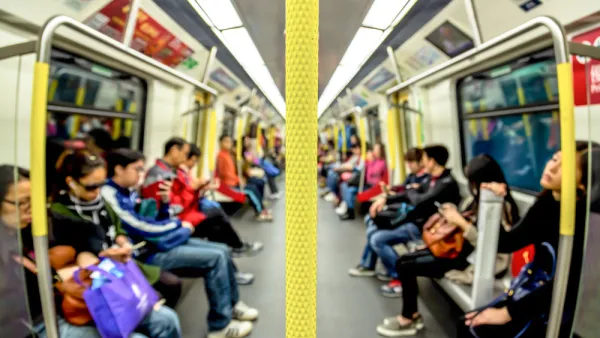
Results from a YouGov survey indicate there is interest in subway and train cars being designated as women only, especially among female riders, younger riders, and people who have had negative interactions on public transportation.

Planetizen Federal Action Tracker
A weekly monitor of how Trump’s orders and actions are impacting planners and planning in America.

California plans to bury El Niño’s downpour
If the state plays its cards right, it may be able to store a billion acre-feet of El Niño’s water in aquifers.

Desperate measures: Advocates weigh draining Lake Powell to fill Colorado River
Draining the reservoir could reduce evaporation losses by a couple hundred thousand acre-feet.

Chicago voters approve permanent festival grounds, penalty for vacant property owners
Currently, major summer and fall festivals take over public parks for weeks at a time, drawing criticism from nearby residents

NYC votes to cut outdoor dining red tape, speed up permitting
New York City also voted to allow the Department of Transportation to begin work on urgent projects before notifying elected officials.

California appears to reject Prop. 45
The proposition would have expanded the projects that qualify for a streamlined environmental review, effectively paring down the California Environmental Quality Act.

FREE Course: Walkable City 1: Why Walkability?
After describing his path towards focusing on walkability as the essence of good planning, Jeff Speck marches through his five principal reasons for making more walkable places.
Reinventing Malls: Planning Alchemy—Turning Gray Fields Into Gold
The course focuses on the opportunities and imperatives that shape reinvention of mall sites.


City of Rosemead
Rutgers University, Edward J. Bloustein School of Planning and Public Policy
One Hundred Miles
Hunter College, City University of New York (CUNY)
The Architects Foundation
University of Cincinnati Online
City of Cambridge
Montrose County
The Pocatello Development Authority