The state of Illinois passed the Climate and Equitable Jobs Act , which will phase fossil fuels out for energy production and position the state as a leader on equitable economic development in the clean energy sector.


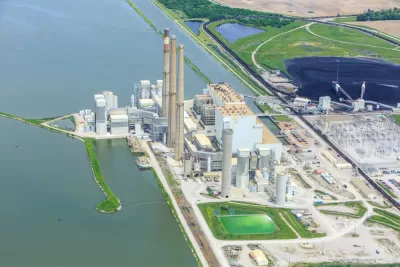
"Illinois Gov. J.B. Pritzker signed a landmark law this month that will transition the state to 100 percent clean energy by 2045, with benchmarks along the way," reports Ben Adler.
According to Adler, Illinois' new Climate and Equitable Jobs Act is particularly notable for three reasons: "Illinois is the first state in the coal-heavy Midwest to commit to eliminating carbon emissions; the plan received some Republican support; and it includes programs to ensure economic and racial equity."
Additional details of the bill are available in an article by J.C. Kibbey for the NRDC provides additional coverage of the new law. Kibbey lists a few significant goals of the bill, like slashing fossil fuels from the power sector, growing renewable energy production five-fold, creating economic opportunities for disadvantaged communities in clean energy, and implementing stronger ethics rules for utilities, among others.
"The Climate and Equitable Jobs Act establishes Illinois as a national leader on climate, equity, and support for communities and workers as they transition away from fossil fuels," writes Kibbey.
The bipartisan support for the Climate and Equitable Jobs Act might indicate a "potential partisan thaw" on the politics of climate change, according to Adler. "Perhaps that’s because the local effects of climate change are becoming impossible to ignore."
Along those lines, Kibbey notes: "This summer in Chicago was among the hottest on record, with record heat and severe drought across Northern Illinois harming farmers and echoing costly droughts in 2012 that were 'almost certainly' driven by climate change." Moreover, "Chicago set records for rainfall in 2018, 2019, and 2020, flooding homes and businesses. 'Uncharted' fluctuations in lake levels are causing property damage along the shore. Devastating floods in 2019 caused more than $6.2 billion in damage in the Midwest, including in Illinois—mostly in the central and southern parts of the state."
Read the full story: Illinois becomes 1st Midwestern state to pass a law to phase out fossil fuels

Building a Just Energy Transition
A new book outlines a “four-plus pillars” framework for phasing out fossil fuels while addressing systemic inequities, emphasizing public support, dedicated funding, economic diversification, coalitions, and reforms that dismantle extractive systems.
Art in Action: USC Event Calls for an Urgent Green Energy Transition
The El Respiro / Respire event at USC uses a large-scale human geochoreography to demand an urgent and equitable transition to green energy, blending art, activism, and community engagement to amplify the message of climate justice.
Building a Cleaner Future: Financing the Coal-to-Clean Transition
The Coal-to-Clean Initiative is an effort to fund the early retirement of coal plants in emerging markets, urging public-private collaboration to achieve a just energy transition that limits global warming and supports sustainable growth.

Planetizen Federal Action Tracker
A weekly monitor of how Trump’s orders and actions are impacting planners and planning in America.

Amtrak, CN end decades-long dispute with eight-year agreement
The new operating agreement establishes an updated framework for the companies to work together, including processes to resolve disputes.

Judges permit Denver to divert 77,000 acre feet from the Colorado River for reservoir expansion
Overuse and climate change have caused the Colorado River’s water levels to plummet.

Atlanta City Council unanimously backs $3.5 billion Beltline light rail project
The resolution was drafted after Atlanta Mayor Andre Dickens pulled support for the Atlanta Streetcar extension last year.

SEPTA to bring nearby frequent transit to over 1 million new riders as part of decade-long plan
The agency's Accelerate plan will also bring frequent transit to twice the amount of jobs that are currently located near it.

NYC plants over 18,000 trees, the most new foliage in a decade
Many of the trees were planted in communities vulnerable to extreme heat.

FREE Course: Walkable City 1: Why Walkability?
After describing his path towards focusing on walkability as the essence of good planning, Jeff Speck marches through his five principal reasons for making more walkable places.
Reinventing Malls: Planning Alchemy—Turning Gray Fields Into Gold
The course focuses on the opportunities and imperatives that shape reinvention of mall sites.

City of Thousand Oaks
City of Wisconsin Rapids
Harvard University Graduate School of Design
The Architects Foundation
University of Cincinnati Online
The Pocatello Development Authority
The Urban Renewal Agency of the City of Pocatello