A study shows zoning reform isn't a silver bullet for the housing crisis. In some low-income and BIPOC neighborhoods, it could 'cause more harm than good.'


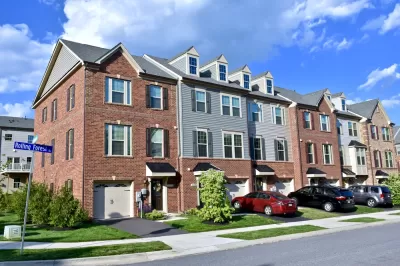
As proposals to reduce or eliminate single-family zoning requirements sweep the country, a new report from New York City’s Association for Neighborhood and Housing Development cautions that "neighborhood upzonings in BIPOC, low-income communities are where these rezonings are really going to cause more harm than good."
Cinnamon Janzer reports on the study, which compared rezoned neighborhoods to those that were not rezoned and "found stark differences between the rezoned areas and the non-rezoned areas." The team "also looked at projects where just a few parcels of land were rezoned at a time. They found that these targeted rezonings produced a higher ratio of affordable housing to market-rate housing than the city’s average of 19%, whereas any neighborhood-scale rezoning, whether the neighborhood was upzoned or downzoned, produced a lower-than-citywide-average ratio of affordable housing."
"Essentially, Walters’ data backs up the fact that more affordable housing is already being built in low-income BIPOC communities and that those communities have the most to lose by new development that brings in market-rate housing." According to Will Delaney, associate director of Hope Community, Inc. in Minneapolis, "just eliminating [single-family zoning] does not, in fact, actually repair the harms of it. If you just undo that but leave everything else the same, the research is laying out what we know to be true—the same winners and losers in the current market will win and lose based on this." Rather than using upzoning as a blunt instrument, says Walters, "the answer lies in treating rezoning and upzoning as what they are—one housing tool among many that should be used where appropriate."
Meanwhile, alarmist concerns about "the death of single-family housing" seem unlikely to come true, even with zoning reform. Under California's proposed SB 9, which is "designed to allow up to four homes on most single-family lots and spur the construction of badly needed new housing," separate research from the Terner Center at the University of California, Berkeley found that a total of 714,000 homes could be built on "5.4% of the state’s 7.5 million single-family lots "a "modest reform" considering the state's deep housing crisis.
Read the full story: Use Upzoning Sparingly, New Report Suggests


San Francisco Mayor’s ‘Family Zoning’ Plan Faces Pushback, Displacement Concerns
Newly proposed legislation aims to protect long-term tenants from displacement caused by Mayor Lurie’s proposed zoning reform plan, which would allow for more housing construction in parts of the city.

Arizona Enters the Upzoning Fray
Arizona lawmakers have proposed a bill that would boost the state's affordable housing fund and increase density in some residential areas.

More Evidence Upzoning Alone Won't Boost Housing
Experts caution that to encourage significant new housing production, other zoning reforms that reduce costs and streamline permitting should accompany increased density requirements.

Planetizen Federal Action Tracker
A weekly monitor of how Trump’s orders and actions are impacting planners and planning in America.

Northwest rail fans eager for Sept. 30 debut of Amtrak’s Airo fleet
Get ready for that new train smell and more seats. But they won’t go faster or run more frequently on the Cascades route in Washington and Oregon.

Record-breaking wildlife overpass in Colorado brings 91% reduction in animal collisions
Prior to the overpass, vehicles were hitting one deer per day on Colorado’s Interstate 25.

Trump wants to cancel nearly 98% of funding for HUD housing support program
Multiple housing groups are suing the administration in an effort to preserve the funding.

See the 12 communities on New York City’s affordable housing naughty list
The Upper East and West Sides, Elmhurst, and Bayside are among the communities that have built little affordable housing over the past five years, and now will see certain projects fast-tracked under new city rules.

Downtown Chicago opens the doors of first office-to-housing project
Chicago aims to eventually turn empty office space into 1,765 mixed-income housing units.

FREE Course: Walkable City 1: Why Walkability?
After describing his path towards focusing on walkability as the essence of good planning, Jeff Speck marches through his five principal reasons for making more walkable places.
Reinventing Malls: Planning Alchemy—Turning Gray Fields Into Gold
The course focuses on the opportunities and imperatives that shape reinvention of mall sites.

City of Thousand Oaks
City of Wisconsin Rapids
Harvard University Graduate School of Design
The Architects Foundation
University of Cincinnati Online
Northern Illinois Transit Authority (NITA)
The Pocatello Development Authority
The Urban Renewal Agency of the City of Pocatello