On August 12, the U.S. Supreme Court issued an emergency order to block the state of New York's eviction moratorium.


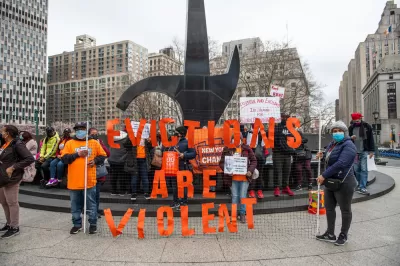
"The Supreme Court issued an emergency order on Thursday blocking a New York state pandemic-issued law created to protect renters from eviction," reports Lilian Dickerson.
The Supreme Court found fault with the portion of New York's "COVID Emergency Eviction and Foreclosure Prevention Act" that "allows tenants to self-certify that they’re facing economic hardship as a result of the pandemic, and avoid eviction through this means through the end of August," according to Dickerson.
"The court’s argument for the law’s unconstitutionality was that landlords had no way to effectively challenge such claims made by a tenant."
The three justices appointed by Democratic presidents dissented from the order, saying the order was unnecessary with the law set to expire in three works from the ruling, and with the potential for harm outweighing the benefit of the order.
An attorney representing the state's landlords is quoted praising the court order. "Meanwhile, housing advocates responded by asking the state legislature to reconvene to amend the law so that it allowed for hearings on tenants’ hardship declarations, in compliance with the emergency order," writes Dickerson.
FULL STORY: Supreme Court partially blocks New York's eviction ban


Landlords Facing Loss of Property and Income During Eviction Bans
Independent landlords struggle to keep up with the cost of rental units and continue to face massive income drops caused by eviction moratoriums. Some of them are pushing back.
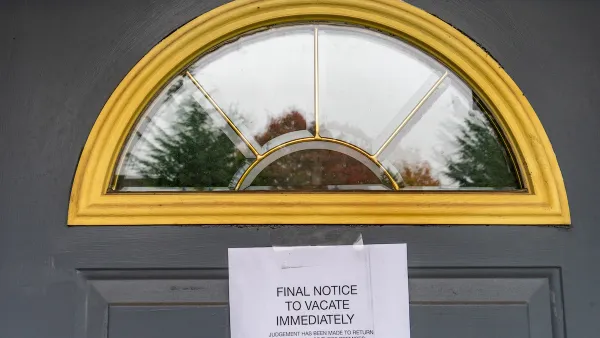
Evictions on the Rise in California
As rent costs continue to grow and eviction protection programs lapse, eviction rates are spiking across the state.
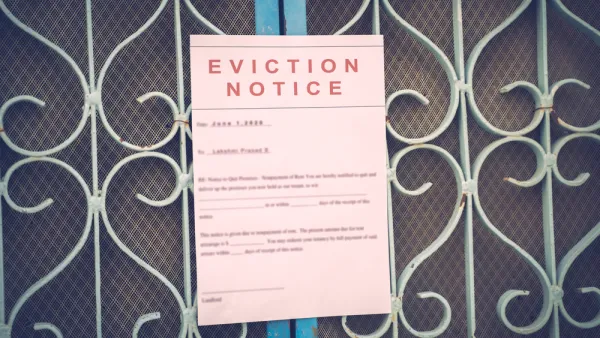
Study: Tenant Distance From Court Affects Eviction Risk
Renters with longer commutes to eviction courts, often located downtown, face higher eviction rates.

Planetizen Federal Action Tracker
A weekly monitor of how Trump’s orders and actions are impacting planners and planning in America.

The state-sanctioned urbicide of Austin
People don’t kill cities. Freeways do.

US to reduce Colorado River water deliveries to Mexico
A new Colorado Treaty amendment reduces Mexico’s Colorado River water allocation by 250,000 acre feet.

5 New England states march closer to 800 megawatt wind energy project
Securing federal approval for the project may be complicated under the Trump administration, which has historically been hostile towards domestic wind power.

Baltimore to break ground on $50 million Transit Priority Project
The project will bring faster bus trips, safer streets and better bike connections to Baltimore.

Airbnb launches $250 million 'last-dollar financing' housing accelerator, makes first investment in Austin
The company will put $6.4 million towards affordable housing development in Texas’ capital.

FREE Course: Walkable City 1: Why Walkability?
After describing his path towards focusing on walkability as the essence of good planning, Jeff Speck marches through his five principal reasons for making more walkable places.
Reinventing Malls: Planning Alchemy—Turning Gray Fields Into Gold
The course focuses on the opportunities and imperatives that shape reinvention of mall sites.

Eagle County Government
Harvard University Graduate School of Design
Nashville Planning Department
The Architects Foundation
University of Cincinnati Online
The Pocatello Development Authority
The Urban Renewal Agency of the City of Pocatello
Journal of the American Planning Association