Three planned Phoenix-area developments have drawn criticism for wasteful water use, but how do water parks compare to other municipal uses?


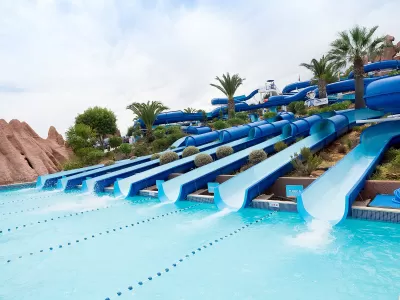
As drought intensifies in the West, Joanna Allhands examines the impact that three planned water parks in Arizona would have on water supplies. "[A]re these parks really an abomination, compared to other municipal water uses?"
Crystal Lagoons, a planned development featuring a 10-acre lagoon, "will require about 19.5 million gallons, or roughly 60 acre-feet, to fill. That should be less than what the site had previously used to grow crops, and roughly what it takes to supply 180 homes a year, based on what the average Glendale home uses." The Strand @ Gilbert, meanwhile, "is expected to use 200 acre-feet of water a year, which Gilbert contends is less than half of what an average golf course might use," and will be supplying its own water rather than using city supplies.
Some wonder whether recreational uses should be allowed at all. Ultimately, Allhands writes, "image is everything, particularly when we should be encouraging folks to conserve. If it’s not wasteful to build beaches in the desert, make that case to residents much earlier in the development process – and with much greater detail."
Read the full story: Is it a waste of water to bring a bit of the ocean to metro Phoenix?
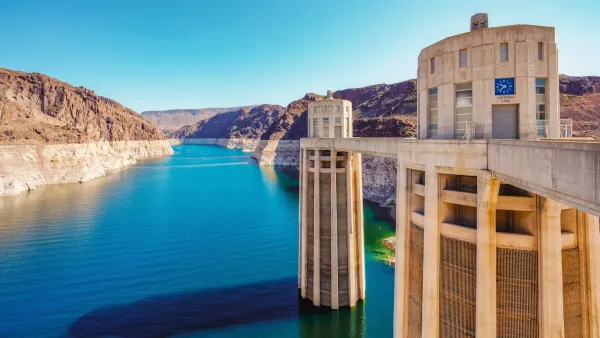
Federal proposal calls for mandatory water cuts to Arizona, California and Nevada
The Bureau of Reclamation stepped in after states failed to come to an agreement over Colorado River water use reductions.
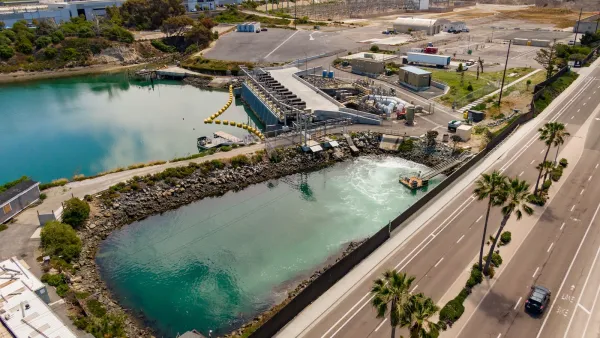
New agreement would let Arizona, Nevada use water from California desalination plant
The plan will help reduce strain on Lake Mead during extreme drought periods.
Southern California water agencies accelerate reuse and recycling projects
From desalination to wastewater recycling, California officials are promoting more reclamation projects as the Southwest remains in drought.

Planetizen Federal Action Tracker
A weekly monitor of how Trump’s orders and actions are impacting planners and planning in America.

California plans to bury El Niño’s downpour
If the state plays its cards right, it may be able to store a billion acre-feet of El Niño’s water in aquifers.

Desperate measures: Advocates weigh draining Lake Powell to fill Colorado River
Draining the reservoir could reduce evaporation losses by a couple hundred thousand acre-feet.

Mamdani’s pied-à-terre tax survives legal challenge
A panel of judges found that the plaintiffs failed to demonstrate injury as a result of New York City's implementation of the tax.

Eastern Nebraska is running out of electricity
Data centers and electrification are straining eastern Nebraska’s grid, throttling economic development.

Seattle passes record-breaking transit services expansion
Proposition 1 will double the city’s transit tax to add 95,000 more bus trips and preserve 180,000 bus trips annually.

FREE Course: Walkable City 1: Why Walkability?
After describing his path towards focusing on walkability as the essence of good planning, Jeff Speck marches through his five principal reasons for making more walkable places.
Reinventing Malls: Planning Alchemy—Turning Gray Fields Into Gold
The course focuses on the opportunities and imperatives that shape reinvention of mall sites.


City of Rosemead
Rutgers University, Edward J. Bloustein School of Planning and Public Policy
One Hundred Miles
University of Michigan School for Environment and Sustainability (SEAS)
Hunter College, City University of New York (CUNY)
The Architects Foundation
City of Cambridge
Montrose County
The Pocatello Development Authority