New research published by the Journal of Transport and Land Use analyzes tens of thousands of pedestrian fatalities over 16 years in the United States.


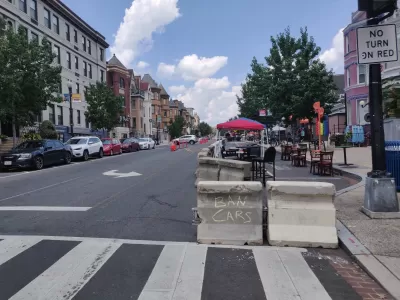
A study published by the Journal of Transport and Land Use provides an unprecedented map of traffic safety—or lack thereof—in the United States.
An article by Kea Wilson shares news of the new research: "In what may be the only attempt to map the U.S. corridors with the highest numbers of pedestrian deaths ever conducted, researchers analyzed data on every pedestrian crash fatality since the federal government began collecting standardized data on them in 2001, until 2016, the last year for which finalized data is available."
Three-quarters of the most fatal roads for pedestrians are located in low-income neighborhoods, according to one of the key findings of the research. There's a surprising amount of geographic variety to be found on the list of "hot spot" corridors—defined as 1,000-meter stretches of road where drivers have killed at least six pedestrians in eight years or less.
The surprisingly varied list spans communities from pedestrian-rich Northeastern megacities to car-dependent Sun Belt towns that routinely rank among the most dangerous for pedestrians. Notorious roads like U.S. Highway 19 in Pasco County, FL, made the list – the 20-mile corridor was the site of seven distinct hot spots and 137 walking fatalities during the study period, almost the same number of U.S. commercial airline deaths during the same years — but so did 12 corridors in New York City, which often ranks as the most walkable city in America.
The variety of the list does not extend to the designs of the roads, according to Wilson. "No matter the location, the design of the deadly roads were much the same: ultra-wide, blisteringly fast, and flanked by businesses to which residents walk every day."
As noted by Wilson, despite the growing rate of pedestrian fatalities in the United States, most cities don't map their worst crashes. Some advocates, like one cited in the source article, think cities should be required to map their pedestrian fatalities—and be required to undertake design and engineering improvements to reduce fatalities.
Rebecca L. Sanders, the founder and principal researcher of Safe Streets Research, LLC and a co-author of the study, is quoted in the article saying that the National Highway Traffic Safety Administration has the capability to get the geo-data on road characteristics near hot spots.
Read the full story: The Most Dangerous Roads in America for Walkers


Debunking Traffic Safety Myths as Pedestrian Fatalities Increase
Angie Schmitt, former editor at Streetsblog USA, has written a new book about pedestrian fatalities, which works to dispel some of the myths about traffic safety in the United States.

Latest Traffic Safety Data Adds Grim Death Count to an Already Tragic Year
The public health epidemic created by dangerous roads, dangerous cars, and dangerous drivers was exacerbated by the COVID-19 pandemic, according to recent data from the National Highway Traffic Safety Administration.

Cleveland Ready for Vision Zero
Cleveland is working to become the latest U.S. city to set a goal to eliminate traffic fatalities.

Planetizen Federal Action Tracker
A weekly monitor of how Trump’s orders and actions are impacting planners and planning in America.

HUD modernizes 50-year-old manufactured housing framework
The Next Generation Manufactured Housing Action Plan establishes new energy-efficiency standards for manufactured homes, and new guidelines for anchoring them.

Data reveals that NYC’s bet on congestion pricing has paid off
After almost two years of the program, reports show positive impacts on traffic and air quality and no disruptions to parking.

How Chicago, New York and Seattle are funding transit projects amid tough times
Notes from the American Public Transportation Association's TransForm conference in Chicago.

Transport for London tackles hate crime spike with free bystander training
Recorded hate crime offences on the London's transport network have increased by 36 per cent.

Denver is solving homelessness. Why aren't the rest of us?
Since 2023, Denver's street homeless population has decreased by 64%, proving that effective tools exist to support those in need of housing.

FREE Course: Walkable City 1: Why Walkability?
After describing his path towards focusing on walkability as the essence of good planning, Jeff Speck marches through his five principal reasons for making more walkable places.
Reinventing Malls: Planning Alchemy—Turning Gray Fields Into Gold
The course focuses on the opportunities and imperatives that shape reinvention of mall sites.


One Hundred Miles
County of Mendocino
planning NEXT
The Architects Foundation
University of Cincinnati Online
Montrose County
Northern Illinois Transit Authority (NITA)
The Pocatello Development Authority