Cities around the continent are taking steps to reimagine transportation, housing, and energy use with intriguing projects that could provide useful lessons for American cities.


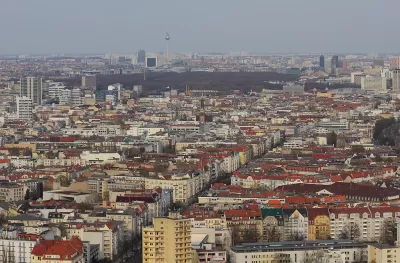
In a guest essay in Volts, Michael Eliason highlights five "intriguing and powerful" European urbanism trends that hold useful lessons for the Biden administration. These include:
- Brownfield redevelopment: Cities all over Europe are turning brownfields into dense, livable, eco-friendly neighborhoods that take advantage of existing land and discourage sprawl. "Citizen participation is also a major component of these projects. Unlike in the US, this participation isn’t a wasteful exercise whereby local homeowners get to block new homes and preserve the status quo. Rather, these processes allow residents to have a say in what their new district can look like, where things should be located, and what kinds of open space or car-free areas it will have."
- Diversity in housing options: Unlike the largely single-family zoning found in many U.S. cities, "cities like Berlin, Vienna, and Freiburg have proactive land policies for non-market housing like social housing, cooperatives, and baugruppen. They award sites to projects incorporating sustainability, affordability, or other innovations." Meanwhile, social housing plays a major role in Europe; a quarter of Dutch housing is social housing, and Paris is aiming for 30% social housing by 2030.
- Rapid transformation: City leaders are working to expedite projects and take "rapid, productive steps" to implement plans that seek to transform cities, improve livability, and reduce environmental impacts. In a reversal of U.S. NIMBYism, some cities are embracing change as a positive constant. "Rotterdam is never finished," goes a slogan in the Dutch city. "Quality of life is always improving."
- Productive cities: The concept promotes a sort of radical mixed-use that brings production into the heart of the city. Production, Eliason writes, "can include urban agriculture, energy production, food production/processes, recycling centers, or any of the small-scale production processes that constitute industry 4.0." As Eliason asserts, "[p]roductive cities mark a return to the way cities developed centuries ago, but with significantly less pollution and safety hazard."
- Circular economy: The European parliament's Circular Economy Action Plan lays out concrete steps "to reduce waste, empower consumers, change food systems, and make sustainable products the norm."
Read the full story: The 5 coolest trends in urbanism ... in Europe


The Trouble With QUIMBY
The idea of “quality urbanism in my back yard” has its uses, but should not be used to limit housing supply.
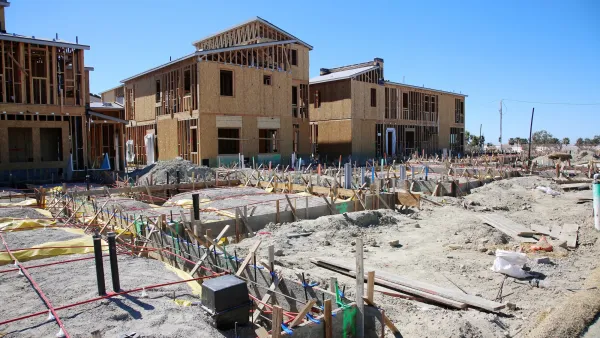
Less than 6% of California cities are building enough housing for very low-income households
Only five jurisdictions are on track to meet their housing goals for all income brackets.
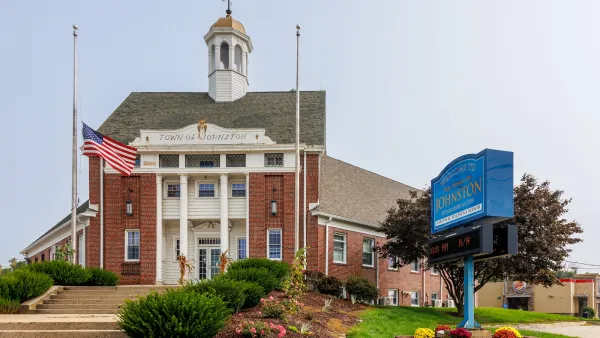
Judge says Rhode Island town can't seize private lot to block affordable housing
The town of Johnston moved to seize a lot for municipal buildings after its owners submitted a plan for a 254-unit housing development.

Planetizen Federal Action Tracker
A weekly monitor of how Trump’s orders and actions are impacting planners and planning in America.

The state-sanctioned urbicide of Austin
People don’t kill cities. Freeways do.

Colorado’s Largest Data Center Could Rise Next to Homes — Without a Public Hearing
The proposed campus would consume 11 times the power of Denver International Airport; as it has across the country, opposition mounts.

Nation's most wind-powered state turns to coal as data centers increase energy demand
For the first time in decades, Iowa has increased its generation of coal power.

NYC cools commuters with city's first rain garden above a bus stop
New York City officials say the plants in the rain garden can absorb 16 gallons of rainwater during heavy storms.

Brightline West’s future may rely on $6 billion federal loan
The company has until Nov. 2 to make a $400 million equity investment into its proposed high-speed rail line.

FREE Course: Walkable City 1: Why Walkability?
After describing his path towards focusing on walkability as the essence of good planning, Jeff Speck marches through his five principal reasons for making more walkable places.
Reinventing Malls: Planning Alchemy—Turning Gray Fields Into Gold
The course focuses on the opportunities and imperatives that shape reinvention of mall sites.


Greater Baltimore Committee
Eagle County Government
Harvard University Graduate School of Design
The Architects Foundation
University of Cincinnati Online
The Pocatello Development Authority
The Urban Renewal Agency of the City of Pocatello
Journal of the American Planning Association