The city, which has some of the nation's most dangerous streets for pedestrians and cyclists, is installing 3 miles of new bike lanes and pedestrian ramps on some of its busiest downtown corridors.


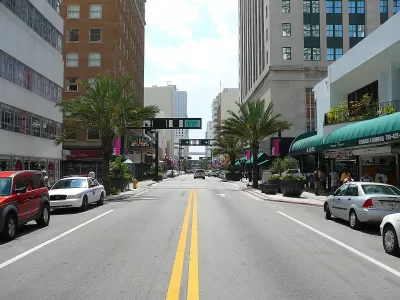
E-scooter fees will partially fund a $2 million program to add 3 miles of protected bike lanes in downtown Miami. As reported by Jason Plautz in Smart Cities Dive, "the city will install concrete barriers along the new lanes and add pedestrian ramps to adjacent sidewalks."
"The goal is to eventually build an extensive network of micromobility lanes — including bollards, concrete barriers and painted bike boxes — that would connect large parts of downtown, rather than simply adding lanes to a handful of streets, said Carlos Cruz-Casas, assistant director for mobility in the Miami-Dade County Department of Transportation and Public Works. The 'proactive' effort, he said, will help create 'a more inclusive transportation network' and also further the county’s Vision Zero goals, which seek to eliminate traffic deaths and serious injuries by 2030."
Kevin Amézaga, executive director of the mobility group Miami Riders Alliance, calls the new lanes "extremely necessary" given Miami's dangerous roads. "As scooters have become more popular and established transportation tools in cities, transportation departments around the country are rethinking their infrastructure plans to build dedicated lanes or paths that can accommodate them. Many cities — like Indianapolis, Atlanta and Santa Monica, California, — have required micromobility operators add fees or pay into infrastructure funds to pay for the new construction."
FULL STORY: E-scooter fees help fund protected bike lanes in downtown Miami

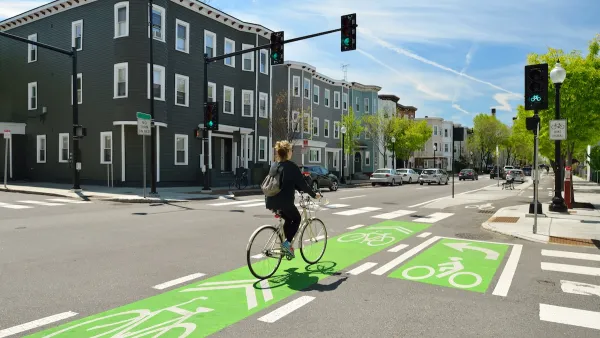
NACTO Releases Updated Urban Bikeway Guide
The third edition of the nationally recognized road design guide includes detailed design advice for roads that prioritize safety and accessibility for all users.
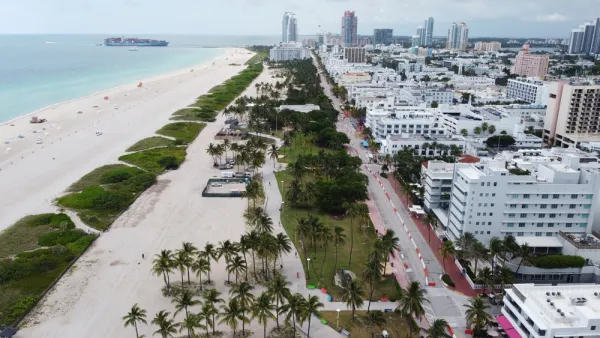
Miami Reinstates E-Scooter Program
After abruptly ending its shared e-scooter program last month, Miami is letting the devices return to its streets–with some new rules.
Cleveland to Boost Bike Safety With New Bike Lanes, School Programs
The program, using curriculum created by Cleveland Bikes, is part of a broader effort to improve safety along school routes.

Planetizen Federal Action Tracker
A weekly monitor of how Trump’s orders and actions are impacting planners and planning in America.

The state-sanctioned urbicide of Austin
People don’t kill cities. Freeways do.

US to reduce Colorado River water deliveries to Mexico
A new Colorado Treaty amendment reduces Mexico’s Colorado River water allocation by 250,000 acre feet.

5 New England states march closer to 800 megawatt wind energy project
Securing federal approval for the project may be complicated under the Trump administration, which has historically been hostile towards domestic wind power.

Baltimore to break ground on $50 million Transit Priority Project
The project will bring faster bus trips, safer streets and better bike connections to Baltimore.

Airbnb launches $250 million 'last-dollar financing' housing accelerator, makes first investment in Austin
The company will put $6.4 million towards affordable housing development in Texas’ capital.

FREE Course: Walkable City 1: Why Walkability?
After describing his path towards focusing on walkability as the essence of good planning, Jeff Speck marches through his five principal reasons for making more walkable places.
Reinventing Malls: Planning Alchemy—Turning Gray Fields Into Gold
The course focuses on the opportunities and imperatives that shape reinvention of mall sites.


Eagle County Government
Harvard University Graduate School of Design
Nashville Planning Department
The Architects Foundation
University of Cincinnati Online
The Pocatello Development Authority
The Urban Renewal Agency of the City of Pocatello
Journal of the American Planning Association