Highway expansion has been shown, time and again, to increase traffic and congestion. Cities are finally getting the message.


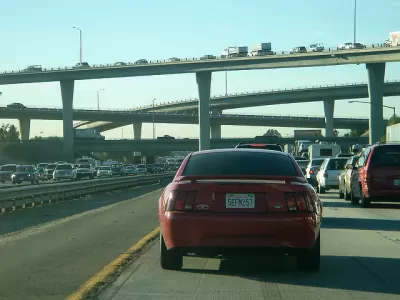
For decades, conventional wisdom in transportation planning circles held that "when a highway is choked with traffic, the solution is to expand it or build another road nearby." Yet research from projects around the country, writes Alan Ehrenhalt in Governing, has disproven this theory. When Los Angeles widened its notorious I-405 freeway in 2014, "[t]ravel times actually increased once the project was finished, although rush hours shortened slightly." Meanwhile "the Katy Freeway in central Houston, expanded in 2011 to more than 20 lanes in some segments, making it one of the widest highways in the world," saw travel times out of downtown increase "by some estimates as much as 30 percent" after the project's completion.
The increase in traffic is due to a phenomenon known as "induced demand," a concept that dates back to the 1960s, when economist Anthony Downs argued that "peak-hour congestion rises to meet maximum capacity." As it turns out, "highways are vulnerable to latent demand — people who haven’t been using them start to fill them up once the capacity is expanded." But "traffic planners, especially those in state highway departments, refused to believe it," writes Ehrenhalt. "They went with what they considered common sense and kept expanding and widening."
Expanded highway capacity also leads to "more development: new trucking depots and large numbers of employees who commute to work; new housing developments and shopping centers at the exits," all of which add to the congestion.
"Most big cities seem to have caught on and are no longer seeking to expand the highways within their borders. But quite a few state transportation agencies have failed to get the message, or are simply ignoring it," with major projects continuing to move forward. "Urban transportation needs many things," says Ehrenhalt, "but it doesn’t need more asphalt."
FULL STORY: Asphalt, Gridlock and Common Sense

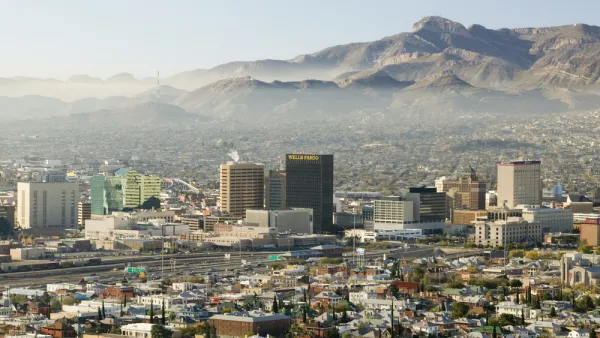
Report Criticizes El Paso Interstate Expansion Plan
An independent review of TxDOT's proposed expansion of I-10 through downtown El Paso highlights several flaws and a price tag close to $800 million.
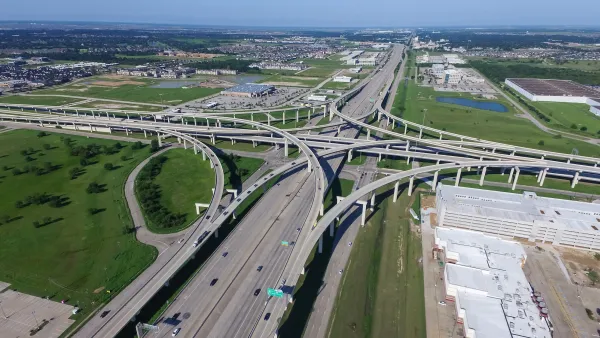
Induced demand is real: Commutes on Houston's 26-lane freeway take 51% longer after expansion
A massive freeway expansion only led to longer drive times, showing that building more lanes won't solve congestion.
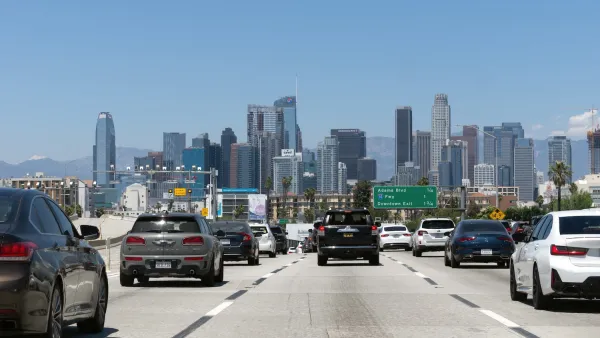
Report: Caltrans Models, Which Guide Billions in Transportation Funding, are Inaccurate and Outdated
Many of the predictive models used by California’s transportation agency fail to account for post-pandemic travel patterns and induced demand.

Planetizen Federal Action Tracker
A weekly monitor of how Trump’s orders and actions are impacting planners and planning in America.

The state-sanctioned urbicide of Austin
People don’t kill cities. Freeways do.

US to reduce Colorado River water deliveries to Mexico
A new Colorado Treaty amendment reduces Mexico’s Colorado River water allocation by 250,000 acre feet.

Mamdani overhauls NYC's Vision Zero plan with 100 new policy goals
The overhaul aims to reduce traffic deaths and make streets safer for pedestrians, cyclists and drivers through lower speed limits, new safety infrastructure and more.

Amtrak not solely to blame for New Jersey commuter rail's unreliability, report finds
A new study from the Garden State Initiative found that NJ Transit’s budget grew 20% across a 4 year period, but reliability declined significantly over the same period.

EPA erases limits on planet-warming pollution from power plants
Under Monday’s plan, power plants would still have some limits on how much mercury, arsenic and other contaminants they can emit.

FREE Course: Walkable City 1: Why Walkability?
After describing his path towards focusing on walkability as the essence of good planning, Jeff Speck marches through his five principal reasons for making more walkable places.
Reinventing Malls: Planning Alchemy—Turning Gray Fields Into Gold
The course focuses on the opportunities and imperatives that shape reinvention of mall sites.

Eagle County Government
Harvard University Graduate School of Design
Nashville Planning Department
The Architects Foundation
University of Cincinnati Online
The Pocatello Development Authority
The Urban Renewal Agency of the City of Pocatello
Journal of the American Planning Association