Despite the purported exodus of untethered Silicon Valley workers from the Bay Area, rents in the city are still the highest in the United States.


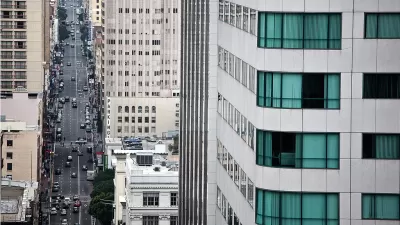
San Francisco's famously high rents have dropped by close to 25% during the COVID-19 pandemic, writes Gabrielle Canon in the Guardian, but the city still remains the nation's most expensive, with the average one-bedroom renting for $2,660 per month.
According to the California Housing Partnership Corporation (CHPC), California needs roughly 1.3 million additional affordable rental units to meet the state's housing needs.
The pandemic complicated a pre-existing housing crisis in a region with California's highest rate of income inequality. While "tech workers and other high earners who easily adapted to work-from-home policies early in the pandemic while retaining big salaries have been able to lower their rental rates or cash in on new opportunities to purchase homes with extremely low interest rates," half of the area's renters lost income, writes Canon. The pandemic's uneven economic effects have hit low-wage workers in the hospitality and retail industries hardest, with few prospects of returning to the job market "any time soon," according to Karen Chapple, faculty director and professor of city and regional planning at the University of California, Berkeley. Int he article, Chapple warns that rent moratoriums, if not accompanied by permanent rent relief, are only a temporary solution for those who face eviction and homelessness.
FULL STORY: San Francisco rents are plummeting – but its housing crisis could get worse

Two Stories From 2020: Which Is True?
Have all cities lost people due to COVID-19, or just a few high-cost ones?
The Demographics of San Francisco’s Pandemic Urban Exodus
New Census data break down San Francisco’s population losses during the first year-plus of the pandemic by race and age.
Manhattan’s Population Is on the Rebound
After the ‘urban exodus’ brought on by the pandemic, most of New York City’s boroughs are regaining their population.

Planetizen Federal Action Tracker
A weekly monitor of how Trump’s orders and actions are impacting planners and planning in America.

The state-sanctioned urbicide of Austin
People don’t kill cities. Freeways do.

US to reduce Colorado River water deliveries to Mexico
A new Colorado Treaty amendment reduces Mexico’s Colorado River water allocation by 250,000 acre feet.

5 New England states march closer to 800 megawatt wind energy project
Securing federal approval for the project may be complicated under the Trump administration, which has historically been hostile towards domestic wind power.

Baltimore to break ground on $50 million Transit Priority Project
The project will bring faster bus trips, safer streets and better bike connections to Baltimore.

Airbnb launches $250 million 'last-dollar financing' housing accelerator, makes first investment in Austin
The company will put $6.4 million towards affordable housing development in Texas’ capital.

FREE Course: Walkable City 1: Why Walkability?
After describing his path towards focusing on walkability as the essence of good planning, Jeff Speck marches through his five principal reasons for making more walkable places.
Reinventing Malls: Planning Alchemy—Turning Gray Fields Into Gold
The course focuses on the opportunities and imperatives that shape reinvention of mall sites.

Eagle County Government
Harvard University Graduate School of Design
Nashville Planning Department
The Architects Foundation
University of Cincinnati Online
The Pocatello Development Authority
The Urban Renewal Agency of the City of Pocatello
Journal of the American Planning Association