A community land trust in San Francisco is buying up properties with the goal of preserving affordable spaces for arts and culture.


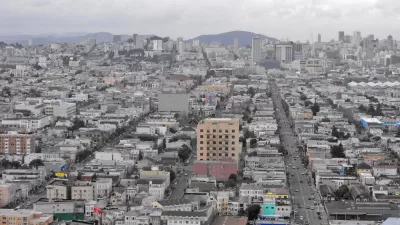
Founded in 2013 with a $5 million grant from the Kenneth Rainin Foundation, the Community Arts Stabilization Trust (CAST) acquires Bay Area properties to run in collaboration with local cultural organizations. Much like a traditional real estate operation, CAST monitors available properties and potential buyers, but also keeps an eye on cultural institutions that face displacement and works to preserve arts spaces before they’re lost.
The trust currently owns four properties, two of which will be purchased at cost by their resident organizations in 2022. The others will be leased to arts and culture groups at low cost. "Plenty of organizations can’t afford to own their own or have made the decision not to own property but really benefit and want a long-term, stable, below market-rate lease that is affordable for them," CAST executive director Moy Eng told Next City. Having a guarantee of low-cost rent can help nonprofit institutions stay afloat and maintain their roots in the community. To help counter the astronomical rents that have increasingly pushed artists out of San Francisco, the trust is also planning its first affordable residential project.
Other cities have taken notice of CAST's innovative model, which brings together philanthropists, property owners, and municipal agencies to preserve legacy properties and acquire new homes for arts and artists. In Seattle, a newly formed public development authority called the Cultural Space Agency will focus on "preserving [the] city’s cultural spaces, building community wealth, and investing in cultural communities of color," signaling an increased awareness of the contributions of arts and culture to a thriving city.
FULL STORY: Permanently Affordable Real Estate for Arts and Culture Matters

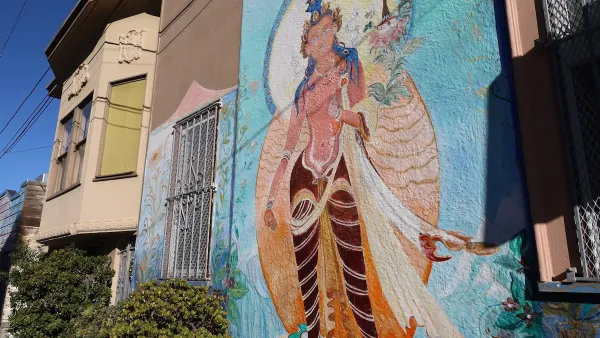
How a San Francisco Land Trust is Preserving Affordable Housing for Artists
The Artist Space Trust has received $10 million in properties bequeathed by artists that will become permanently affordable housing.
Northern Virginians Look to Community Land Trusts to Increase Affordable Housing
As the state's real estate costs rise, community land trusts struggle to access funding and land in order to build more affordable housing.

As prices skyrocket, San Francisco Mayor declares rent emergency
Landlords in San Francisco have initiated over 2,400 evictions since January, putting the city on track to see more evictions this year than during any year in the past decade.

Planetizen Federal Action Tracker
A weekly monitor of how Trump’s orders and actions are impacting planners and planning in America.

The state-sanctioned urbicide of Austin
People don’t kill cities. Freeways do.

US to reduce Colorado River water deliveries to Mexico
A new Colorado Treaty amendment reduces Mexico’s Colorado River water allocation by 250,000 acre feet.

Mamdani overhauls NYC's Vision Zero plan with 100 new policy goals
The overhaul aims to reduce traffic deaths and make streets safer for pedestrians, cyclists and drivers through lower speed limits, new safety infrastructure and more.

Amtrak not solely to blame for New Jersey commuter rail's unreliability, report finds
A new study from the Garden State Initiative found that NJ Transit’s budget grew 20% across a 4 year period, but reliability declined significantly over the same period.

EPA erases limits on planet-warming pollution from power plants
Under Monday’s plan, power plants would still have some limits on how much mercury, arsenic and other contaminants they can emit.

FREE Course: Walkable City 1: Why Walkability?
After describing his path towards focusing on walkability as the essence of good planning, Jeff Speck marches through his five principal reasons for making more walkable places.
Reinventing Malls: Planning Alchemy—Turning Gray Fields Into Gold
The course focuses on the opportunities and imperatives that shape reinvention of mall sites.

Eagle County Government
Harvard University Graduate School of Design
Nashville Planning Department
The Architects Foundation
University of Cincinnati Online
The Pocatello Development Authority
The Urban Renewal Agency of the City of Pocatello
Journal of the American Planning Association