To keep up with affordable housing demand, Snohomish County needs to add 200,000 units by 2050. Planned light rail stations could be the ticket.



Snohomish County's Fall 2020 Light Rail Communities program, as a part of an in-progress workshop to plan subareas around two proposed light rail station locations, has solicited feedback from the community about housing affordability, now and in the future. According to Shaun Kuo, the conversation comes at a time when affordable housing prospects are dwindling in Snohomish County.
"The County presents worsening figures for housing affordability, as new housing grew 7% slower than new households, there was a 50% to 67% decline in low rent housing in the county between 2011 and 2017, and 30% of homeowners and 50% of renters were cost burdened–spending more than 30% of their income on housing and utilities," Kuo reports. Lower rates of homeownership among Black, Indigenous, and people of color (BIPOC) communities shows that the burden of a lack of housing affordability tends to fall on these groups.
Given the need to add 200,000 units to the housing market by 2050, Snohomish County acknowledges that about half of the new stock should be subsidized low-income households and should be built around high capacity transit, Kuo says.
The article discusses Missing Middle Housing, incentives, inclusionary housing, and local housing projects as housing approaches to consider to increase affordable housing options in the county. Recently, the 2017 Census Bureau data reported that 65% of the county’s 300,000 housing units were detached single-family homes, 23% was multifamily, and under 7% was single-family attached–townhouses, duplexes, etc.
Another desired housing type: missing middle housing. "Middle housing isn’t precluded from Snohomish County’s development regulation and zoning, but one reason why that kind of housing is lacking is due to building industry cost models not favoring middle housing. The county’s Urban Core Subarea Plan will be reviewing existing development regulations to search for opportunities to encourage missing middle housing," writes Kuo.
The workshops acknowledge the potential impacts of light rail stations to increase housing cost rise and cause displacement as a result. "Preserving existing affordable housing and supporting the development of diverse dwelling sizes and types to meet the needs of the current and future population will be a part of the Urban Core Subarea Plan’s guiding principles," reassures Kuo.
FULL STORY: Snohomish County Light Rail Planning Turns toward Housing


A Transit and Land Use Planning Shift in Federal Way, Washington
Federal funding for Sound Transit's Federal Way Link extension and a new transit-oriented land use plan are changing the future of Federal Way.
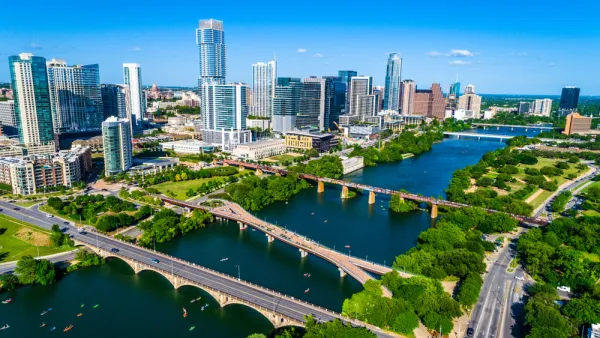
Light Rail and Buses and More, Oh My!
A light rail bridge proposed for Lady Bird Lake, still pre-design, is causing controversies about whether adding buses to the bridge would be too dangerous for the other non-automotive modes.
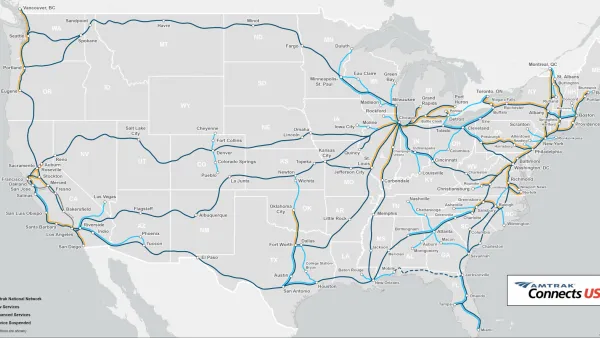
Infrastructure and its Discontents
The significance of the Biden administration's expansive view of infrastructure is reflected in the flood of commentary published in the week since the public's first look at the American Jobs Plan.

The state-sanctioned urbicide of Austin
People don’t kill cities. Freeways do.

US to reduce Colorado River water deliveries to Mexico
A new Colorado Treaty amendment reduces Mexico’s Colorado River water allocation by 250,000 acre feet.

New Jersey’s second-largest city bans standalone data centers
Jersey City will continue to allow co-location facilities, such as those meant for research institutions that store their own data.

Amtrak not solely to blame for New Jersey commuter rail's unreliability, report finds
A new study from the Garden State Initiative found that NJ Transit’s budget grew 20% across a 4 year period, but reliability declined significantly over the same period.

EPA erases limits on planet-warming pollution from power plants
Under Monday’s plan, power plants would still have some limits on how much mercury, arsenic and other contaminants they can emit.

Phoenix announces new on-demand transit service, more frequent RAPID buses
Both new services will launch in October, and are part of Phoenix's Project Effective Access Solutions for Easing Congestion.

FREE Course: Walkable City 1: Why Walkability?
After describing his path towards focusing on walkability as the essence of good planning, Jeff Speck marches through his five principal reasons for making more walkable places.
Reinventing Malls: Planning Alchemy—Turning Gray Fields Into Gold
The course focuses on the opportunities and imperatives that shape reinvention of mall sites.

Eagle County Government
Harvard University Graduate School of Design
Nashville Planning Department
The Architects Foundation
University of Cincinnati Online
The Pocatello Development Authority
The Urban Renewal Agency of the City of Pocatello
Journal of the American Planning Association