Labor unions are raising alarms about the difficulties of keeping transit workers—the essential workers upon which so many essential workers rely—safe during the pandemic.


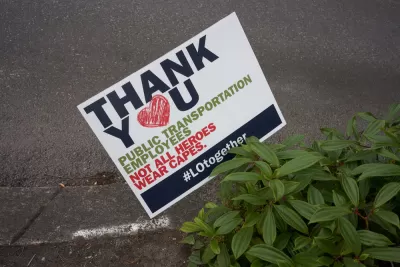
Marcia Brown reports on an underreported tragedy amongst the many tragedies of the COVID-19 pandemic:
Hundreds of these transit workers have died as a result of their exposure to the virus while at work. Nearly 100 members of Transit Workers Union Local 100 in New York City alone have died. Every time there’s a hot spot around the country, labor leaders told me, transit workers in that region contract COVID-19 and some die.
More data from around the country add to the misery:
As of [September 4], at least 87 ATU members have died. TWU has lost at least 150 members, and no fewer than 10,000 members have tested positive or been in quarantine. But for the most part, states and agencies aren’t tracking COVID deaths of transit workers. According to ATU Local 192 president Yvonne Williams in Oakland, California, AC Transit officials claim that workers for bus system serving parts of Alameda and Contra Costa counties, contracted the disease outside the workplace. As of September 3, 37 of her members have contracted the disease and two have died.
All of this death has occurred while ridership has declined catastrophically in most cities and regions, and transit agencies continue to raise alarms about fiscal solvency as Congress has come up short on a second round of economic relief for the country. The funding shortfalls have made it difficult for transit agencies to invest in the public health and safety measures necessary to keep transit workers safe during the pandemic, according to the article. Labor unions are left to fill some of the void, but struggling to effectively balance so many risks to transit workers, according to Brown.
FULL STORY: Six Months Into the Pandemic, Transit Workers Are Still Dying—With No End in Sight

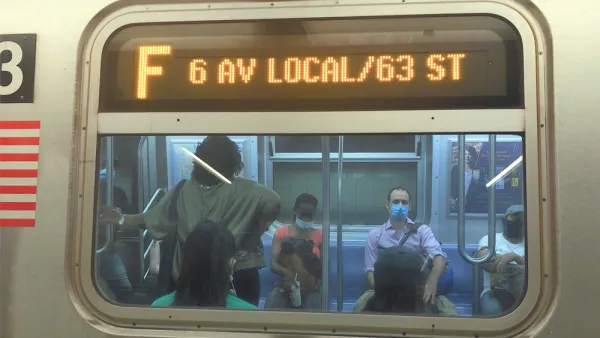
Advocates: It's Time to Get Back on Transit
The story about the safety of public transit has changed since the early days of the pandemic.
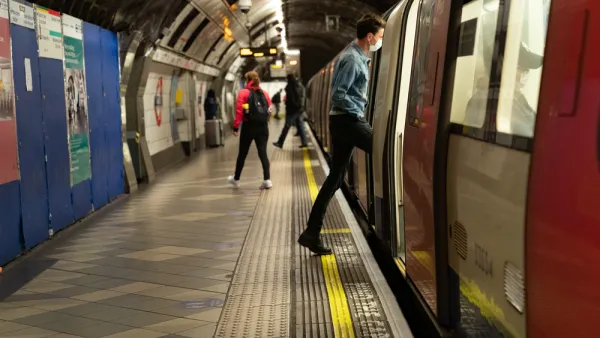
What Is the Future for Transit After COVID? - A Debate
Critic Randal O'Toole and advocate Todd Litman debate how communities should plan for public transit in the post pandemic future. Should it contract or expand?
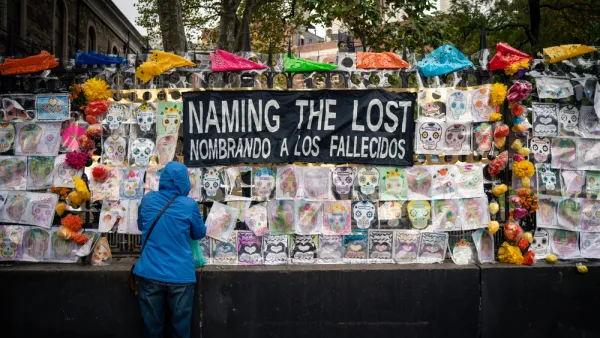
Nine Months Later: How the Pandemic Is Changing Communities
Planetizen shares the latest in a series of compendia tackling the effects of the pandemic, now and in the future, for cities and communities.

The state-sanctioned urbicide of Austin
People don’t kill cities. Freeways do.

US to reduce Colorado River water deliveries to Mexico
A new Colorado Treaty amendment reduces Mexico’s Colorado River water allocation by 250,000 acre feet.

New Jersey’s second-largest city bans standalone data centers
Jersey City will continue to allow co-location facilities, such as those meant for research institutions that store their own data.

Amtrak not solely to blame for New Jersey commuter rail's unreliability, report finds
A new study from the Garden State Initiative found that NJ Transit’s budget grew 20% across a 4 year period, but reliability declined significantly over the same period.

EPA erases limits on planet-warming pollution from power plants
Under Monday’s plan, power plants would still have some limits on how much mercury, arsenic and other contaminants they can emit.

Phoenix announces new on-demand transit service, more frequent RAPID buses
Both new services will launch in October, and are part of Phoenix's Project Effective Access Solutions for Easing Congestion.

FREE Course: Walkable City 1: Why Walkability?
After describing his path towards focusing on walkability as the essence of good planning, Jeff Speck marches through his five principal reasons for making more walkable places.
Reinventing Malls: Planning Alchemy—Turning Gray Fields Into Gold
The course focuses on the opportunities and imperatives that shape reinvention of mall sites.

Eagle County Government
Harvard University Graduate School of Design
Nashville Planning Department
The Architects Foundation
University of Cincinnati Online
The Pocatello Development Authority
The Urban Renewal Agency of the City of Pocatello
Journal of the American Planning Association